The Psychology of Pricing: Why ₹99 Feels Cheaper Than ₹100
Introduction
Let’s begin with something simple.
You’re looking over through an online store. You see two comparable products.
One is estimated at ₹99.
The other is ₹100.
Logically, the contrast is fair ₹1.
But somehow… ₹99 feels cheaper.
You don’t indeed think twice. Your brain says, “This is a way better deal.”
And that’s precisely what businesses depend on.
Pricing is not fair. It’s almost how individuals feel around those numbers.
Once you begin taking note of it, you’ll see estimating brain research everywhere—from nearby shops to huge brands.
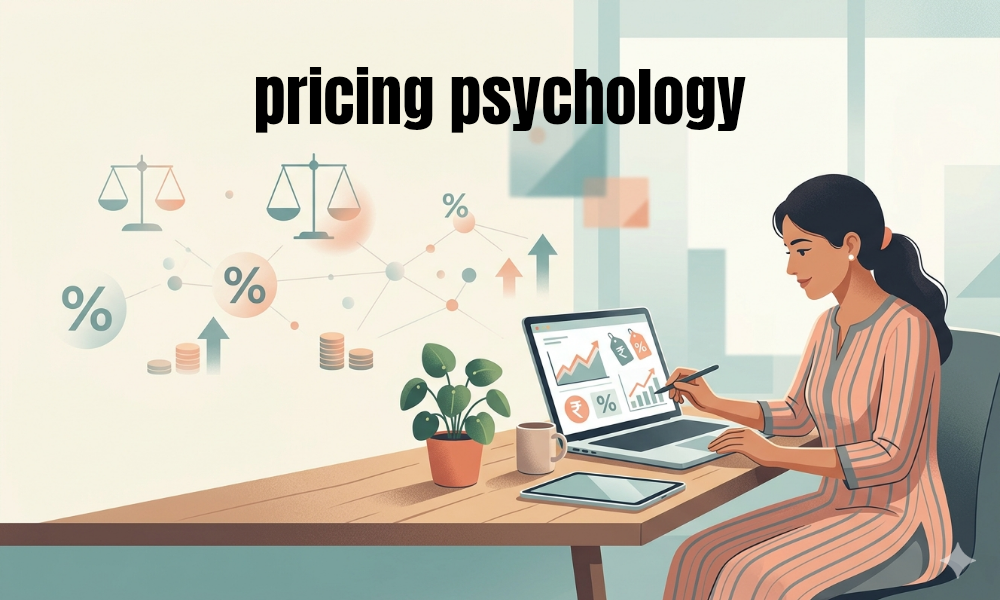
Why ₹99 Feels So Distinctive from ₹100
To begin with, it shouldn’t matter.
But our brains don’t handle numbers the way we think they do.
The “Left Digit Effect”
When we see ₹99, our brain centers on the beginning with digit—9.
When we see ₹100, it centers on 1.
Even in spite of the fact that the real distinction is modest, mentally:
₹99 feels like “ninety-something”
₹100 feels like “one hundred”
And that little move changes perception.
—
It Feels Like a Deal
Prices finishing in 9 make a sense of:
Discount
Smart buying
Value for money
Even if there’s no genuine discount.
That’s why you’ll see:
₹499 instep of ₹500
₹999 instep of ₹1000
₹1999 instep of ₹2000
It’s not arbitrary. It’s intentional.
—
Where You See This in Regular Life
Once you take note of it, you can’t unsee it.
Online Shopping
Almost each e-commerce stage employs this.
Clothing: ₹799, ₹1299
Electronics: ₹14,999
Accessories: ₹299
Rarely do you see circular numbers.
—
Restaurants and Cafes
Menus regularly have costs like:
₹249
₹199
₹149
It unobtrusively makes the dinner feel more affordable.
—
Local Shops Too
Even little businesses have begun utilizing this.
You’ll hear:
> “₹99 ” instep of ₹100
Because it sounds lighter on the pocket.
—
But Estimating Brain Research Goes Past ₹99
There’s a parcel more happening behind the scenes.
—
The Control of Anchoring
Ever seen something like this?
Original cost: ₹2,999
Discounted cost: ₹1,499
Even if ₹1,499 is still costly, it feels like an extraordinary deal.
Why?
Because your brain compares it to the higher number first.
That higher cost gets to be the “anchor.”
—
How Businesses Utilize It:
Showing MRP some time recently discount
Displaying “premium” alternatives another to essential ones
Highlighting “limited-time offers”
It makes the last cost feel more reasonable.
—
The Center Choice Trick
This one is exceptionally common.
You’re given three options:
Basic: ₹199
Standard: ₹399
Premium: ₹999
Most individuals select the center one.
Why?
Because:
The cheapest feels moo quality
The costly feels as well much
The center feels “balanced”
—
Where You See This:
Subscription plans
Restaurant combos
Online courses
Businesses don’t set costs randomly—they direct your choice.
—
The “Too Cheap” Problem
Here’s something numerous little businesses don’t realize.
Low estimating doesn’t continuously cruel more sales.
Sometimes, it makes me doubt myself.
—
What clients might think:
“Why is this so cheap?
“Is the quality good?”
“Will this last?”
Price is not fair, almost affordable—it’s too approximately recognition of value.
—
Example:
A tote estimated at ₹299 vs ₹899.
Some clients might really believe the ₹899 one more—even without knowing the difference.
—
The Part of Circular Numbers
Interestingly, not all businesses utilize ₹99 pricing.
Some incline toward clean, circular numbers.
When Circular Numbers Work Better:
Premium brands
Luxury products
High-value services
For example:
₹5000 feels more “premium” than ₹4999
₹10,000 sounds more sure than ₹9,999
It gives a sense of:
Clarity
Quality
Trust
—
Emotional Buying Is Real
We like to think we make consistent decisions.
But most buys are emotional.
—
Pricing taps into feelings like:
“This is a great deal”
“I’m sparing money”
“This feels worth it”
Even little contrasts in estimating can:
Increase sales
Improve conversions
Change client perception
—
Practical Illustration: A Little Commerce Scenario
Let’s say you run a domestic bakery.
You cost your cake at ₹500.
Now try:
₹499 → feels somewhat cheaper
₹549 → might feel more premium
₹599 with “Free delivery” → feels like superior value
Same item. Distinctive reactions.
—
What Little Businesses Can Learn From This
You don’t require complicated techniques to utilize estimating psychology.
Just a few shrewd alterations can make a difference.
—
- Test Your Pricing
Not accepting one cost is perfect.
Try:
₹500 vs ₹499
₹799 vs ₹749
See what works better.
—
- Don’t Undervalue Yourself
Low estimating might get attention—but not continuously trust.
Find a adjust between:
Affordability
Perceived value
—
- Utilize Bundles
Instead of offering one thing, offers
Combos
Packages
Deals
It increases the seen esteem without bringing down cost as well.
—
- Keep It Simple
Too numerous estimating alternatives can confound customers.
Clear and straightforward estimating works best.
—
So… Is Estimating Fair a Trick?
Not really.
It’s more around understanding how individuals think.
Because at the conclusion of the day:
Customers don’t fair purchase products
They purchase what feels right
And estimating plays an enormous part in that feeling.
Conclusion
A Little Thought Some time recently You Go
Next time you see something estimated at ₹99, stop for a second.
Ask yourself:
Do I really require this?
Or does it feel like a great deal?
Because once you get it, estimating brain research, you begin seeing things differently.
And if you’re running a trade, it’s indeed more powerful.
Not to manipulate—but to display your esteem in a way individuals can get it and appreciate it.
Because now and then, it’s not about changing the product.
It’s fair to change the number following it.
About the Author
This article was written by Jhala Nidhiba