The Loneliness Inside Moments That Look Social
Introduction
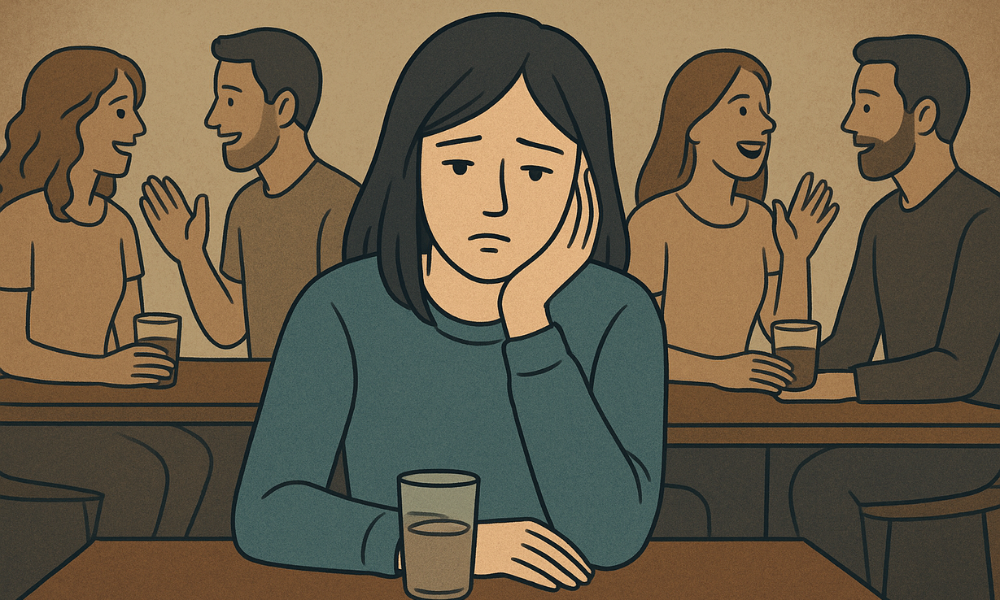
A person can have a room full of people laughing, talking, and having fun with them at a party, but still feel an acute sense of loneliness—despite everyone’s cheerful expressions, etc. When in this type of situation “being social” might be mistakenly identified on the outside, but it is a fact of life! When you truly want to be included with those you’ve been hanging out with (be friends) but cannot connect, then it feels even more painful than being alone physically! This blog post addresses the experience of people when they are between the states of feeling included or isolated from a social environment.
Not Every Encounter is a Connection, Just Because You Are There Together
While it may seem that we should automatically connect when surrounded by people, it is important to note that emotional bonds develop differently from how they appear physically. It is possible to sit at a dining table full of familiar faces and not feel a connection between those seated with you, nor will this connection provide a path to bridge the emotional divide. You may experience one of these situations when the discussion continues to stay at a superficial level, without ever touching upon anything that could connect you to those present. You may also not be on the same emotional level as those around you or not have the same emotional feelings, creating an emotional divide. In such cases, you may not feel as though you are alone, but rather you have developed an almost imperceptible emotional distance from those seated around you. You may be there, but are not truly with anyone. It can be painful to realize that even the most welcoming and friendly gatherings do not provide the opportunity for emotional connection when you are seeking a deeper understanding of who you are as a person. It serves as a reminder that physical proximity does not equal emotional connection; rather, emotional connection occurs as a result of the combination of effort, intention, and reciprocal feelings of each individual involved.
The Pressure to Perform the Happy You in Social Contexts
There’s an unspoken rule in social contexts that requires everyone to appear happy, positive and energetic. This puts pressure on every individual in social contexts, even though you are likely suffering from fatigue or pain. As soon as you walk into a social situation, you feel you need to turn on the happy performance mode of yourself so that others feel comfortable around you. You may laugh in all the right places, share in all the right conversations, and agree with people when they say things that thou are not happy to hear. Performing as if you are happy can be tiring because it distracts you from really expressing the way you feel on the inside. As you continue to perform, the apparent happiness you have on the outside will become further and further away from what you are experiencing on the inside, leaving you with yet another form of isolation. Knowing that people appreciate the person you are in the social context may be comforting, but being aware that there are many people around you who may be struggling silently while entertaining others is another form of loneliness. It can sometimes feel lonelier to put on a show of being fine in the middle of a crowd of many than it would be to be home alone.

The Moments We Realize We Don’t Belong
We often do not belong where we are currently located. Our internal rhythms are what’s most important to us. When you walk into a place, you often find that the conversation, humour and emotional rhythm of that area, have not been created with you in mind. People often talk above or over top of you, and you will also become aware that people are reminiscing about things that you were not involved in. As a result, you will begin to pay more attention to what is happening around you and start to see those points in the conversation where you have something to add, but cannot because you don’t know what to say. It will also become easier to spot those spaces in the conversation where people are laughing at something that you did not participate in, and the rhythm of the conversation moves past you, and you will see that it is still moving away from you.
The Aftertaste of Social Interactions That Leave Us Empty
When we interact with others socially, some of these interactions feel good in the moment but produce an unexpected sense of emptiness afterword’s. For example, after attending any type of gathering where you felt connected to others, there will be some heaviness in your chest and stomach. You may feel like the closeness you were looking for has not actually occurred. This may be a result of your not being able to have the depth of conversation that you wanted and expected, or it may be because you gave more emotional energy to the people you were interacting with than what you received back.
People can demonstrate kindness to you in many different ways, such as being friendly toward you or being present while talking with you. However, very few people demonstrate an active interest in the things that are important to you or they can become distracted during the conversation (that is, they are “in and out of” the conversation). The “aftertaste” left behind in these instances creates feelings of emptiness rather than warmth. This emptiness usually shows up later, when everything turns quiet, and you are left alone to contemplate your thoughts. All of these experiences reinforce that socializing with people does not necessarily lead to a connection; rather, true connection creates a sense of understanding instead of a feeling of emptiness.
Conclusion
For the majority of us, loneliness within social situations is a commonality that we experience but do not often discuss; it does not create disconnection or drama, it defines us as human beings. The emotional voids that create this isolation are reminders of the importance of finding our place within a group of people or a setting where we can truly be ourselves. When we find those spaces and people, everything we do together, even the simplest of things, feels like home.