The Versions of Ourselves That Only Exist in Certain Rooms
Introduction
As humans, we all typically portray multiple iterations of ourselves. The version of ourselves that we present to the public is highly influenced by the immediate environment we are within. Depending on the space, we may exhibit more confidence, a softer side, or we may feel smaller/less confident than usual. Many individuals mistakenly think that they exhibit the same version of themselves no matter where they are; however, environmental influences affect who we are, often without our conscious awareness. Take a look at this blog to consider how much more deeply our surroundings shape who we are than we may have originally thought. Furthermore, this blog will address how certain versions of ourselves only come to life when we are in particular environments.
How We Change Based on the People We Are Around
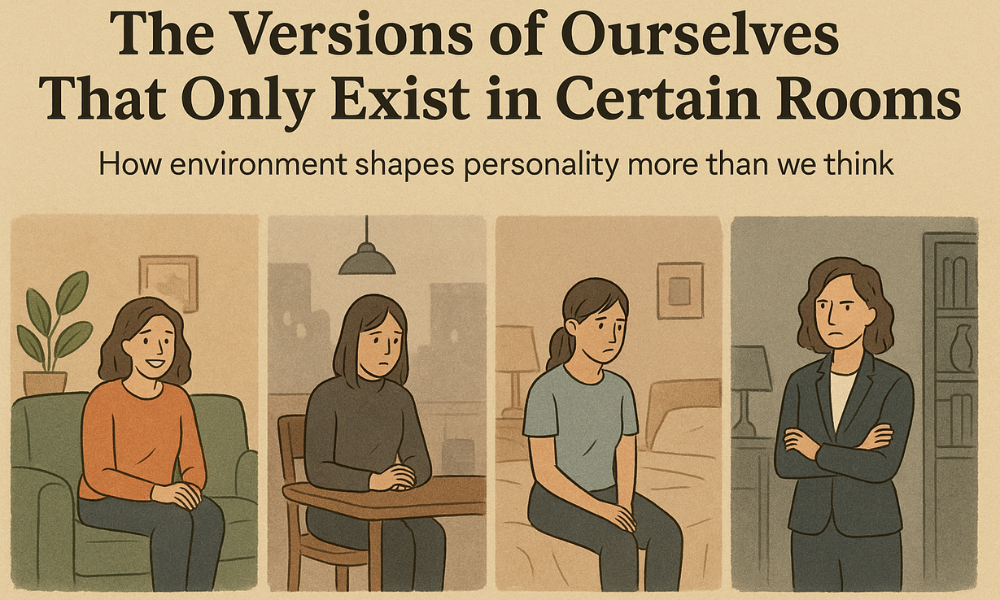
Isn’t it strange how quickly our personalities shift when we are in the presence of someone? We may surround ourselves with a certain group of friends that brings out our loud, boisterous, and laughing side. In contrast, there may be other friends that cause us to become calmer and more thoughtful. Some friends encourage us to be responsible; others allow us to be goofballs that we do not normally see in us beyond their company.
None of these persona are fakes; rather, they are indicators of how safe, understood, and accepted a person is in a particular relationship. The people we interact with tend to reflect back to us who we are at our core. The minute we enter a room and see familiar faces, we automatically adopt an ‘emotional’ mode depending on our past experiences with them. Over time, these personas will continue to develop as we create ‘versions’ of ourselves within that particular environment. They are influenced subtly by the comfort that comes from connection and memory.
The way physical space influences your behavior without you realizing it
With the warm atmosphere of a cafe and the peacefulness of a library, as well as the tension and stress that can occur in a meeting room, the way you speak and act are influenced by where you are. The environment you are in affects your mood and behaviour through lighting, noise, temperature and other environmental attributes.
For example, if the temperature is nice and it is adequately illuminated, the physical environment will make you feel comfortable. In contrast, being in a bright, formal room will naturally make you feel guarded and cautious.
Each of these spaces represents a place in our minds that trigger comfort and safety or revive old habits. There is no need to deliberately alter your tone, posture and emotional state when in the presence of these spaces. Instead, you will react without thought based on the feel of the environment you are in. These reactions will be subtle; however, they will help you gradually become the person who belongs in the environment in which you are located.
The Identities We Outgrow but Still Perform Out of Habit
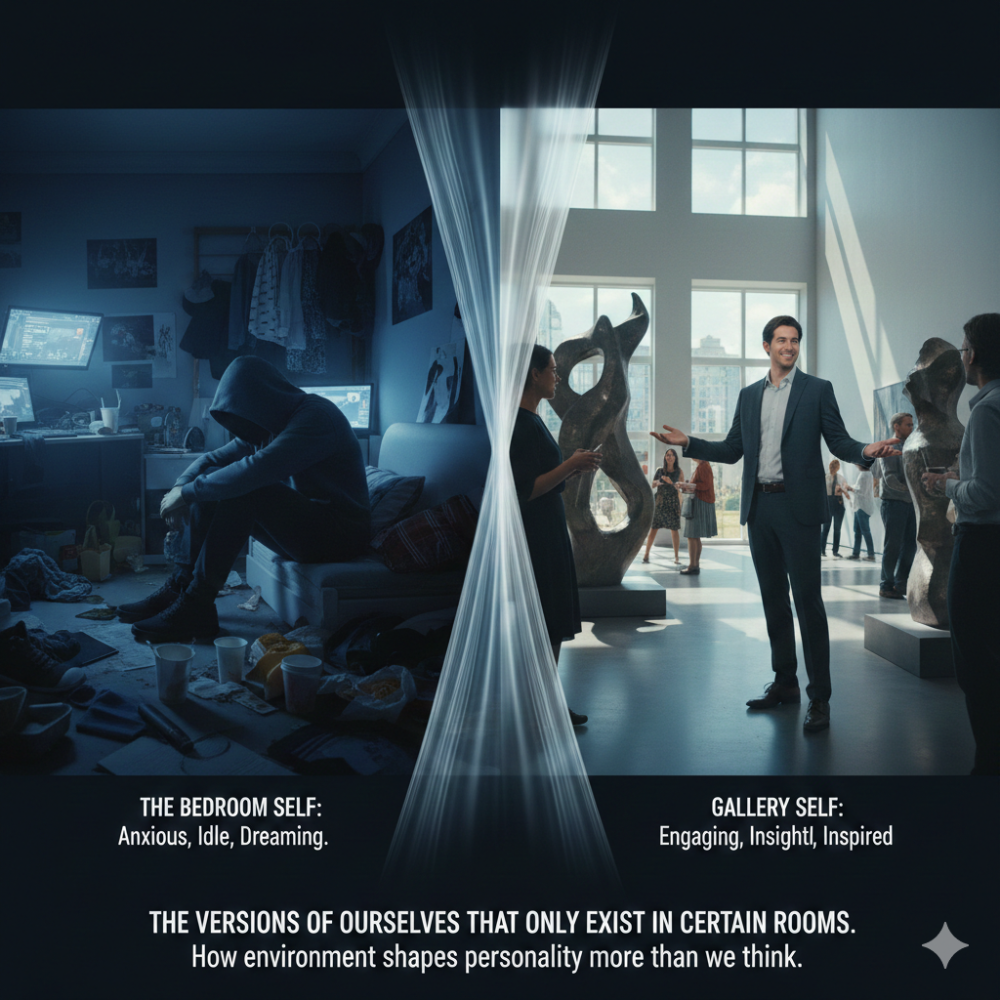
Rooms can make us feel small; they bring us back to who we were when they filled our lives. Children are often re-cast into the roles they played as children when returning to their childhood homes, through classrooms they took classes in, or even to the homes of other family members. This is unintentional: we automatically return to the role we played in that environment. For example, even though today we may feel more independent and confident, when we go back to that familiar room, it gives us signals of our past roles. Sometimes we become more than one person as we grow. But that room is still who we were when we were there.
The Emotional Cost of Being “Room-Specific” Versions of Ourselves
It’s hard on our mental health when we have to be different for each “room” we are in; some rooms give us more than we give to them. In some of those rooms we feel alive and accepted; in others we may feel small or performative or simply unseen. The ongoing shape-shifting of emotional space leaves us wondering what part of us really represents who we are. Are we naturally quiet people, or simply quiet in “rooms” that make us feel unsafe? Are we confident individuals, or only confident where there is support? Switching back and forth between roles creates confusion and/or exhaustion, especially when the versions are too far apart. However, they do have a positive value; they show us the areas in which we thrive and those in which we shrink or fade away. Thus, understanding this allows us to find “rooms” that represent who we want to be rather than who we have to be.
Conclusion
“Life is full of different versions or expressions of us. Each of these expressions is the result of the impact that the various places we go to or live in have on our development as an individual. Some environments or places allow us to “grow”, whereas others suppress our mental & emotional growth. Identifying which environments have this effect on us is not a means of self-judgment or finger-pointing, but instead serves to inform where we should find the most opportunities for personal growth. By becoming aware of the various spaces that either drain or energize us we can learn to strategically select which spaces we enter, thereby creating a clear path to becoming our most authentic self.”