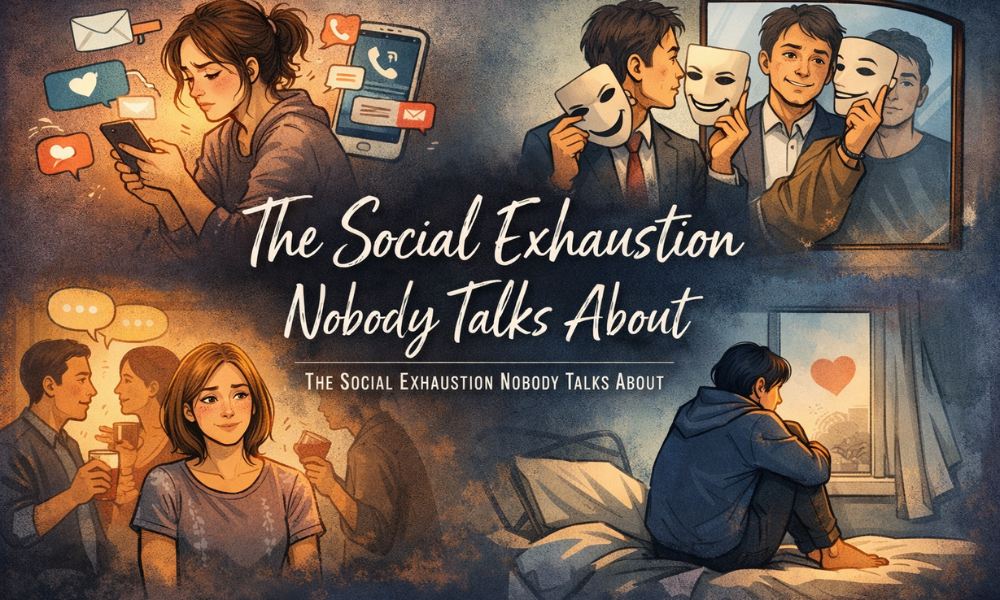
The Social Exhaustion Nobody Talks About
Introduction
Not all cases of fatigue are related to overexertion; it can also stem from interaction or time spent with others. Social exhaustion is another type of fatigue that can be built up gradually without being obvious to anyone else. There are many factors, such as continuing dialogue, expectations imposed upon the individual by society, and being emotionally available. The stigma surrounding this type of fatigue makes it difficult for many people to discuss it and creates feelings of guilt and I would be ungrateful if I were to inform my colleagues, friends, or family about it. The key to managing this hidden fatigue is simply to understand its presence and then develop ways to care for yourself successfully.
The Challenge of Being Available 24/7
We did not openly agree upon being able to be reached at all times, however, society has adopted this as a standard. Along with that comes the expectation that you will respond promptly, with courtesy, and on a continuing basis, due to messaging, calling, and receiving notifications via the internet. Feeling obligated to respond to others even when you are tired, busy, or emotionally spent creates the need to react. Being available 24/7 causes a lack of quiet time to simply be, without needing to connect. After a while, connection will begin to feel more like an obligation. Being continuously available emotionally and/or mentally causes continued mental exhaustion. You are not speaking to someone all day long, but you will be mentally on standby at all times. Not responding creates guilt while responding creates emotional drain. The continued cycle of these two forces is gradually leading people to disconnect from one another at some point in time and feel the burden of social interaction.
Identifying Who We Are
How do you know which version of yourself is most you? It can feel confusing and overwhelming trying to choose between different versions of yourself. We all have particular habits or character traits that are distinct to each version of ourselves. As a first time parent, I try to maintain the best parts of being a father. In fact, I think of myself as having at least two identities: a father and an employee/partner/husband. Although I love the identity of being an employee/partner/husband, I think of this part of my life as an extension of my father identity, and the two will forever influence the way I live and think. My friends and family help me define who I am, but sometimes they can take away from the person I want to be. As a result, I might look back on my life and question everything I ever did because of my family/friends influence and the way I was treated. I want to know what I did, who I am, and what I have achieved without the influence of my family/friends.

Small Talk That Feels Bigger Than It Is
While small talk is typically regarded as innocuous, excessive amounts of it can leave you feeling overwhelmed even with small amounts of effort. Small talk includes many elements or characteristics such as common, polite inquiries, forced smiles, predictable reactions, etc. On the other hand, it provides much less of an insight into the emotional connection between individuals than would an emotionally engaging conversation, and therefore it can be difficult for people who are seeking an emotionally rewarding connection to be engaged by the enormity of these conversations without receiving additional emotional rewards as well. The content of small talk itself isn’t necessarily poor quality, but rather the lack of authenticity in either party in producing these types of interactions creates an overall draining effect. Surface-level conversations do not add any value to your emotional state but instead take away from it. By using the term “exhausting”, we are talking about our ability to be present with someone without the ability to be truly engaged with them. After spending an entire day being socialising through small talk, it is common to feel as though you have completely filled your social quota for the day but are still lacking in terms of emotional fulfilment. Ultimately, we do not always have the means to explain our reasons for feeling exhausted due to a lack of meaningful connection, which is why this type of fatigue is frequently left unaddressed.
The Guilt Associated with Wanting Space from Those We Care For.
Needing a little spare time away from those close to us is not indicative of lack of caring but many people associate these two things. Many people struggle with the guilt associated with stepping back from social interaction, especially with loved ones. The concern about possibly hurting one’s feelings, appearing to be distant, or being misunderstood is one of the main reasons people force themselves to engage socially even when feeling completely fatigued and exhausted. This creates yet another layer of emotional conflict added to the problem of social exhaustion. Needing space is a form of self-care and self-respect, not a rejection of individuals. Society has encouraged and promoted the idea of constant connection, therefore when anyone opts for solitude there is a feeling of disapproval. The burden of emotional exhaustion continues when we ignore those limits based on others’ expectations. Learning how to take space and downtime without guilt is extremely hard; however, it is absolutely necessary for healthy long-term relationships, in addition to creating long-term mental health.
Conclusion
Feeling drained socially isn’t about having negative feelings for others; it’s about finding balance in your life. In today’s world of constant connection and engagement with one another, it can feel exhausting to be around others, which is just as valid, and maybe a little quieter than the desire for constant connection. Allowing you to be honest about your exhaustion will help you create healthier boundaries around social interaction, and allow you to be truer to yourself when you’re socializing. Giving yourself permission to take breaks from social interactions makes being social an enjoyable experience instead of an exhausting experience.