The Boy Who Failed in School but Changed the World: A. P. J. Abdul Kalam’s Journey
Introduction
The life of A. P. J. Abdul Kalam serves as an example of how failure can lead to success rather than being a finality. A student who faced many challenges in his schooling, Kalam utilized his curiosity, diligence and determination to turn failures into opportunities for success. His transformation from a modest childhood to becoming a famous scientist and the President of India inspires us to reach for higher goals than we may believe are attainable.
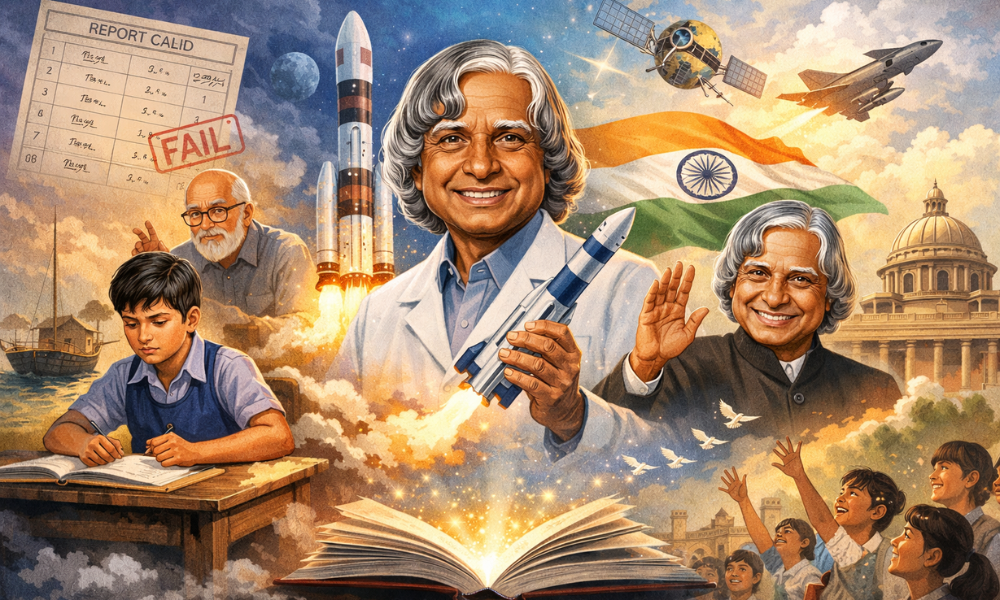
Academic Scores Don’t Determine His True Ability in the Classroom
A.P.J. Abdul Kalam was not regarded as being a ‘brilliant’ student based solely on academic performance alone by teachers. He was raised in a family with limited income in Rameswaram and due to the financial stress of his surroundings, he developed as a student in a less than ideal environment due to a lack of materials available to him and the surrounding areas. He also experienced difficulty with specific subjects and did not generally achieve academically, which could have deterred him. Regardless of this level of performance, Abdul Kalam, in particular, refused to allow poor performance to define his level of intellect or his ability to be successful or his self-worth. Instead, he relied on a high degree of effort and an eagerness to learn about how things worked in order to develop an understanding of various subjects and be successful throughout his life. He valued effort produced over the results produced immediately. It was this balancing element that contributed to the development of his resilience and discipline in school over the course of his school days. Abdul Kalam has taught us that the fact that you were unsuccessful in a particular subject matter is not necessarily an indicator that you won’t be successful in your future. The unsuccessful time in any particular subject is only one part of the entire story of your personal growth.
Self-learning and mentorship are powerful forces in shaping people to achieve their full potential
Abdul Kalam distinguished himself through his avid pursuit of knowledge that extended well beyond the four walls of the classroom. He dedicated extensive amounts of time each day for reading on topics such as science, aviation, and philosophy, while also introducing himself to various related ideas that would captivate his curiosity. His teachers, most notably Sivasubramania Iyer and Iyadurai Solomon, guided his aspirations and enabled him to dream beyond the limitations of his environment; they provided encouragement and nurturing support to help build his self-esteem. As such, through the process of accumulating knowledge, supporting mentors encouraged an individual’s contribution to society, and stimulating an individual’s curiosity. The encouragement from his instructors encouraged Abdul Kalam to pursue knowledge wherever possible. Rather than allowing an individual to become fearful from the lack of knowledge, Abdul Kalam remained excited about learning new things. His experiences prove that with proper direction and motivation, a typical student can develop into an outstanding intellect.
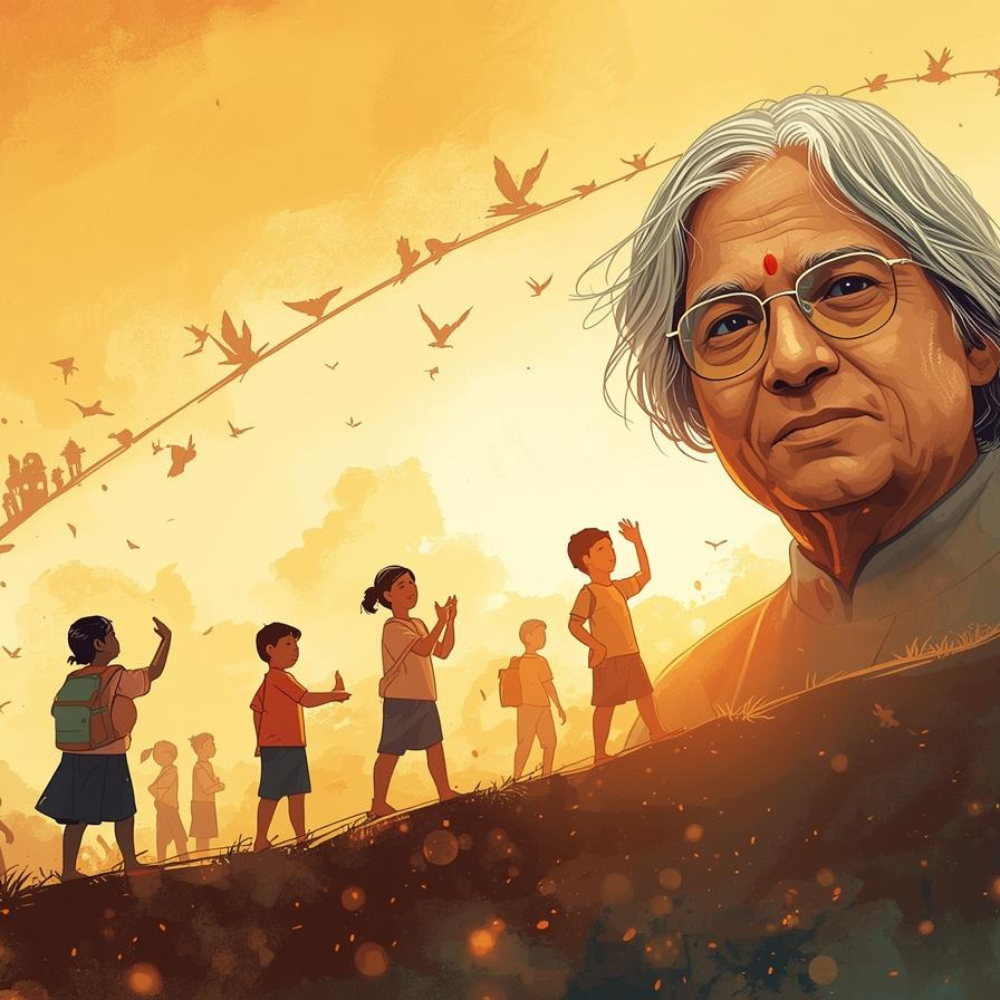
From Rejection to Rockets: Turning Setbacks into Breakthroughs
Although there were many disappointments that could have easily discouraged Kalam during his life and career, he did not allow these difficult experiences to set him back. For example, when he did not get selected to become a pilot, this was one of Kalam’s biggest disappointments. However, he redirected himself toward life and ultimately became part of ISRO and DRDO after this event in his life. Many of his scientific experiments were unsuccessful; however, he viewed every failed rocket launch, every missed deadline and every instance of criticism as feedback rather than failure, which helped him to refine his knowledge and ultimately strengthened his resolve. Over time, through determination, he became a major contributor to India’s space and missile programs. Therefore, the story of his life illustrates how rejections often lead us to a higher calling than what was first presented to us.
An Inspirational Legacy: Abdul Kalam
Dr. A. P. J. Abdul Kalam has had an immense impact on our country; he did not only work with scientists in facilities, but he also communicated to students, academic staff and aspiring youths all around India, during his years as President of India (2002 – 2007). Despite that success, Kalama remained accessible and grounded in tradition. He believed that the key to India’s future rested with the dreams of its young people and he encouraged them to think of themselves without fear. And he has taught the importance of hard work, discipline and leading by example through his honest approach to success, through talk of success and failures. Abdul Kalam’s inspiring speeches and books and his many contacts with individuals have inspired untold millions of men and women even after his passing. In addition to being a scientist and a leader of the nation, however, he is considered a beacon of hope to many. He taught us to believe in the power of inspiration from others and that true success is defined more by what we can do to uplift others, than by what we achieve for ourselves.
Conclusion
The experiences of A. P. J. Abdul Kalam demonstrate that failing does NOT end everything (it is just another step toward your final goal). His story illustrates how through consistent effort, education, and modesty, one can achieve greatness from humble circumstances. Akram’s enduring legacy to all people is that your ability to persevere, to learn/new ideas; and use them to develop new dreams; will help them accomplish their own desired success, regardless of their place as a mother or father, etc.