Apple’s Next MacBook Pro Could Be Its Boldest Redesign Yet — Here’s What’s Coming
Introduction
While the MacBook Pro has long been considered the ultimate computer for professionals and creators, the updates over the past few years have rather been evolutionary rather than revolutionary. While the faster Apple chips have helped the MacBook, Pro maintain its lead over its competitors in the area of raw processing power, the design itself has not really changed much since 2021. At least, that may now be about to change. As a number of reports out of the tech world indicate, Apple is working on an overhaul of the MacBook Pro design itself and could be released as soon as 2026 or 2027. It may finally be the most radical redesign the computer has ever seen. While any individual desirous of acquiring a MacBook Pro may be well advised to hold out till the new features are released.

OLED Now on a Mac: A Huge Upgrade for Creators
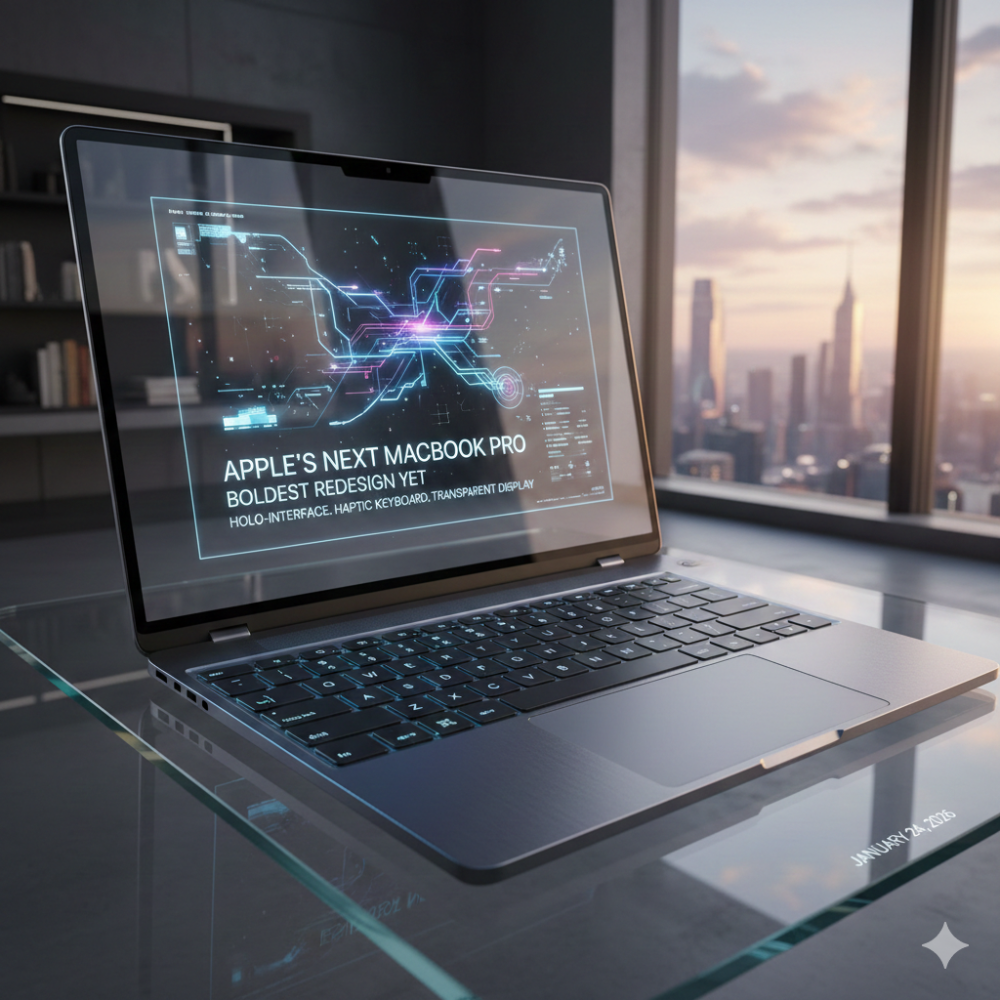
A major upgrade that lies at the core of Apple’s planned revamp of the MacBook Pro computers is the upgrade of the computers’ screens. There have been claims that Apple could soon abandon the current usage of LCD panels with mini LED backlighting and instead opt to utilize OLED panels. Notably, this upgrade will see the computers join the rest of the Apple products, such as the iPhone and iPad Pro, that already utilize this different technology. Not to mention that this upgrade will prove to be advantageous to different kinds of users. Specifically, users who operate the computers—perhaps those who operate them creatively—shall likely benefit from the utilization of OLED panels. Most likely, this upgrade will see the computers reduce in thickness. Thus, it shall result in a slimmer design. Evidently, this upgrade shall attain the status of being one of the major upgrades to the devices in quite some time.
Touchscreen MacBook Pro & the Blurring Line Between Mac and iPad
The introduction of Macintosh laptops with touchscreen displays may be one of the most innovative features being considered by Apple. The ability to touch directly upon the display instead of simply relying on trackpads or keyboards to input commands will increase the level of interactivity between device and user. In the past Steve Jobs, co-founder of Apple, was against incorporating touch technologies into Macintosh computers due to potential issues of ergonomic comfort for users who spent long periods at a desk working on an electronic device. However, Apple has continued to push forward with merging functionality and design between Macintosh and iPad devices by adding keyboards to the iPad’s capabilities. The ability to use a touchscreen adds another layer of interaction for creators enabling users of Creative Cloud software to create in entirely different ways, allowing for a deeper level of interaction between user and device than was previous possible with a traditional keyboard or mouse. If this occurs it would definitively change the perception of how people use Macintosh computers than previously believed.
Goodbye Notch? Hollow Camera, Variable Island & Slimmer Build
Apple is reportedly considering removing one of the MacBook Pro’s most talked about design features, the notch, due to the uncertainty over whether or not there will still be a physical key on the laptop. If true, Apple could replace the notch with a hole-punch design for the camera, similar to the Dynamic Island format seen on its phones and, in the future, on laptops. The new space at the top of the MacBook Pro display would allow for display of system alerts and running apps/information/miscellanea, while optimizing screen space. And with this change, Apple is also said to be developing a slimmer design for the MacBook Pro through the use of OLED technology and internal hardware improvements. As of now, it appears that Apple is not planning on removing popular ports included on the MacBook Pro such as HDMI and MagSafe, as well as the SD Card slot.
M6 Chips, 2nm Technology, & Notebooks with Connectivity (Always Connected).
Apple is planning on using its upcoming M6 Pro and M6 Max processors as the engines for the new MacBook Pro. According to reports, the new M6 chip family will be manufactured by TSMC at their new 2nm scale, an advancement from the existing 3nm process used today with soon-to-be-released M5 series processors. With the small size of the chips, Performance and Power Efficiency should see improvements especially among users that run similar heavy workloads for long periods of time. It has been suggested that Apple will include built-in cellular (mobile) service in the future for its notebooks. Thus, MacBook Pro owners will not have to rely on their iPhones as mobile hotspots for internet connections via 5G or LTE. If added, Apple will likely utilize its proprietary modem technology like the C1X (or a forthcoming C2 chip) to allow users’ laptops/mobiles to remain connected to the internet constantly (always-connected).
Conclusion
Even though the new line-up based on the M5 chip may promise minor performance improvements in the new MacBook Pro models due to the upgrade to the latest chip in the family, it seems the major changes could be just around the corner. And by major changes, we could be talking about the OLED displays, touchscreen capabilities, notch-less design, new M6 chips based on the new 2nm node, cellular capabilities built directly into the device—this new future MacBook Pro could be the game-changer in terms of the look and feel of the device. Indeed, professionals will be advised to take a look at the future updates before deciding to upgrade to the new device.