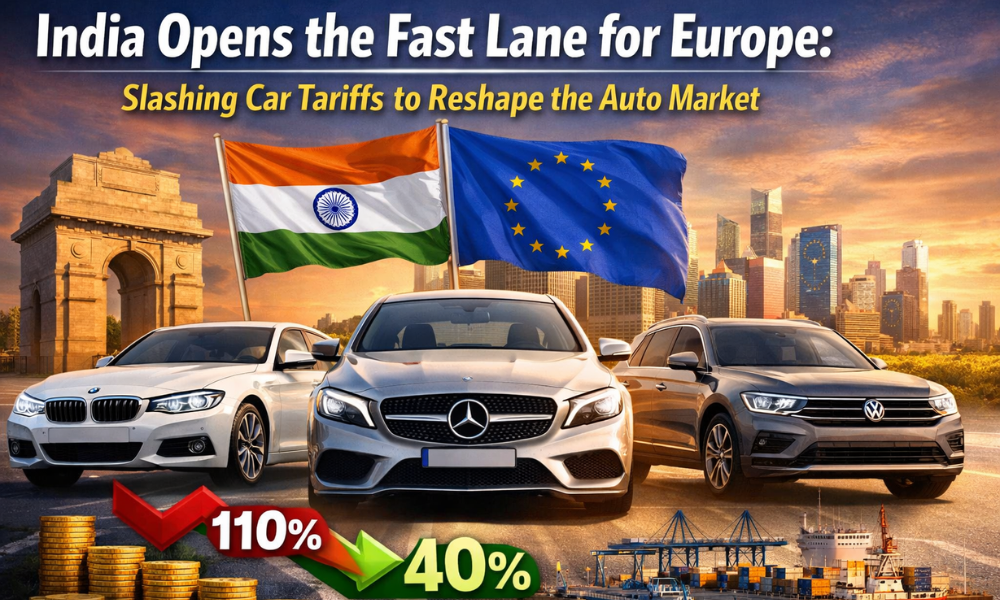
India Opens the Fast Lane for Europe: How Slashing Car Tariffs Could Reshape the Auto Market
Introduction
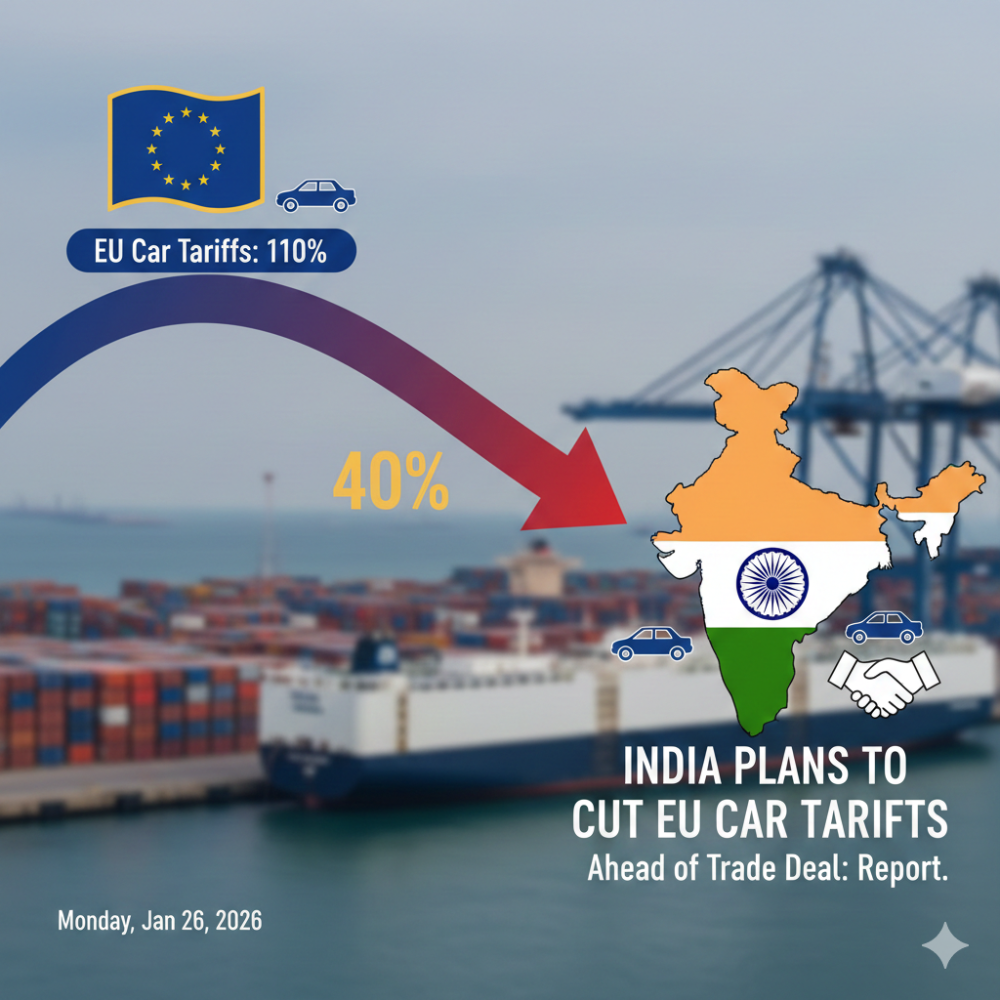
India is getting ready to make its biggest-ever concession in the automobile sector by sharply cutting import duties on European cars-a signal of a big shift in the trade policy. Tariffs on high-end imported vehicles, under the proposed India-EU free trade agreement, could drop from an steep 110% to 40%, with further reductions over time. The move is likely to break open India’s tightly protected auto market to European giants such as Volkswagen, Mercedes-Benz, and BMW. Beyond just cars, the decision reflects India’s broader strategy to deepen economic ties with the European Union and position itself as a key global trade partner.
From 110% Down to 40%: The Rethink of High Car Imports Tariffs
For many years, India has had some of the highest rates of automobile import royalties globally, reaching up to an extraordinary 110%. The intention of the policy was to assist Indian manufacturers by creating an environment where global automobile companies would establish production within India. Due to the changing global dynamic and India’s desire to create a deeper integration into the global supply chain, the tariff structure needs to be reassessed. In addition, as India continues its negotiations for a comprehensive free trade agreement with the EU, establishing a new car import tariff structure will be an important tool for negotiation. The announcement of a proposed reduction from 110% to 40% will apply only to a limited number of high-end vehicles that cost over ₹16.3 lakh, reflecting a gradual opening rather than a sudden influx of vehicles. By pursuing a phased reduction plan, India wants to send out a strong signal to global investors about India’s desire to pursue genuine trade liberalisation while still being committed to the domestic manufacturing sector and workforce.
Big Win for European Automakers: What Volkswagen, Mercedes-Benz & BMW Stand to Gain
European Manufacturers of Vehicles (automobiles) have received a major advantage from the announcement of reduced tariffs on imported vehicles. Tariff reductions will open new doors for European manufacturers and create new opportunities for Indian consumers to purchase European-manufactured vehicles. European manufacturers, including Volkswagen, Mercedes-Benz and BMW, have stated for years that high import duties on their vehicles have made them too expensive for consumers in India, even though the European manufacturers have strong brand recognition in the country. By reducing the import duties on European-manufactured vehicles to 40%, not only will the tariff reduce the disparity in price between premium European vehicles and similar vehicles manufactured in India, but the overall reduction in import duties to 10% will create increased sales potential for European car manufacturers and allow them to introduce new products and advanced technology into the market. The rapidly expanding disposable incomes of consumers in India make them an attractive growth opportunity for luxury automakers. The reformulated tariffs on imported luxury vehicles could impact automotive manufacturers’ decision making in regard to increasing their local assembly presence; developing and manufacturing EV automobiles, and providing increased supply chain support in India. The reduction of import tariffs on European-manufactured automobiles establishes Europe as one of the leading automotive regions in one of the world’s largest automotive markets.
More Than Trade: A New Era of Economic Interdependence between the EU and India.
The reduced tariffs that were discussed are part of a broader free-trade agreement between India and the EU that has been negotiated for a number of years. Although the automotive sector has been one of the most contentious aspects of the India-EU negotiation, the agreement between these two partners will ultimately encompass much more than the trade of cars. Future Engagement Between India and EU for Economic & Strategic Partnership on Defence, Technology and Mobility of Professionals: The timing of the impending announcement of the FTA corresponds with increased interactions between the two Governments through high-level diplomatic engagement such as the recent visit of Ursula von der Leyen and António Costa to India. Beyond the Announcement of the FTA, it is highly likely that the agreement will also include a Defence Partnership Agreement and a framework developed to facilitate the mobility of Indian professionals to Europe. Therefore, opening up the Automotive Market to Europe is seen as a pivotal step in India establishing a broader Economic and Geopolitical Partnership with the EU.
What Are the Effects on India’s Automotive Industry? More Competition or More Opportunity?
Throughout the years, when auto manufacturers in India have depended on tariffs to maintain barriers from international competitors; with the decrease of import duties, the level of competition will increase for the local manufacturers. The manufacturers who will feel the most competitive pressure will be in the segment of higher priced vehicles (premium and luxury) but as with the reduction of tariffs, it will take several years for those manufacturers to fully adjust their pricing and be competitive. However, there will be a lot of opportunities for Indian manufacturers to innovate faster, improve their products’ quality and invest heavily in EV/next-generation vehicle technology—there will also be added consumer options and technology advancements due to a greater number of manufacturers in India. Ultimately, over time, a more open and competitive automotive marketplace could facilitate new investments in India and enhance its automotive supply chains with the goal of making it a globally recognised automotive centre rather than just a domestic market.
Conclusion
India plans to reduce the import duty on cars to increase openness towards doing business with other countries. This strategy could be beneficial for Indian companies interested in exporting their products to Europe. The removal or reduction of barriers between countries allows for greater innovation, investment, access to technology, and choice for consumers. There will be challenges for local manufacturers. However, creating a phased implementation will maintain a level playing field while protecting India’s manufacturing base. Ultimately, this decision demonstrates that strategic partnerships through trade will be key to creating sustainable growth in India.