Smart Manufacturing: How Industry 4.0 Is Reshaping Indian Factories
Introduction
The manufacturing industry in India is also experiencing a paradigm shift due to the advent of Industry 4.0 and smart manufacturing. Conventional manufacturing facilities are being transformed into networked and data-driven manufacturing facilities using automation, artificial intelligence, and the Internet of Things (IoT). This has enabled the Indian manufacturing industry to enhance efficiency, minimize costs, and compete effectively in the global market. Smart manufacturing is also changing the way manufacturing facilities function in India, whether it is large-scale industrial facilities or new MSMEs.
What Is Industry 4.0? Understanding the Smart Manufacturing Revolution
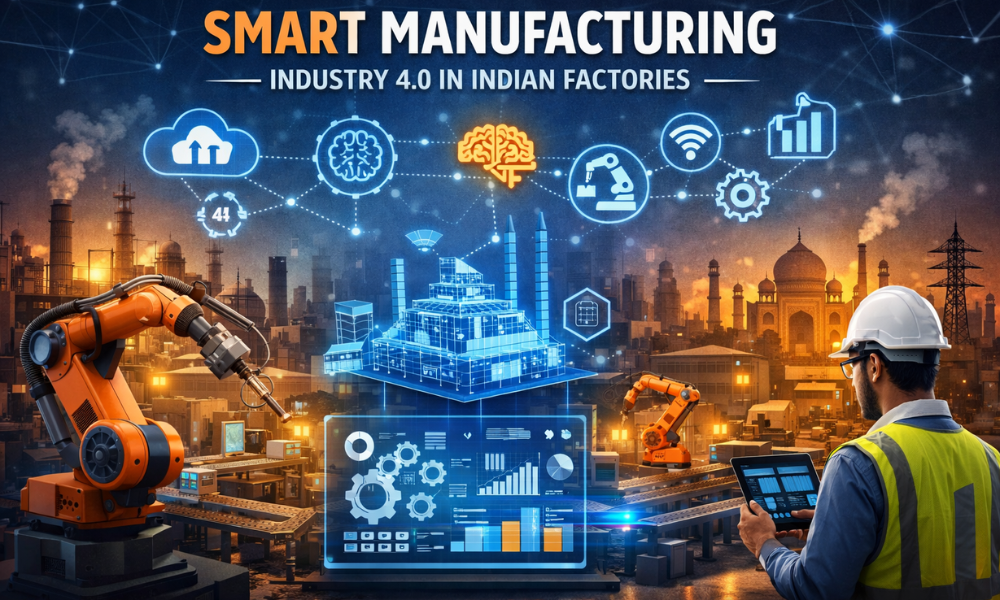
Industry 4.0 is the fourth industrial revolution, which involves the use of digital technologies in manufacturing a smart factory. Unlike the previous industrial revolutions, which concentrated on mechanization and automation, Industry 4.0 involves the use of the Internet of Things (IoT), artificial intelligence (AI), big data analytics, cloud computing, and cyber-physical systems. Smart factories use Industry 4.0, which enables production lines to adjust automatically depending on the demand, machine performance, or quality. Industry 4.0 is not only a means for Indian factories to modernize but also a means to remain competitive in the global supply chain. Industry 4.0 enables Indian factories to make better use of resources, increase productivity, and improve the quality of products. As the expectations of customers increase and markets become more dynamic, Industry 4.0 is the solution that enables Indian factories to adapt and grow efficiently.
Key Technologies Driving Smart Manufacturing in Indian Factories
In recent years, a number of advanced technologies have enabled many Indian factories to become “smart.” Technologies such as IoT sensors are key to providing manufacturers with real-time data about their machine, equipment and production line performance. That information can be analyzed using AI-based tools and machine learning algorithms to find trends, predict failures and improve overall efficiency. Manufacturing Robotics and Automation improve speed, quality and safety in the workplace – particularly when completing repetitive tasks or working in dangerous environments. On-premise investments are not always required thanks to the availability of cloud computing services, enabling manufacturers to store and process large amounts of data without significant capital investment. The creation of digital twins (virtual representations of assets) provides manufacturers with the ability to simulate production processes and trial changes to processes prior to making modifications to actual operations. These technologies are enabling Indian manufacturers to minimize unplanned downtime, deliver consistently high quality products, and provide greater visibility into their operations. The continued reduction in technology costs and improvements in connectivity are allowing even small and mid-sized manufacturers to begin leveraging these technologies.
How Industry 4.0 Is Transforming Indian Manufacturing Operations
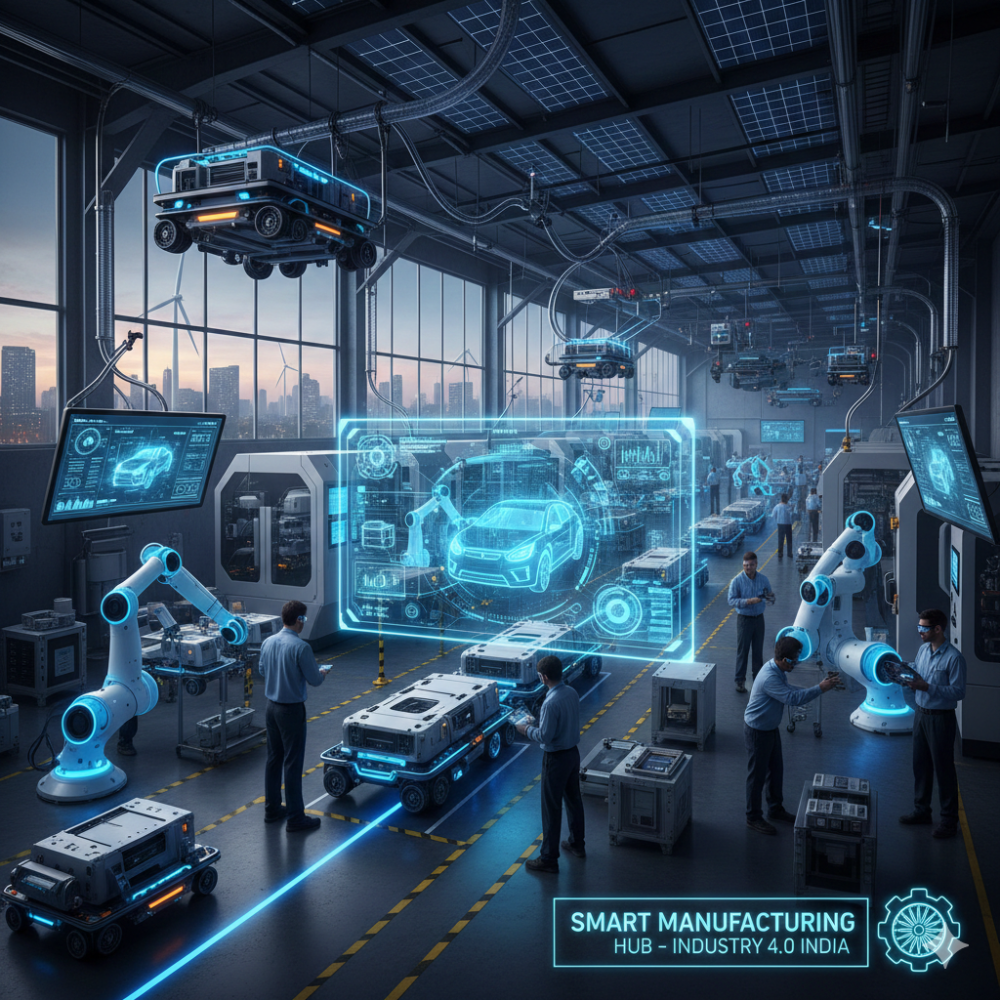
The evolution of manufacturing processes in India as a result of Industry 4.0 is profound in terms of operational efficiencies and by improving productivity through advanced automated manufacturing systems that utilise real-time monitoring to minimise manual mistakes and manufacturing inefficiencies. Predictive maintenance through Artificial Intelligence (AI) allows equipment to be monitored in real time for predictive maintenance enabling equipment to be repaired prior to failure; this minimises the risk of unplanned downtime and saves money. The process of managing quality is significantly improved through the use of smart cameras and sensors; these technologies enable real time detection of defective products throughout the manufacturing process. Real time access to data facilitates rapid and accurate decision-making enabling manufacturers to respond quickly to customer demands, facilitate quick action to address supply chain disruptions or production problems. Smart manufacturing technologies also facilitate mass customisation enabling manufacturers to fulfil customer requests by producing customised products without affecting the efficiency of the manufacturing process. Overall, the advancements driven by Industry 4.0 are allowing Indian manufacturers to produce products that meet international quality standards while controlling costs. Over time, there is a significant shift in how factories operate; moving from a reactive environment to a proactive, intelligent environment.
Challenges and Future Scope of Smart Manufacturing in India
There are several challenges associated with the use of smart manufacturing in India, even though it has many advantages. Small and medium-sized companies often face challenges due to the high start-up expense of the new system. Skilled workers who will be using these systems are lacking in India, and will need to be trained on how to use digital technologies such as automated systems and analyse data. Another issue is the potential for cyberattacks when factories are linked via the Internet, because it places factories at risk of data breaches. However, India is still positioned very well for the future of Industry 4.0, and the initiatives by the government such as the “Digital India” and “Make in India” initiative will help engender an increase in the adoption of these systems across the entire country. With increasingly accessible and affordable technology, and increasing levels of awareness about smart manufacturing, it is anticipated that the adoption of smart manufacturing will occur very rapidly. As this occurs, India will have the right policies, skilled workforce, and infrastructure in place to enable it to establish itself as a leader in the area of advanced manufacturing.
Conclusion
Smart manufacturing based on Industry 4.0 is no longer an idea for the future but is already changing the face of Indian manufacturing. Through the implementation of technology such as IoT, AI, automation, and data analytics, manufacturers are working to increase efficiency, quality, and competitiveness in the global market. Although challenges such as high costs, lack of talent, and security issues exist, the long-term advantages far outweigh the difficulties. With the help of initiatives from the Indian government and growing awareness about digital technology, India is poised to move ahead in the adoption of smart manufacturing. As more companies adopt Industry 4.0, smart manufacturing will be a key factor in making India a global manufacturing leader.