Adani Group’s Infrastructure Push: What It Means for India’s Economy
Introduction
Adani Group has come to be known as one of the most powerful forces in the infrastructure sector in India, with large investments in the areas of ports, airports, energy, and logistics. With the government’s efforts to achieve rapid economic growth and connectivity, the group’s initiatives are changing the way commodities, energy, and people are transported in the country. While the group’s expansion is seen as a driving force for growth by its supporters, there are concerns about debt and power concentration by its critics.
Strengthening Core Infrastructure: Ports, Airports, and Logistics
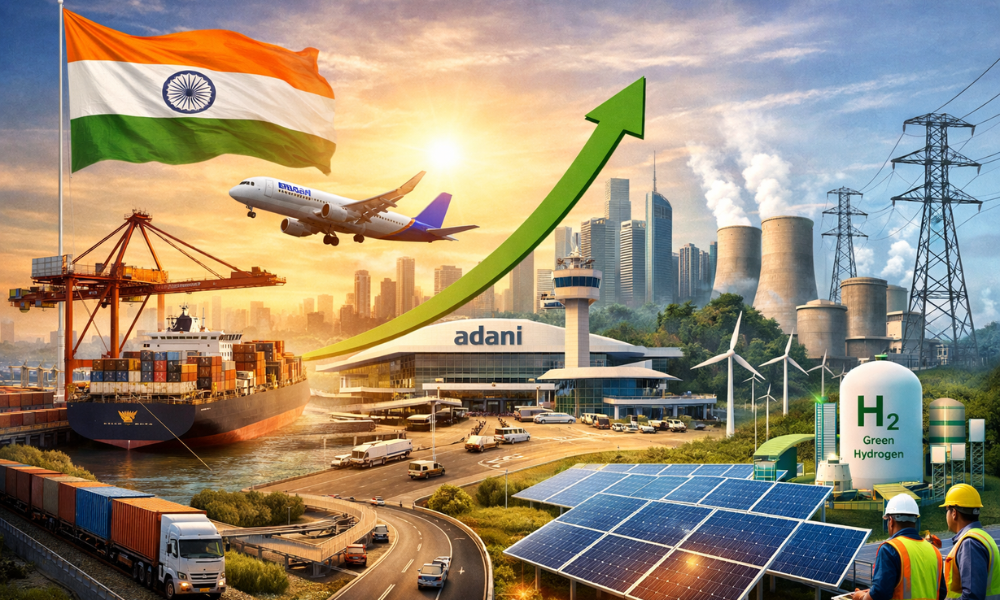
The most significant contribution of the Adani Group to the Indian economy is through its rapid growth in core infrastructure sectors like ports, airports, and logistics. Through Adani Ports and Special Economic Zone (APSEZ), the Adani Group has the country’s largest port network, which helps in the faster movement of goods and reduces logistics costs. The Adani Group’s foray into the airport sector has brought about modernization in passenger and cargo handling, as well as regional connectivity. These changes help the country achieve its vision of becoming a global manufacturing and export center. The group’s efforts in improving logistics have reduced delays, increased the resilience of supply chains, and made Indian companies more competitive in the global market. For a country like India, where logistics costs are substantially higher than the global average, the Adani Group’s integrated model of ports, rail, road, and warehousing is critical to improving trade efficiency and economic productivity.
Energy Transition and Power Security
Adani group has got an important role to play in helping India be economically stable. As part of the energy transition process and ensuring reliability within the power sector, Adani operates in both Thermal Power Generation, Renewable Energy generation (Wind/Solar), Transmission systems and Emerging Green Hydrogen Projects. Although Coal Power continues to provide the base-load demand for the country, Adani’s rapid expansion into Solar and Wind Energy aligns with India’s long-term Clean Energy Objective. Investments in Transmission networks help assure reliable and consistent power sources reach both Industrial and Residential customers. The group’s endeavour into Green Hydrogen indicates a desire to establish India as an industrial leader and potential future exporter of Clean Fuels. Collectively, these initiatives work towards meeting India’s growing Energy needs and are crucial elements for Industrial Growth, Investor confidence and long-term Economic Resiliency through affordability, reliability and sustainability.
Boost to Industrial Growth and Job Creation
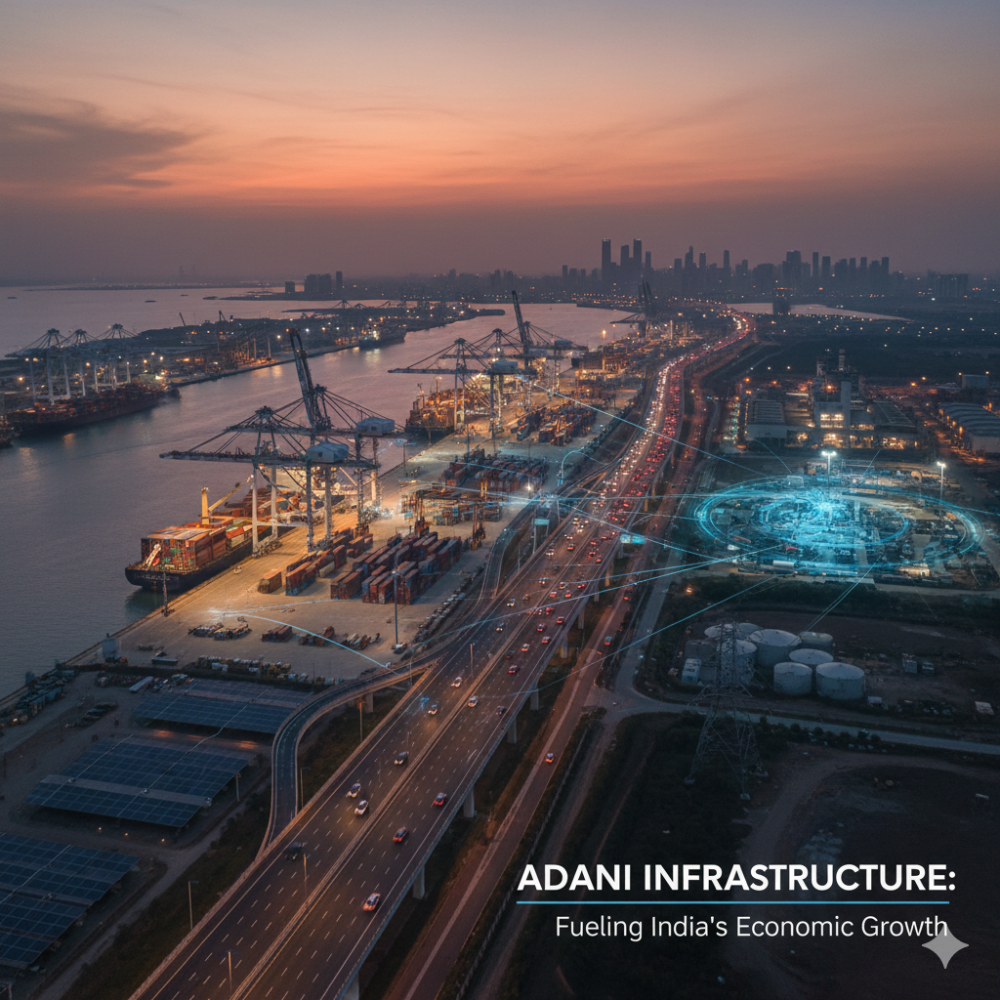
In terms of providing a stimulus for industrial development and creating jobs, Adani Group’s large-scale infrastructure projects have a significant multiplier effect on employment and the overall industry. Improved ports, increased energy supplies, and logistics systems provide manufacturers with efficient supply chains at lower operating costs. In addition to creating jobs directly through construction and long-term job opportunities in operations, maintenance, and support services, Adani Group’s investments also support the Indian Government’s initiatives for Make in India and the establishment of industrial corridors and special economic zones. Through the creation of thousands of jobs, direct and indirect, both while constructing infrastructure projects and as a result of increased demand for ancillary products/services, Adani Group’s infrastructure projects generate an increased level of demand in many other sectors, including steel, cement, engineering, transportation, and services. By facilitating faster project execution and better connectivity, Adani Group’s investments in infrastructure have an overall positive impact on regional economic development, especially in un-developed coastal and industrial regions.
Economic Risks, Debt Issues, and Long-Term Effects
Adani Group’s rapid expansion of infrastructure has resulted in many advantages to the economy. However, there are also several important concerns. The significant expansion has been almost entirely funded by debt which began making investors, regulators and credit agencies concerned, as any financial problems within the Adani group would have serious wider implications due to their significant presence in critical infrastructure. Market concentration, governance, and regulatory compliance risk are also areas that critics have expressed concern regarding; however, if the long term infrastructure assets are managed properly, then cash flow and continued economic growth will occur. The overall impact to the Indian economy will depend on the following: transparency, financial discipline, and a balanced policy framework in which large private companies assist in development of the economy without introducing any systemic risks.
Conclusion
The infrastructure development initiative by Adani Group is a manifestation of the increasing importance of private sector entities in determining the future course of the Indian economy. With the potential to bring about efficiency in the logistics sector, enhance energy security, and promote industrial development, the initiatives undertaken by Adani Group can prove to be a catalyst in bringing about economic prosperity in the country. However, the magnitude of growth and expansion in the infrastructure sector also underscores the importance of prudent financial management and responsible regulation. If properly handled, such major investments in infrastructure can expedite the transformation of the Indian economy into a globally competitive economy.