Amazon Makes Rare Remote Work Exception for Employees Stuck in India Amid H-1B Visa Delays
Introduction
Amazon has made an unusual exception to its standard policy requiring employees to return to the office for those who are stuck in India because of longer processing times for H-1B visas. These affected employees will be able to continue working remotely from India until March 2, 2026, in order to relieve some burden while the backlog continues for visa appointments in US consulates. Many employees who recently travelled back for non-business-related reasons cannot obtain US visa interviews at US consulate offices because they did not schedule them before leaving India, therefore leaving them in a questionable position. This flexibility is not without limitations, and it will be strictly monitored and controlled by Amazon.
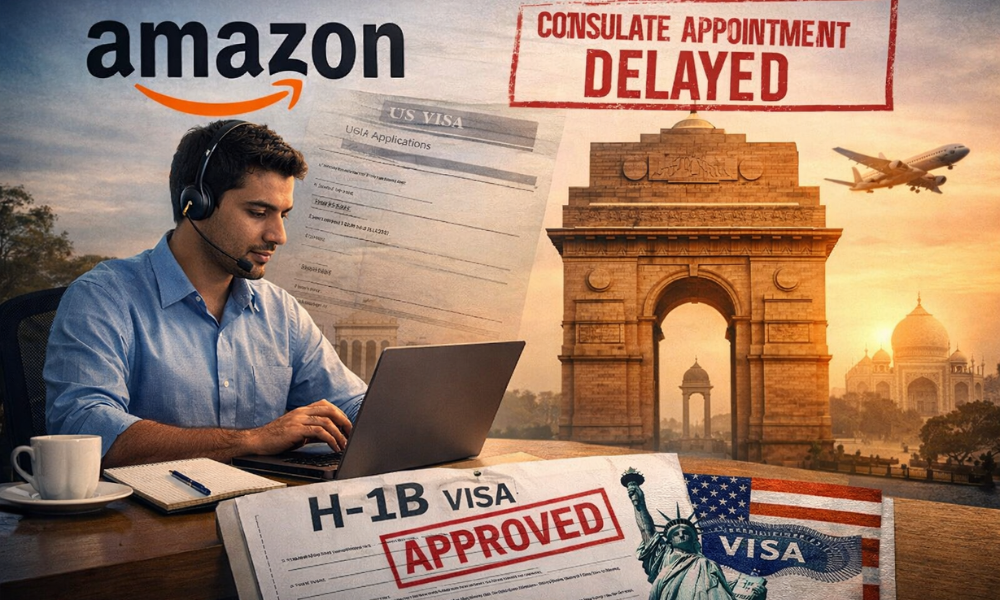
Why Amazon Allowed Work-From-Home for Stranded Employees
Due to the continued backlog of processing H-1B visas, Amazon decided to let select employees residing in India to continue working at home. Several of these employees had travelled to India for personal reasons, and due to the lack of appointments or delays in obtaining an appointment, they could not return to the United States. Because these employees do not have an established timeline for returning to the United States, rather than keep them on leave, Amazon chose to give some of these employees more flexibility. The decision to allow overseas work was a temporary break from the company’s standard five days of returning to the office requirement. In normal situations, Amazon allows employees overseas to work from their home country for a maximum of 20 days. Therefore, extending this period to March 2, 2026, is an exception to Amazon’s general policy. The goal of allowing work from home while waiting for a return from India is to provide business continuity for Amazon while also providing clarity to employees who have been affected by the visa backlog. However, the policy will be temporary until the legal requirements of both the United States and India are satisfied.
Who Is Eligible for This Temporary Remote Work Policy
Employees of Amazon who are impacted by their delay in obtaining an H-1B Visa to enter into the United States, will be able to temporarily work remotely from India. This assistance to employees of Amazon through the temporary work-from-India policy applies to only a limited number of Amazon employees according to the company’s internal memo communicating this information posted on the company’s HR portal. Only those employees who were physically located in India on December 13, 2025, are eligible for this temporary work-from-India policy as of this time. All employees travelling after that date or that are not undergoing an H-1B Visa delay cannot take advantage of this temporary policy. Therefore, any employees who are impacted should remain in close contact with your immediate management team and the HR team, to ensure that you comply with all eligibility and compliance requirements. This targeted approach will help Amazon continue to provide assistance to stranded employees, while allowing it to manage its workforce operations and avoid changes to its attendance policies across the company.
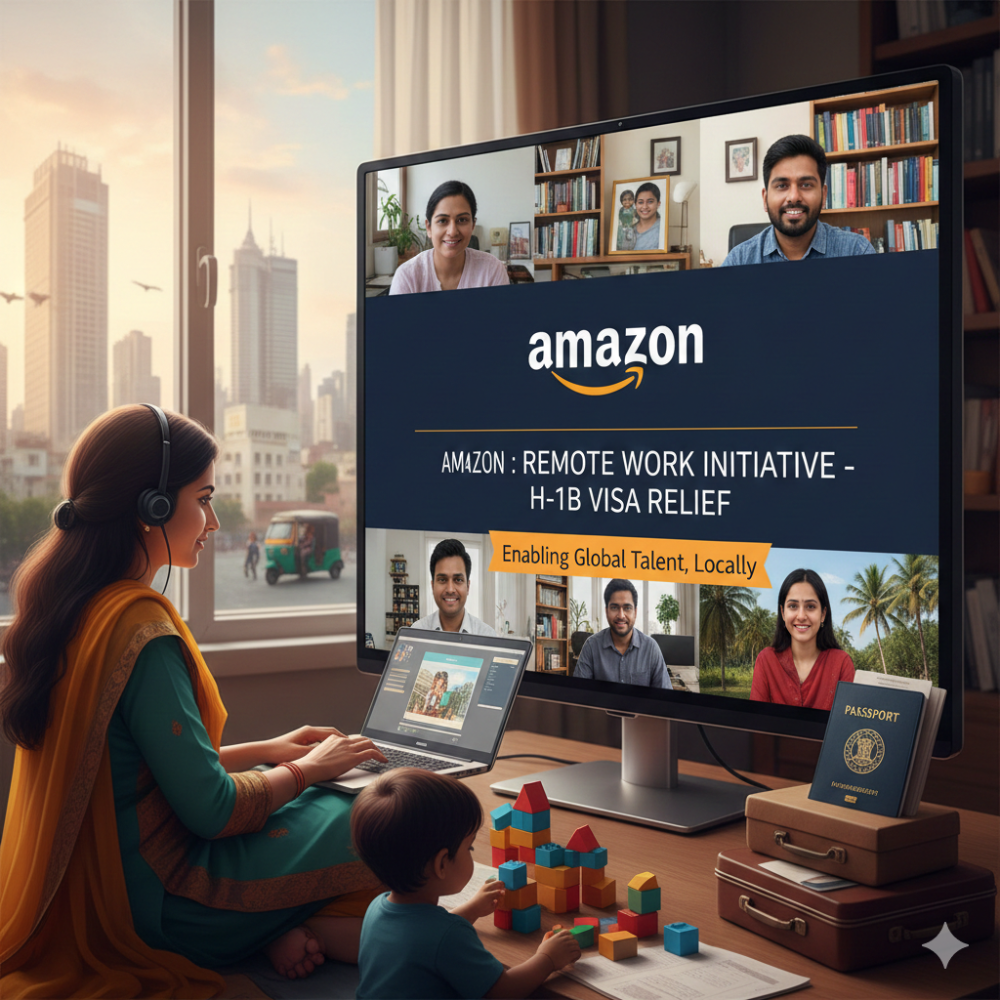
Remote Work Restrictions on Remote Work at Amazon India
Amazon has instituted strict policies regarding the type of work that may be performed by remote employees located in India. The company’s internal communication specifically indicates that employees working from India will be unable to code, test, develop, deploy or provide quality assurance for software products as these activities are specifically prohibited by Amazon. Further, employees will not be permitted to sign contracts or negotiate on behalf of the company. Additionally, employees will not be allowed to supervise a team or make strategic decisions with respect to the company’s operations in India. Finally, while working remotely for Amazon, employees will not be permitted to work from or visit any Amazon facilities located in India during the period of remote work. The internal communication makes clear that reviews, approvals, and final sign-offs must be performed outside of India in order to comply with the United States and India legal frameworks governing such activities. Amazon has also indicated that there will be no exceptions to the prohibitions in place regarding remote work in India and that failure to comply with these policies will have legal or policy ramifications. Employees are to regularly consult with the human resources department to ensure that they remain compliant with company policy.
How H-1B Delays Are Affecting Amazon & Other Technology Companies
At Amazon, the problems that employees are experiencing with respect to their H-1B visas reflect a larger trend within the technology sector in the United States. Delays caused by consular backlogs have created trip disruptions for many foreign nationals employed by many companies and have prompted many companies to issue travel warnings. For example, many companies including Google, Apple, and Microsoft have warned their employees with H-1B visas who have to travel outside of the country not to risk being stuck abroad for an indefinite period of time because of delays in their visa processing. As one of the world’s largest H-1B sponsors, Amazon has been heavily affected by this trend. In fact, during the 2024 Fiscal Year alone, Amazon sponsored 14,783 H-1B applications, which highlights the need for skilled foreign workers in the United States. Although Amazon’s work-from-home policy has provided short-term solutions, it doesn’t resolve the long-term uncertainty created by delays in the processing of visas or the limited availability of visa appointments.
Conclusion
Amazon’s short-term remote working exemption for employees working in India due to ongoing H-1B visa processing delays provides temporary assistance by creating an opportunity to work remotely while maintaining legal compliance and efficient operations. The limitation to March 2, 2026, has limitations but represents an alternative approach Amazon has adopted outside their normal business model for overseas workers impacted by prolonged visa processing delays. These visa processing backlogs significantly impact the way worldwide companies hire internationally and demonstrate that uncertainty continues to exist for H-1B visa holders who rely on the program.