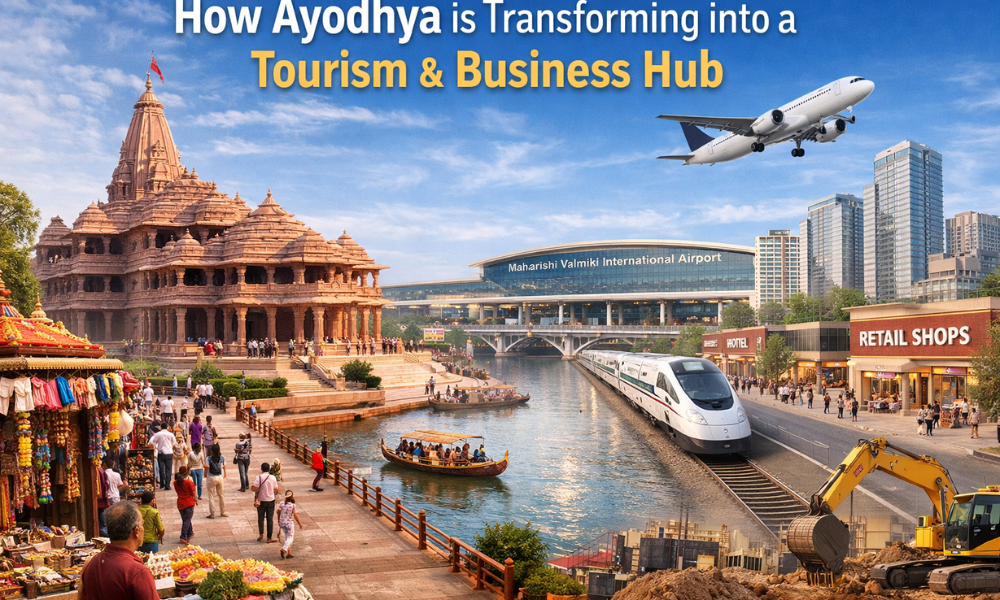
How Ayodhya Is Transforming into a Tourism & Business Hub
Introduction
The city of Ayodhya began primarily as a religious pilgrimage destination before transitioning to a thriving commercial and tourism industry. The establishment of the new Ram Mandir has propelled Ayodhya onto the world tourism market, with millions of tourists coming to the city from all over the country every year, and expected growth of the amount of people visiting from abroad. A significant acceleration in Ayodhya’s growth is currently occurring, as this growth supports all of the activities within Ayodhya. The rapid development out of the business and tourism industry is currently allowing Ayodhya to provide a significant number of new jobs, businesses and investments to satisfy an ever-increasing demand in the local community.
Ram Mandir’s Impact on Ayodhya’s Tourism Boom
The Ram Mandir is now the main driver of tourism in Ayodhya; millions of devotees and visitors from throughout India and elsewhere are visiting annually. Ayodhya was traditionally a seasonal pilgrimage destination, but with the opening of the Ram Mandir, Ayodhya has become a year-round tourist destination. With the rise in visitors, local businesses have benefited from an increase in demand for hotels/motels, transportation service, food service and guided tour services. The increase in visitors has created more income and continuous growth for local shopkeepers, vendors, priests, tour operators, and many others. The temple has allowed visitors to stay in Ayodhya for longer periods; therefore, many visitors are now spending time exploring and soaking up all that Ayodhya has to offer, including its many ghats, cultural sites, and heritage corridors. Festivals, religious events, and spiritual tourism packages have continued to generate economic momentum for the city. The Ram Mandir has strengthened Ayodhya’s spiritual identity and laid a solid foundation for the growth of a sustainable tourism-oriented economy in Ayodhya.
Massive Infrastructure Development Reshaping Ayodhya
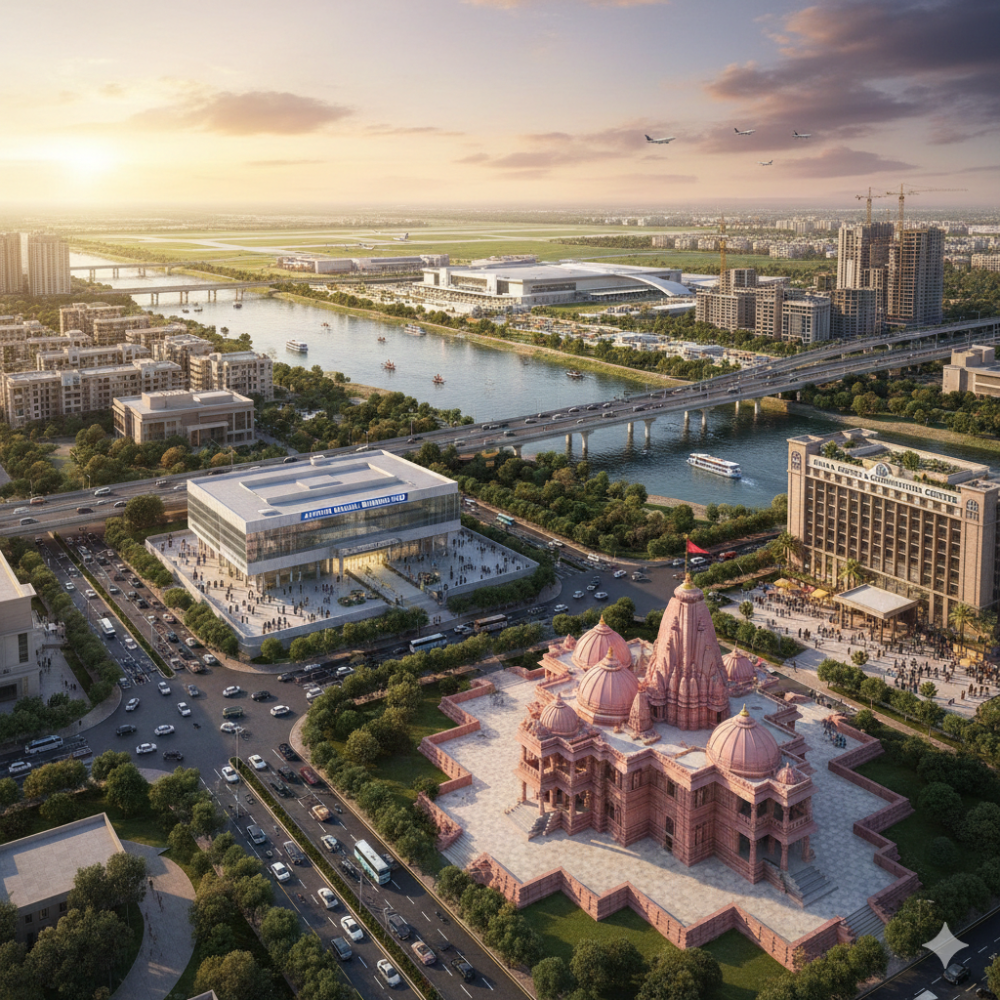
Ayodhya is experiencing a significant transformation in infrastructure development to support the influx of people visiting for pilgrimage as well as the growing urban population. Road widening, construction of flyovers and improvements to existing roads have greatly streamlined visitor access to and through Ayodhya. With the recent expansions of Ayodhya Dham railway station, along with the establishment of Maharishi Valmiki International Airport, it is now easier for people in other major Indian cities to visit Ayodhya. Improvements to the beauty and functionality of the riverfront along the Saryu River; beautification of ghats; implementation of Smart City Projects, amongst many other projects, provide a more enjoyable atmosphere for visitors to Ayodhya. Improved sanitation, greater lighting availability, enhanced public transportation systems and upgraded crowd management systems also make it easier for tourists to visit Ayodhya and improve investment potential for the region. Strong infrastructure is crucial for developing Ayodhya’s potential as a completely built-up urban and economic center.
Rise of Hotels, Retail, and Local Businesses in Ayodhya
To accommodate the influx of visitors to Ayodhya, hotels, guesthouses, dharamshalas (a type of accommodation for Hindu pilgrims), and budget accommodations are being built as demand increases. Restaurants, cafés, roadside stalls (such as sweetshops), and other types of eateries are seeing significant increases in customers throughout the entire year. A number of retail businesses are also experiencing rapid growth, especially those selling items related to religious observance, handicrafts, traditional souvenirs, and other traditional items. The most significant benefactors of this surge in business activity have been local entrepreneurs and small businesses, which have received a sustainable source of income through the growth of tourism, and have provided locals with the potential for employment. In addition, new businesses, such as travel services and logistics companies, are emerging as a result of growing demand. All of these businesses are contributing to the overall modernization of Ayodhya’s economy while preserving its cultural identity. The economy of Ayodhya is gradually developing into a healthy ecosystem in which local businesses based on traditional occupations can coexist and benefit economically along with modern industries.
Ayodhya An Emerging Investment Real Estate Location
As a result of the rapid changes taking place in Ayodhya, there is now a focus by developers to explore real estate development in Ayodhya, with extensive opportunities in the residential, hotel/guesthouse, retail/commercial and mixed-use sectors. There has been significant increase in land values due to enhanced transportation (highways, rail, air) increasing tourist access, and anticipated future development opportunities created through greater government investment in both urban planning and development policy. Additionally, an array of service industries from logistics, transportation and the manufacture of food products; transportation services to support tourism, have begun to receive funding from private sources looking for a return on investment in Ayodhya.
Thus far, the perception of Ayodhya is changing from a religious based city to an economic area of Uttar Pradesh. The continued support from the government for business growth combined with the increasing demand for services, Ayodhya represents a unique opportunity for businesses and investors to get in early on the economic expansion of Ayodhya.
Conclusion
Ayodhya’s transformation from a historical pilgrimage site to a successful tourist and commercial district illustrates how tradition can coexist with modern improvements. Economic value is being produced over the long term by Ayodhya due to the growth of local businesses, infrastructure improvements, and growing investment in the area, as well as the new Ram Mandir temple. As Ayodhya continues to grow in terms of tourism and urban development, it promises to be one of the most important growth centers within U.P. The shifting demographics of the city also exemplifies how cultural heritage may influence sustainable growth in a local area through this economic revitalization.