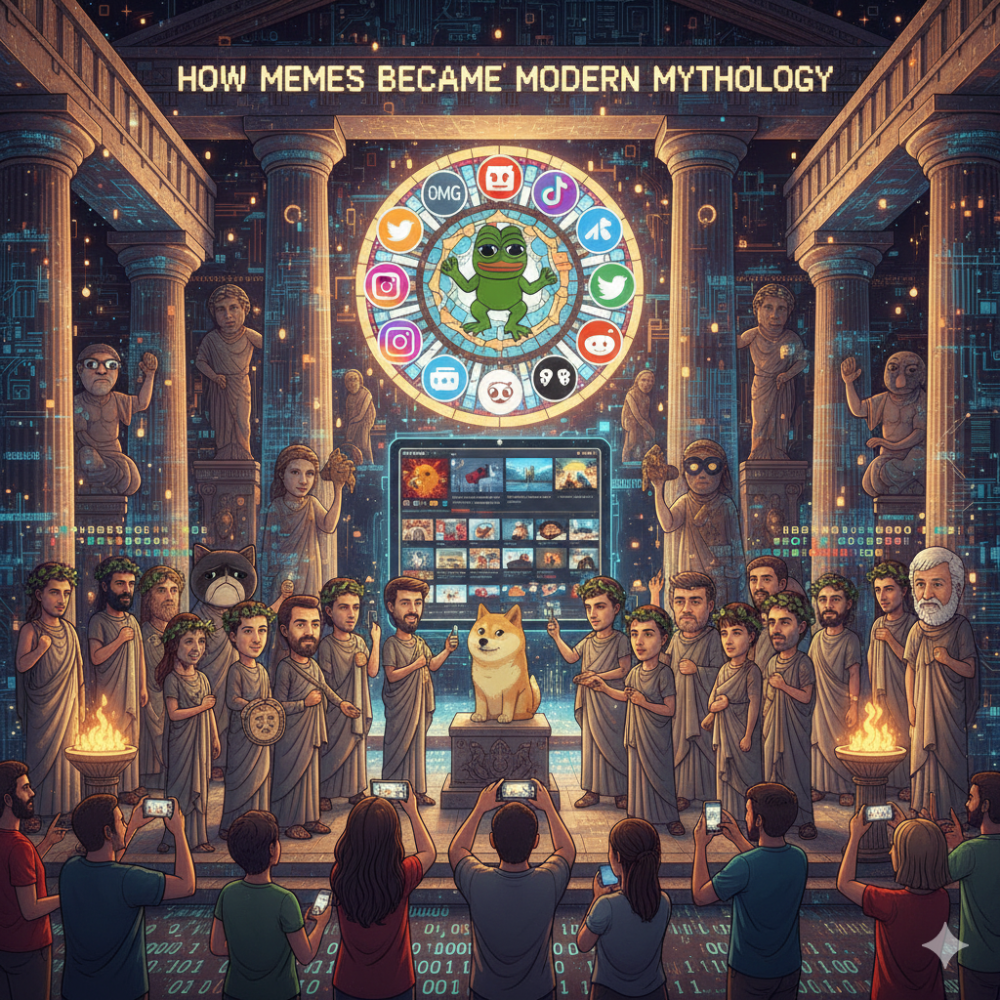
How Memes Became Modern Mythology
Introduction
Since the first memes exchanged online, they have developed into something much greater than one-liners. They create a connection between people through storytelling, by creating a strong sense of attachment and creating shared emotions and laughter. Even though the way memes are interpreted can change when travelling across networks, their meanings remain relevant for all of the societies using them. Memes allow new communication styles to emerge, and allow individuals to connect with people from around the world, regardless of where they come from.
Memes as the New Folk Tales of the Internet
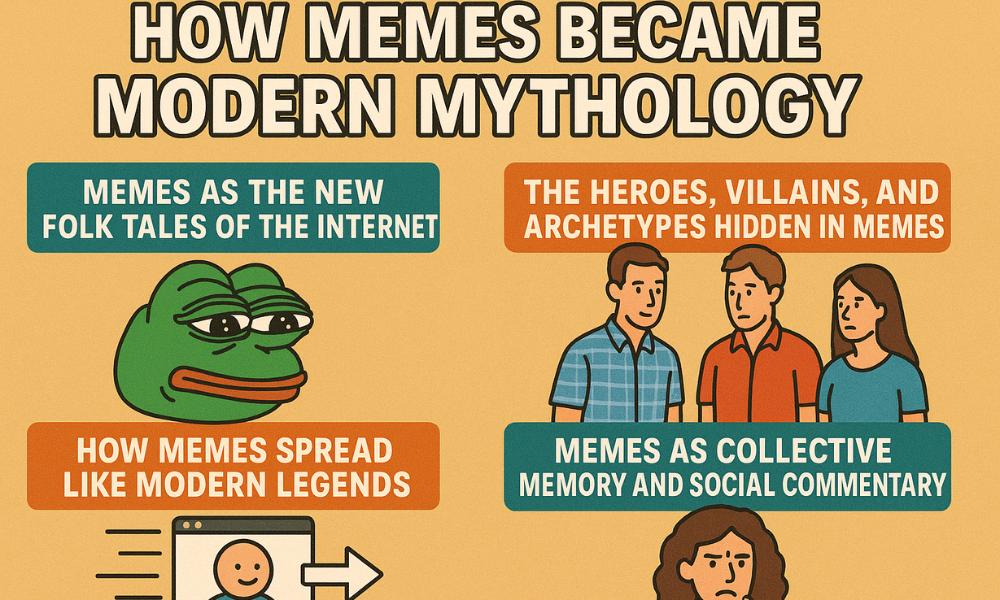
The Internet now utilizes memes as a modern folk tale. Instead of passing on stories verbally around a campfire, we now use our phones to share memes through social media feeds, comment sections, and chat rooms. The power of memes is rooted in their ability to depict our current feelings about everyday events such as work stress, uncomfortable conversations, minor successes, and collective annoyances. A single image or phrase can represent a shared experience that instantly has meaning for everyone. Just as there have been many variations on traditional folktales based on different cultural perspectives, so too will memes take form as they spread across diverse communities. Each adaptation of each meme brings new context and cultural elements from the originating culture, thus providing multiple expressions of the same experience. In essence, the meme becomes a living document that continues to evolve and interpret the events of our everyday lives and remains relevant through time.
The Heroes, Villains, and Archetypes Hidden in Memes
Many memes utilize characters that embody modern day archetypes similar to the gods and divinities found in ancient mythologies. There will always be a hero who has no problems accomplishing his or her goals; the villain whose role it is to bring chaos into our world and finally, the many characters who are experiencing the “everyday” struggles most of us encounter. For example, the distracted boyfriend, confused math lady and unbothered queen are three memes that represent different personalities or emotional states that are universally understood. These memes have become archetypes through both the creativity of the creators and the millions of users’ shared interpretation of them that results in numerous reports of the same meme. They give people the ability to express complicated emotions via images instead of only verbal or written forms. Just as gods and goddesses in mythology do, modern meme culture has utilized recognizable characters to represent emotions beyond simple words.
Memes Are Distributed Like Contemporary Folklore
The transmission of memes shares the same conditional unpredictability that shaped folklore’s dispersion. An individual’s original concept will subsequently propagate across many platforms, geographic regions, and languages—usually within hours. Moreover, each group introduces its own particular twist to the original meme, thus creating multiple iterations and variations, while remaining true to the original content. For example, one version of a meme could be humorous, relating to a student’s life, while other examples could comment on political events, personal relationships, or worldwide occurrences. Much like folklore, the transmission process of memes facilitates transformation and modification as they travel from culture to culture. Additionally, memes gain legitimacy through their repeated exposure; the greater the number of individuals who view and/or share a meme, the more it becomes legitimized and relatable to them. Additionally, the speed with which memes circulate through cyberspace allows the meme to capture cultural information regarding a specific time period and, ultimately, to communicate that information to people throughout the globe.
Memes as Collective Memory and Social Commentary
Memes serve as a collective way for an entire generation to express everything from feelings of economic instability to daily disruptions. The experience of anyone who has been affected by something (i.e. Mental Health) is collectively expressed through memes and creates opportunities for people to work through their feelings in a positive way. When viewing memes from an historical perspective many of them will serve as very valuable sources of information on how people were feeling and/or thinking during this point in time. Additionally, memes can serve as societal commentaries by providing insight into issues of economic hardship, the astoundingly trite things we do in our everyday lives and the enormous wealth difference between the rich and poor. Both the visual nature and the fact that they are created and shared in a very quick way makes them an ideal way to convey ideas about what it is like to live in this time period compared to any other time. Memes are more than just comedy; they provide insight into the shared human experience.
Conclusion
Despite appearing simplistic, memes contain great depths of understanding through their humour. They also provide an avenue for self-expression, allowing for feelings to be expressed; as well as allowing individuals to connect with other people across time and space that they would otherwise never encounter. There are also ways in which memes provide a method for creating and recreating identities, while also providing a framework for, developing and understanding the impact of the digital age of human experience and culture. In this sense, memes can be considered as modern-day myths, in that as long as they continue to be created and shared, we will work together to understand ourselves and what it is to be a participant in our cultures.