How OYO Scaled Rapidly—And What It Learned from Setbacks
Introduction
The growth of OYO is one of the fastest-growing and heavily debated growth stories in the Indian start-up ecosystem. Initially launched as a site for budget accommodations, OYO has evolved into an international hospitality company with multiple operating locations worldwide. However, as a result of their rapid growth, OYO has experienced operational difficulties, conflicts with partners, and mistakes in their strategic direction. The OYO journey also highlights all of the positives of aggressive scaling; however, it is important to recognize that aggressive scaling brings numerous disadvantages, including potential weakness in business practices. In this blog post, we will discuss how OYO grew so rapidly and what they learned through their experiences.
The Asset-Light Model That Drove OYO’s Rapid Expansion
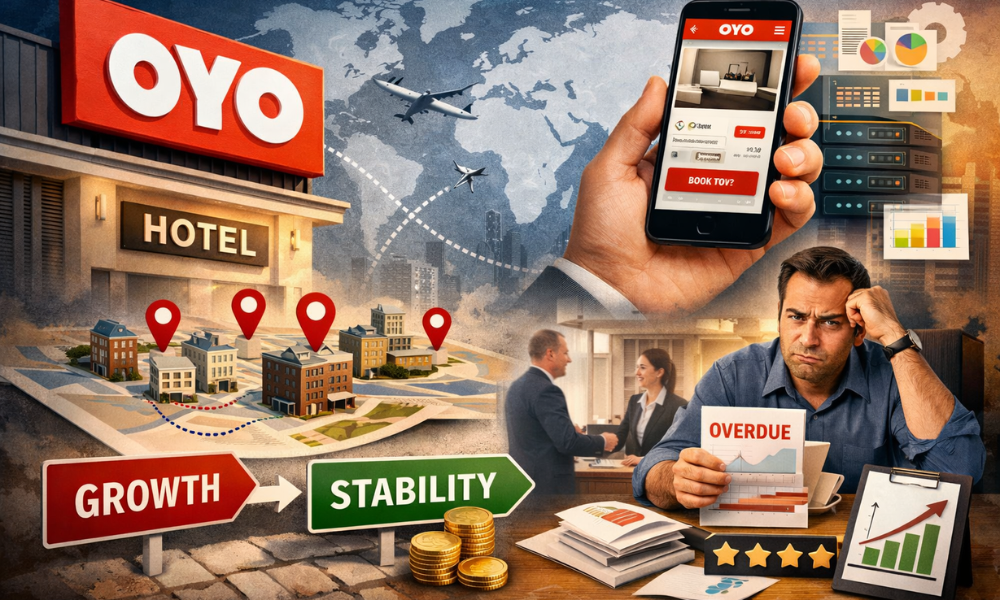
OYO’s rapid expansion was made possible by its asset-light business model, which allows OYO to grow its brand without owning any hotels. Rather than investing in commercial property as traditional hotel chains do, OYO works with small- to medium-sized budget hotels and provides them with a brand name, standard operating procedures, and access to the company’s large customer base. As a result, OYO’s capital investments were considerably lower than those of traditional hotel chains and allowed OYO to expand into new cities and countries much faster than traditional hotel chains. The partnership between OYO and its partner hotels resulted in greater occupancy rates and the ability for OYO to rapidly expand its portfolio of hotels. However, because OYO is reliant upon partner hotels to maintain compliance with OYO’s operational standards and business practices, OYO faced great difficulty in maintaining consistency among thousands of independent properties as the company grew.
Technology as the Backbone of OYO’s Growth Strategy
OYO relied heavily upon technology in order to truly scale its operations. Through an investment in data Analytics, Dynamic pricing algorithms, standardisation of guest experiences through property management software and the use of APIs to enable interconnectivity between their business model and the properties that they partner with, OYO leveraged technology in order to maximise occupancy and revenue from their properties as well as from their partner hotels. In addition, OYO leveraged mobile application technology and a dashboard approach, to allow partner hotels to view on a daily basis (time of day), the amount of bookings received for their property, the current rate being charged for rooms as well as reviews from guests who have stayed at their property, to name a few things. Ultimately this technology focus allowed OYO to streamline its operations by having lean teams on-site focused on execution across multiple markets. There are some drawbacks; for example, Occasional price disputes have arisen as well as communications gaps with partners because of OYO’s heavy reliance on its automated systems for pricing and other market-related issues. Additionally, as OYO’s business continues to grow, it becomes increasingly difficult for OYO to effectively align its technology-driven decisions with the realities that they face on the ground.
Where the Cracks Appeared: Operational & Partner Challenges
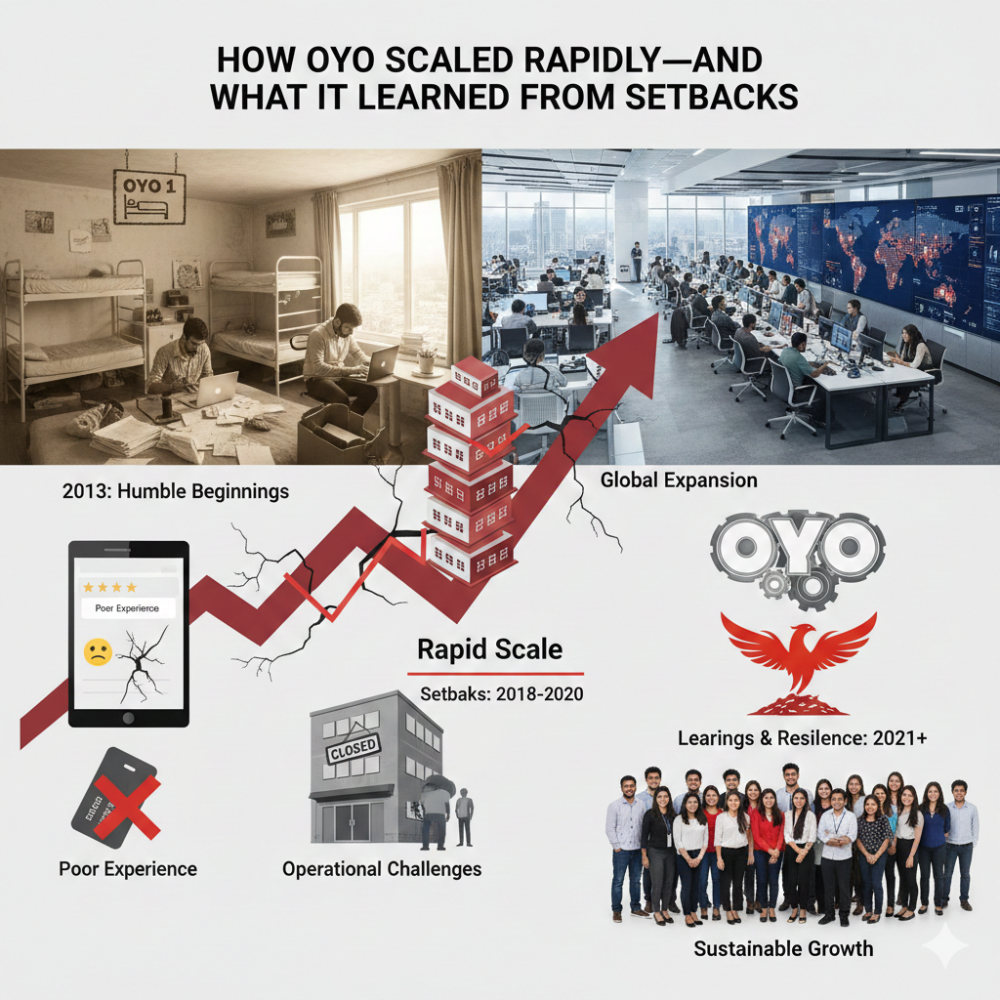
As OYO expanded at a rapid pace, many operational weaknesses were exposed within its business model. A number of partner hotels expressed their concerns about the delays in payments to them, the frequent changes to OYO’s policies, and the aggressive nature of the discounts given by OYO, all of which negatively affected the profitability of the partner hotels. Furthermore, quality control became very difficult for OYO as a large number of properties were unable to consistently maintain the same level of brand standards. Customer complaints were also beginning to accrue regarding the conditions of the rooms and the mismatches in the service provided to the customers versus the customer’s expectations, which caused a decrease in trust in OYO’s brand. In addition, OYO’s expansion into international markets without a deep understanding of the local markets resulted in significant regulatory and operational obstacles. Overall, OYO’s challenges served to reinforce the concept that while it is possible to build scale quickly, the ability to maintain quality and build relationships across that scale requires maintaining a high level of operational discipline and authentic, honest communication with all of its partners.
Corporate Realignment: The Changes OYO Made Due To Difficult Times
After considering the struggles that have negatively affected the company, OYO has now refocused their priorities on sustainable growth over aggressive expansion. In addition to changing its partner agreements and enhancing payment transparency, OYO revised its price structure to lower excessive discounts so as to preserve hotel owner margin. The company has exited many unprofitable markets and re-concentrated on poising itself for success in its core geographical market. OYO also improved its quality assurance and has invested a greater amount of resources towards its on-ground support team to enhance relationships with its partners. A concentrated focus on making a profit and the development of unit economics replaced the previous notion of “grow at all costs.” These actions enabled the company to stabilize its operations as well as build back trust with its various stakeholders. The realignment of OYO provides multiple lessons in business. The first lesson learned is that while expanding quickly may generate a lot of visibility, staying in business over the long term will depend on the ability and willingness of the company to adapt to new conditions, to hold itself accountable, and to find the appropriate balance between leveraging technology for growth versus utilizing labor to execute on its business strategy.
Conclusion
The OYO example illustrates how large growth can create a very large opportunity for a company, but it can also expose weaknesses in an organisation. The company’s focus on improving its learning curve from mistakes and transitioning to becoming sustainable proves that one of the most important factors for success in a business is smart scaling, not the speed of scaling.