India’s EV Charging Infrastructure: The Biggest Roadblock to Mass Adoption
Introduction
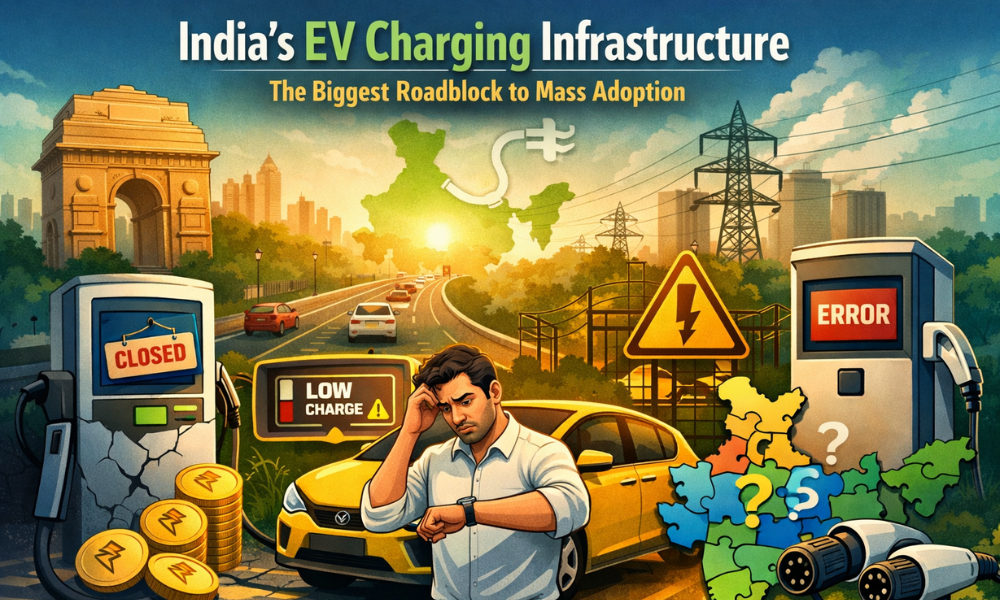
The Indian electric vehicle market is expanding rapidly due to increasing fuel prices, environmental issues, and government support. But the rate of adoption of electric vehicles is not equal in the entire country. The major issue that is hindering the adoption of electric vehicles is the absence of a strong charging infrastructure network. Ranging from range anxiety to the absence of public charging points, infrastructure issues are still influencing consumer behaviour. It is important to understand this hurdle to unlock the electric vehicle revolution in India.
Current Scenario of EV Charging Infrastructure in India
The current scenario of EV charging infrastructure in India is in its infancy stage, given the plans that have been laid out for the development of electric vehicles. Although the government has planned thousands of charging points, the availability of these points is still not adequate. Most of the charging points are available in major cities like Delhi, Mumbai, Bengaluru, and Pune, but the availability in smaller cities and on highways is still a concern. This has further increased the range anxiety among buyers who are interested in purchasing electric vehicles, given that they have to travel long distances. Also, most of the charging points are facing issues like lack of maintenance, reduced operating hours, and unavailability of information regarding the availability of charging points in real-time.
High Costs and Low Returns: Why Charging Stations Struggle to Scale
The establishment of charging stations for electric vehicles (EV) in India requires a significant initial outlay of funds, thus posing a significant scalability issue. The high costs of land in major cities, the expensive fast-charging equipment required, and the cost of upgrading the electricity grid all add up to create a prohibitively high initial cost for institutions that set up EV charging stations. At present, EVs comprise a small percentage of the total number of vehicles on Indian roads, resulting in a lack of utilisation of charging stations and low revenue generation. Because of this imbalance, charging stations have very long payback periods. This, in turn, has led to disinterest from the private sector in aggressively growing their footprint of EV charging stations. The operation of charging stations is complicated further by issues such as high electric tariffs; demand charges; maintenance costs; etc., and these factors contribute to a lack of profitability for charging stations. Unlike with a petrol station, EV charging stations have longer dwell times and, therefore, will have lower turnover and revenue per customer. While there have been limited initiatives by both State and Central governments to offer subsidies to charging station operators, these initiatives are generally not enough to encourage widespread charging station expansion because of delays in implementation. Until the EV market reaches critical mass and the pricing models of charging stations become reasonable, the growth in the number of charging stations is not likely to be anything more than cautious and fragmented.
Challenges to Power and Readiness of the Electricity Grid in India
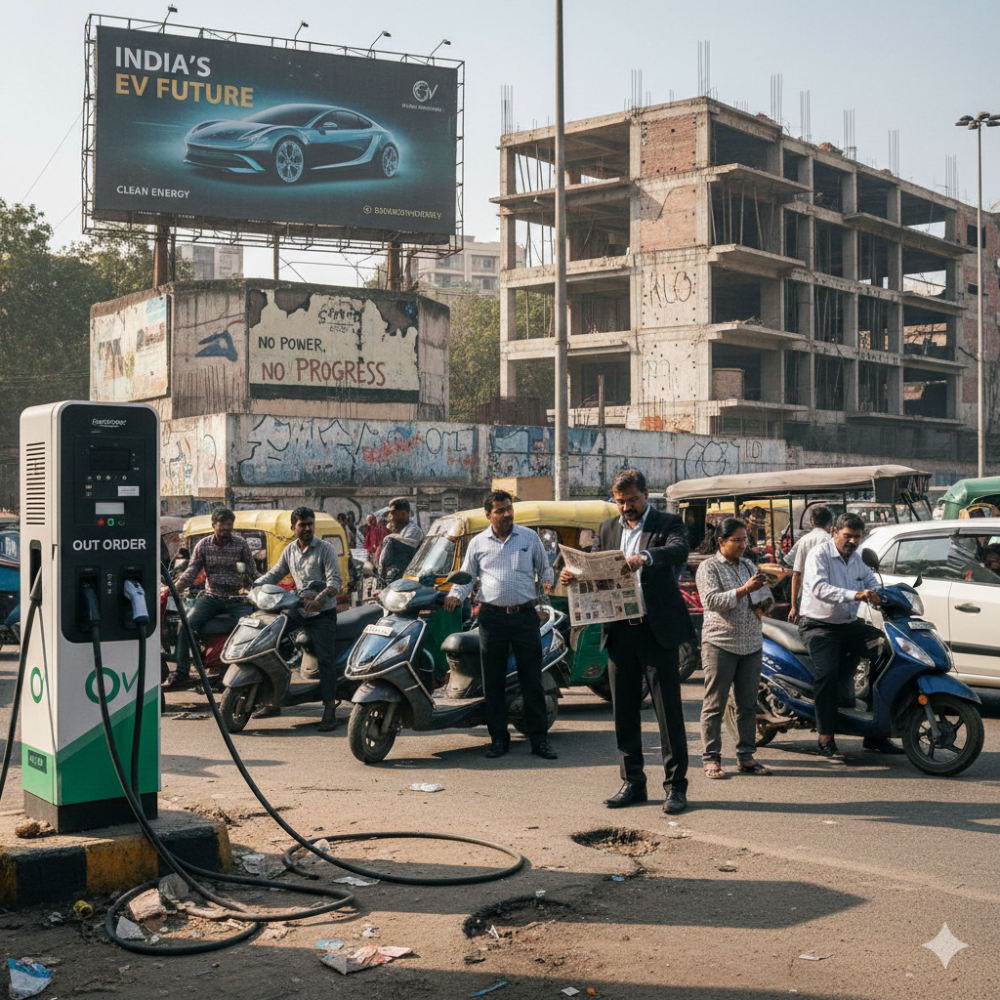
Problems related to the electrical grid in India can be caused by increasing use of electric vehicles (EVs). When millions of EVs charge at the same time, there will not be enough electricity available for that demand. Fast chargers require large amounts of power very quickly and could put serious pressure on existing electrical supply/ distribution systems. In many places, the necessary transformer capacity and/or upgrades to the electrical grid to support widespread EV charging stations do not exist. The reliability of public charging stations is severely impacted by frequent power outages and fluctuations in voltage. If people cannot rely on public charging facilities, their desire to use/rely on EVs will diminish. Lastly, if India continues to rely so heavily upon coal as an energy source, this could have an adverse impact on the environment that EVs are designed to improve. Additionally, if renewable forms of energy can be integrated into EV charging (e.g. solar powered or those supplemented with battery storage systems), this could help reduce the stress placed on the electricity grid, as well as lower the total amount of emissions produced when charging EVs. However, all of these potential solutions will require significant coordination amongst relevant stakeholders, funding for such projects, and changes to the regulatory framework to be established. Failure to strengthen the electrical infrastructure could result in significant barriers to the expansion of EV use in India.
Policy Gaps, Standardisation Issues, and the Way Forward
Although India has national policy support for the EV sector, there are still a lot of issues with how well these policies are being executed and in terms of standardisation of the various network operators that provide EV charging. There is confusion among consumers and operators about the different types of charging standards, connector types and the payment systems used to access these different chargers. This lack of interoperability means that many EV users cannot easily access all the available chargers in their area. There is a significant difference between how different states have implemented policy with respect to incentives, approval processes, and land allocation for charging stations. The government schemes designed to help stimulate EV infrastructure such as FAME and state EV policies have suffered from bureaucratic barriers and delays in their implementation. If India is to progress with the mass adoption of EVs, a national framework is needed that encourages standardisation of charging protocols, faster permitting and attractive investment models. It is also important to facilitate the inclusion of private sector participants in EV charging as well as providing greater opportunities for renewable-based charging and the integration of charging infrastructure into urban planning. By addressing these issues holistically, India can eliminate one of the most significant barriers to mass adoption of EVs.
Conclusion
The EV vision for India cannot proceed at full throttle without a robust charging infrastructure support system in place. It is important to address the challenges related to infrastructure, power readiness, and bottlenecks in policies to instill consumer confidence. With proper planning and coordination, the charging infrastructure can become India’s biggest EV enabler.