New Year’s Eve Strike by Swiggy, Zomato & Gig Workers: Why India’s Delivery Backbone Is Protesting
Introduction
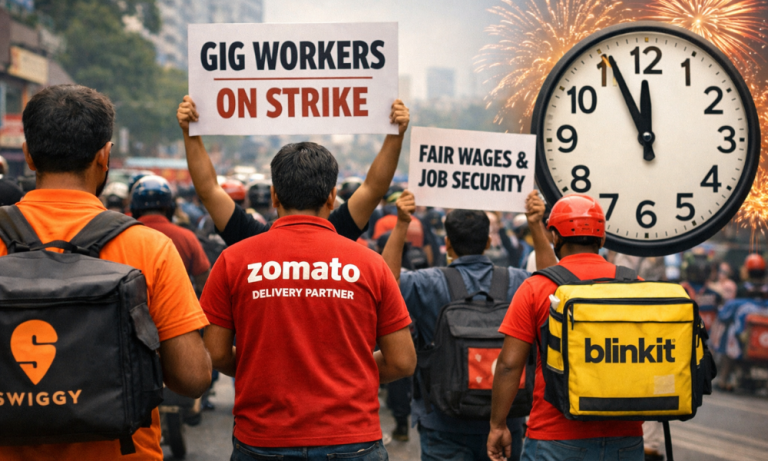
India is getting ready to celebrate New Year’s Day with a potential interruption to one of its busiest online shopping periods by means of a planned nationwide work stoppage from gig delivery drivers. The work stoppage will affect drivers working for Swiggy, Zomato, Blinkit, Zepto, Amazon, and Flipkart. This planned strike is taking place less than a week after similar strikes occurred on Christmas Day and disrupted services in many locations. The primary message behind this strike is concerns over decreased earnings, unsafe working conditions, and the absence of basic social protections for gig workers.
The New Year’s Eve Strike’s Scale and the Platforms Affected
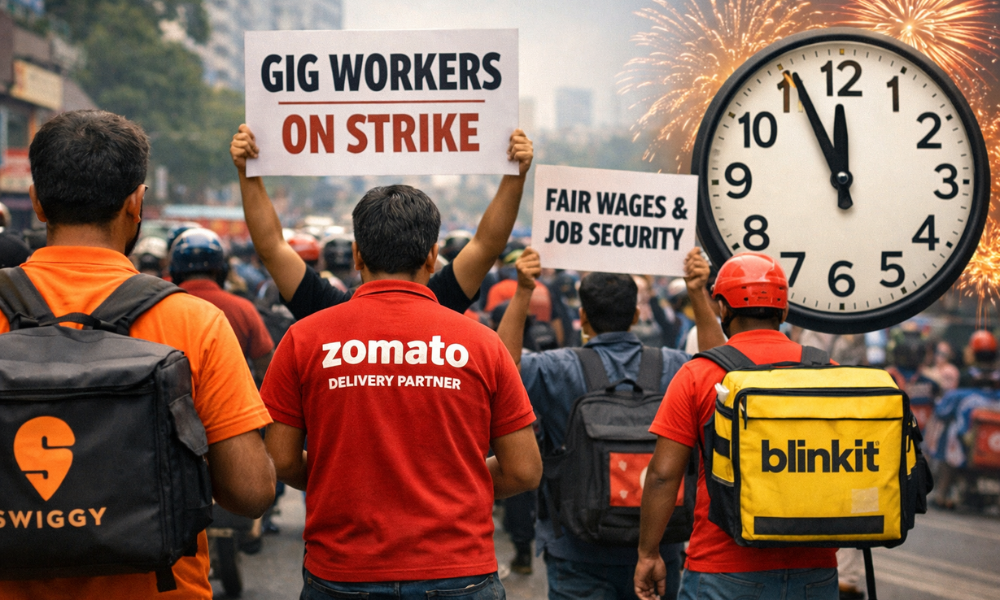
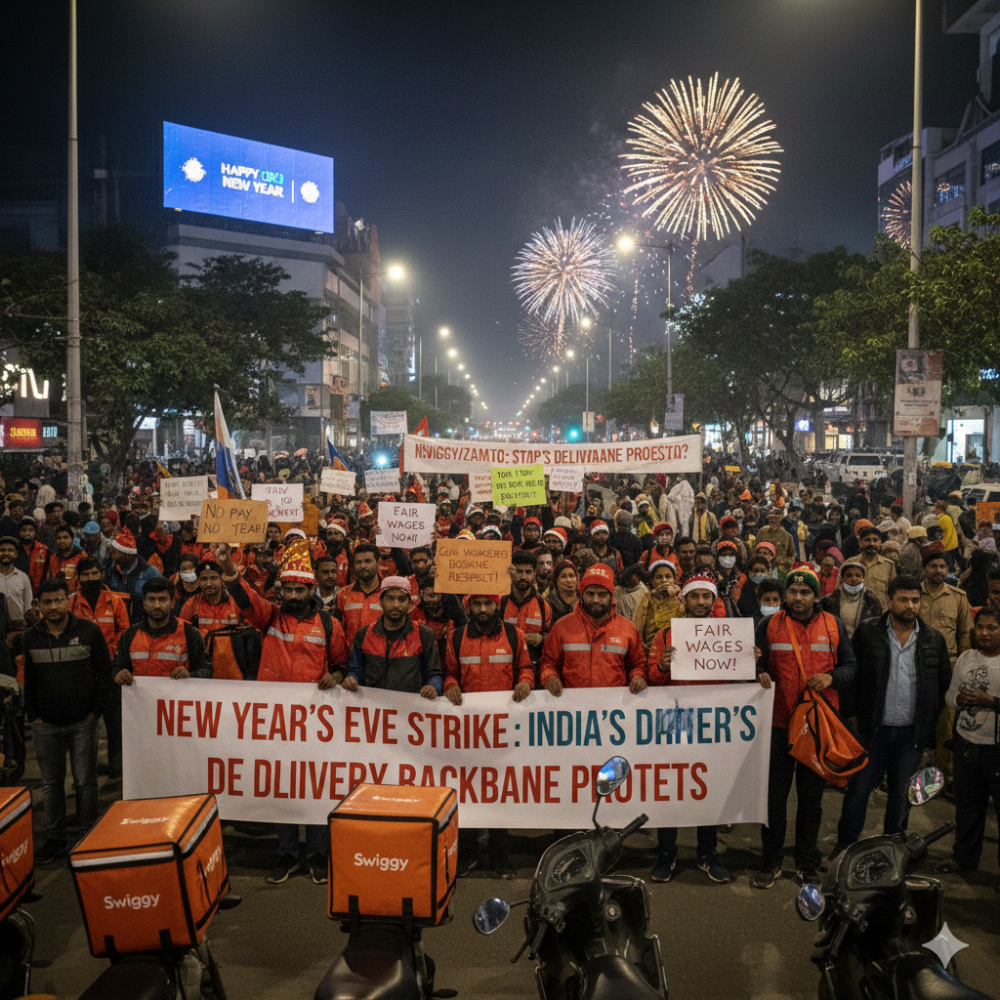
Gig and delivery workers from a variety of states are expected to participate in a widespread protest in the form of a strike on New Year’s Eve. This means they will either log off their apps altogether or greatly reduce the number of deliveries they complete on December 31 as part of this strike. The strike has the potential to impact the services of major platforms — Swiggy, Zomato, Blinkit, Zepto, Amazon and Flipkart — to a massive extent because New Year’s Eve is one of the busiest days for food delivery, grocery orders and other last-minute shopping.
A flash strike held on December 25, 2018 caused service disruptions in several cities of around 50% to 60%. This flash strike’s success has given a glimpse into just how large of an impact the New Year’s Eve strike could have. Cities where significant delays or cancellations are likely include: Bengaluru (Bangalore), Delhi-NCR, Hyderabad, Pune, Kolkata and all other major urban centres plus several tier-2 cities within them. Many consumers and businesses dependent upon last-mile delivery will be impacted by delays and cancellations due to the New Year’s Eve strike.
The Declining Earnings and Identification of Unhealthy Work Models of Gig Workers
The primary reason why gig workers are protesting is due to the increased number of hours and deliveries being assigned to them while the workers’ earnings continue to decrease.
According to gig workers, the timeframes set by gig platforms for deliveries have become radically aggressive and unsafe for the workers. Gig workers claim to be victims of the gig platforms’ use of ‘Mass Identification Blocking’, ‘Temporarily Lifting Accounts’, and Algorithmic Penalties without any due explanation or access to a fair hearing for workers who are laid off. The job uncertainty and lack of respect that gig workers experience continue to contribute to the growing trend of dissatisfaction felt by the delivery partners.
Unions assert that the gig worker population has almost no access to social services such as health insurance, accident insurance, and pensions. Following the December protest, gig workers describe the failure of gig platforms to communicate in a meaningful way and instead use threats and punitive actions to respond to the protests, which has only served to increase the frustration experienced by gig workers, leading to the organisation of another protest at a national level.
Effects on Consumers, Retailers and Platforms
Prior to the New Year, a potential strike has implications for millions of consumers using online platforms to purchase food products, grocery items and party supplies. It is likely delays and cancellations will occur and there may be limited availability of delivery partners affecting multiple cities. As many retailers and restaurants rely heavily on app-based platforms for revenue at the end of the year, their sales could be impacted dramatically due to lost sales from festive season order peaks. Quick commerce and e-commerce businesses who guarantee rapid delivery times may face both operational challenges as well as customer dissatisfaction as a result. A strike could disrupt the flow of business for these companies affecting brand loyalty, trust and experience in the marketplace. With stiff competition within the delivery marketplace, even temporary service disruptions can create loss of revenue and damage to reputation, thus it is an important situation to be aware of by both platform providers and retailers.
Government Intervention, Labour Laws, and the Future of Gig Work in India
The need for government intervention is critical for the gig economy in India according to unions representing gig workers. In a recent letter to the Minister of Labour, unions are demanding that platform companies operate under current employment laws and that dangerous delivery methods promoting extreme speed be prohibited. Unions want clearer wage structures, protection from arbitrary badge blocking, as well as access to social security benefits like health care, workplace injury coverage, and retirement pensions. They have requested that a “trilateral dialogue” between the government, apps/platform companies, and gig worker unions take place as part of this strike. This may be a watershed moment for India’s Gig Economy that has raised many important questions around workers’ rights and the accountability of platform companies. The response of government and app/platform companies to this major strike will ultimately determine the trajectory of app-based employment and labour protections in India.
Conclusion
Gig and delivery workers in India have emphasized long-term issues in India’s rapidly developing gig economy by conducting a strike on New Year’s Eve. Although this strike may result in a temporary interruption for consumers and employers alike, it has generated widespread public awareness of critical issues, such as equitable compensation, secure working environments, and provisions for social security. As gig apps become an integral part of urban society in India, the viability of the platforms will ultimately rest on how they address the concerns of the workers that make them operational. How organisations and governmental authorities react to the information presented during this protest could have a substantial effect on the direction of gig employment in India and on whether continued growth will place worker rights and dignity at risk.