Reliance Retail’s Expansion Strategy: How It’s Dominating Indian Commerce
Introduction
Reliance Retail has proved to be one of the most influential factors in the modern commerce sector in India. With the strength of the Reliance Group behind it, Reliance Retail has managed to change the way millions of Indians shop, both offline and online. Starting from the kirana stores to the large format malls and online platforms, Reliance Retail is creating an ecosystem that reaches out to every consumer in the country.
Omnichannel Model: The Best of Both Worlds Online and Offline
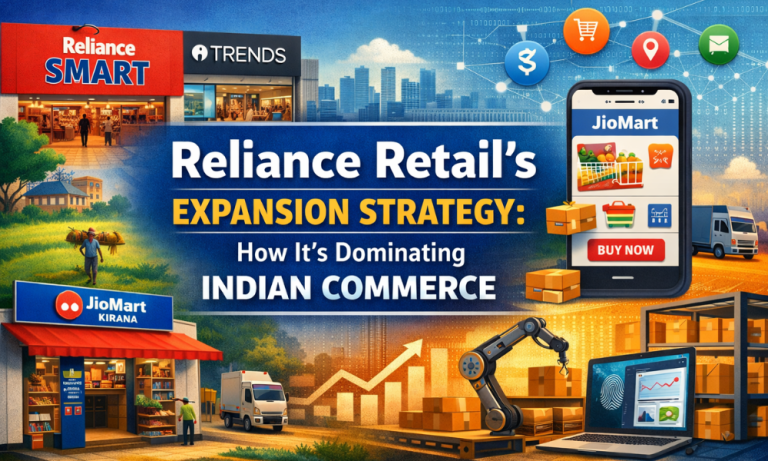
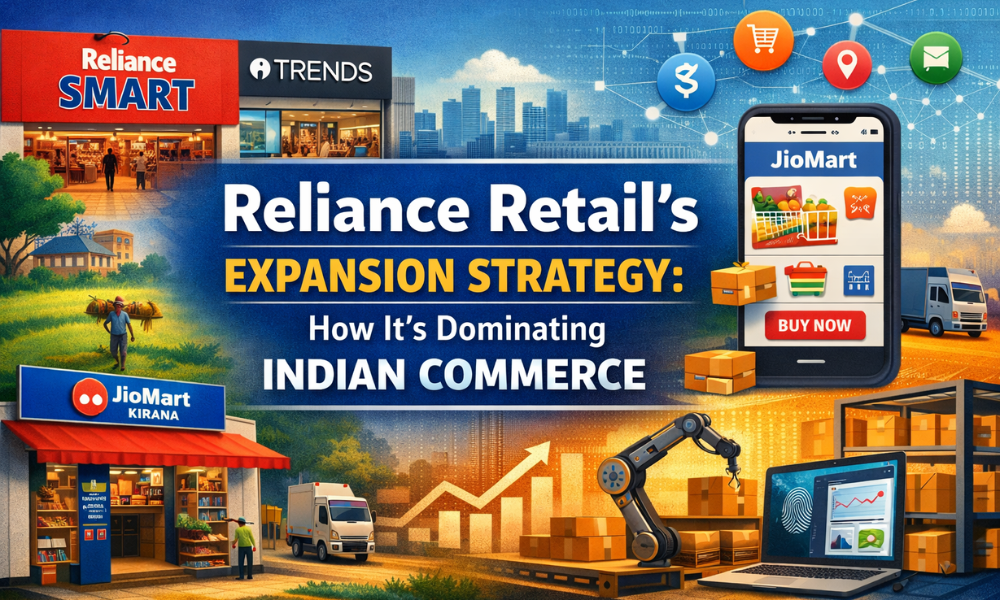
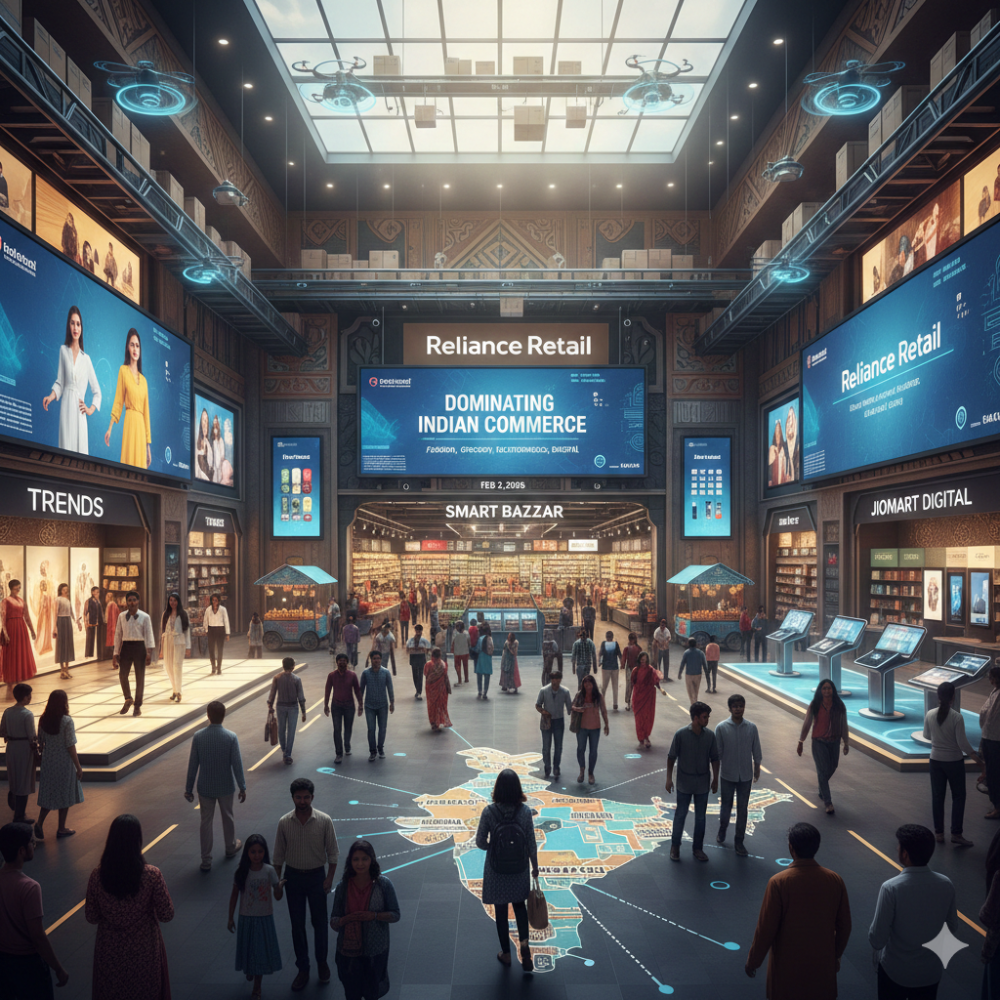
The omnichannel retail model of Reliance Retail is one of its strongest points in the Indian market. With its extensive offline store network and online platforms such as JioMart, Reliance Retail provides consumers with the best of both worlds: online ordering, offline pickup, home delivery, and assisted purchasing. The hybrid retail model of Reliance Retail meets the varied demands of Indian consumers, who on the one hand trust their local stores and on the other hand are increasingly looking for convenience. The partnership between Reliance Retail and Kiranas further enhances this retail model by digitizing the neighborhood stores and integrating them into the Reliance Retail supply chain. This hybrid retail model enables Reliance Retail to expand much faster than its online and offline counterparts.
Aggressive Store Expansion Across Urban and Rural India
Expansion of stores throughout the cities and towns of India has been a key factor in establishing Reliance Retail as a leader in Indian commerce. There are more than 1,000 locations operating under various brands, including Reliance Smart, Smart Bazaar, Trends, AJIO Exclusive Stores, and JioMart Kirana. Reliance has aggressively pushed into the Tier 2, Tier 3 and rural markets compared to its competitors, who have mainly focused on metropolitan areas. This increased penetration will give Reliance access to the next phase of consumption growth in India. By creating smaller store formats to cater to local consumer needs, Reliance can keep its cost down and still have volume. By being first to establish an offline presence in the growing areas of India, Reliance will gain customer loyalty and brand recognition. In addition, the wide geographic footprint of Reliance supports greater supply chain efficiency, thereby providing faster replenishment times and reducing logistics costs throughout different areas of India.
Private Labels and Pricing Power
Reliance Retail is making good money off their private labeling or their own brand products. They have developed a large number of in-house branded items across grocery, clothing, footwear, electronics and household products that offer good value but are priced competitively compared to third party brands. This reduces Reliance’s dependence on other companies that sell similar products, thus allowing them more control over the pricing, margins and inventories of these items. Consumers in India, particularly those with limited income or budget, will find their private label offerings to be comparable to those of leading national brands and provide them with affordable options without the sacrifice of quality. The fashion vertically, specifically the Reliance Brand names of Reliance Trends and AJIO, have become very popular with value conscious and younger shoppers. By utilising their size and economies of scale, efficient purchasing methods, and future demand/need forecasting data, they are able to discount price their private label offerings while still making a healthy profit margin making it difficult for both traditional and internet-based competitors to compete.
Jio Ecosystem Advantage and Reliance Retail File Data and Technology
Reliance Retail has access to a powerful technological advantage through its integration with the larger Jio ecosystem. This enables access to millions of Jio customers, who can then use data analytics for gaining insights into the buying habits of consumers, predicting consumer demand and personalising their offerings. In addition, advanced supply chain technology, such as AI-driven inventory management and automated warehouse systems, allows for waste reduction and improved operational efficiencies. Digital payment methods, loyalty program options and mobile application engagement help further strengthen customer loyalty. Reliance can offer products and services across a wide range of industries at scale through the synergies created between that of the telecommunications industry, digital services and retail. This ecosystem approach significantly reduces Reliance’s customer acquisition costs and creates an environment where switching costs are very high. As technology continues to be adopted by consumers throughout India at an increasing rate, Reliance’s data-driven retail model will position them to dominate the marketplace for the foreseeable future.
Conclusion
The success of Reliance Retail is not based on a single approach but on a highly effective mix of scale, technology, and understanding of the market. Through the integration of online and offline shopping, aggressive expansion across geographies, development of robust private labels, and leveraging the Jio ecosystem, Reliance Retail has developed a retail business model that is best positioned for the Indian market. With the continued growth of consumer demand beyond the metros and the acceleration of digital adoption, Reliance Retail is poised to further consolidate its position and define the future of Indian retail.