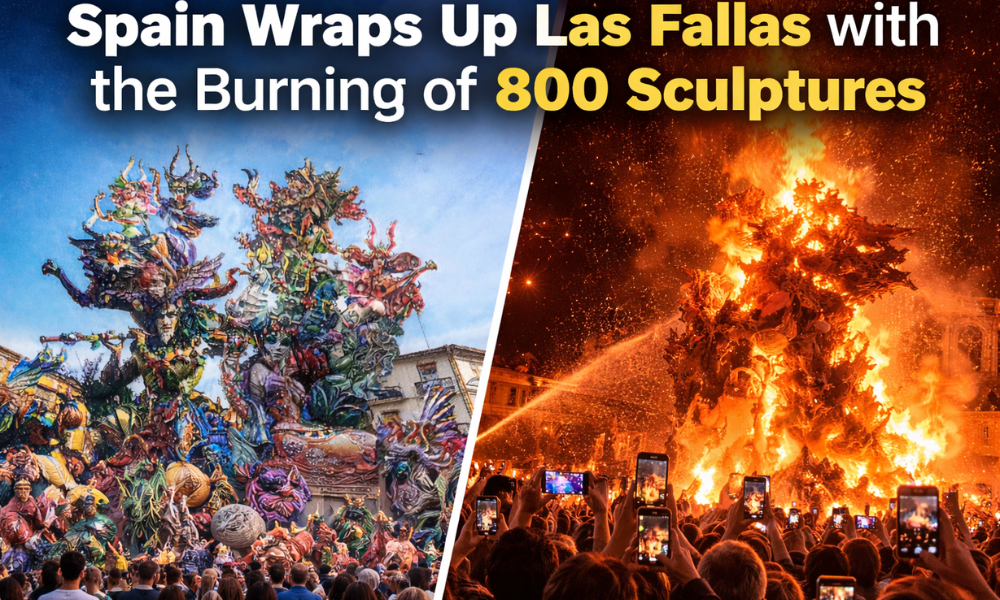
Spain Wraps Up Las Fallas with the Burning of 800 Sculptures
Introduction
Every year, the vibrant city of Valencia in Spain transforms into a spectacular stage of fire, art, and tradition during the world-famous Las Fallas festival. In 2026, the festival concluded in grand fashion, with the dramatic burning of more than 800 intricate sculptures, marking the end of days filled with creativity, celebration, and cultural pride.
A Festival Rooted in Tradition
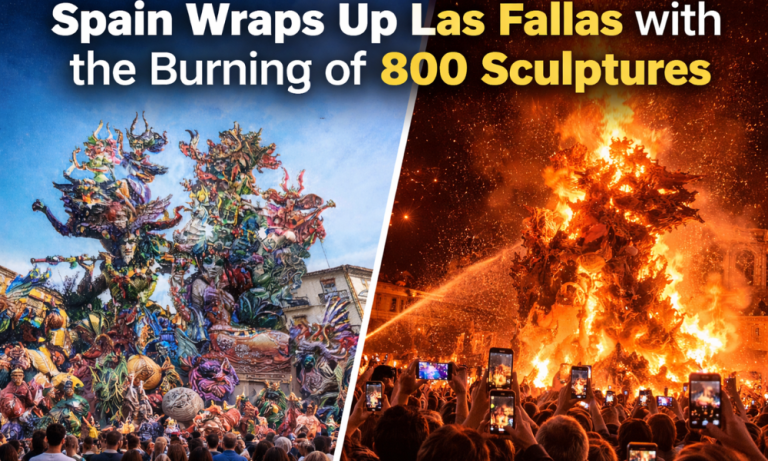
The origins of Las Fallas date back to the 18th century, when local carpenters in Valencia burned leftover wooden materials at the end of winter to welcome spring. Over time, this simple act evolved into an elaborate cultural celebration featuring large artistic monuments known as “fallas.” Today, these sculptures are not just piles of wood but massive works of art crafted from papier-mache, wood, and other materials.
The festival has grown into one of the most iconic cultural events in Spain, attracting visitors from across the globe. It is even recognized by UNESCO as an Intangible Cultural Heritage, highlighting its importance in preserving tradition and community spirit.
The Art of the Fallas
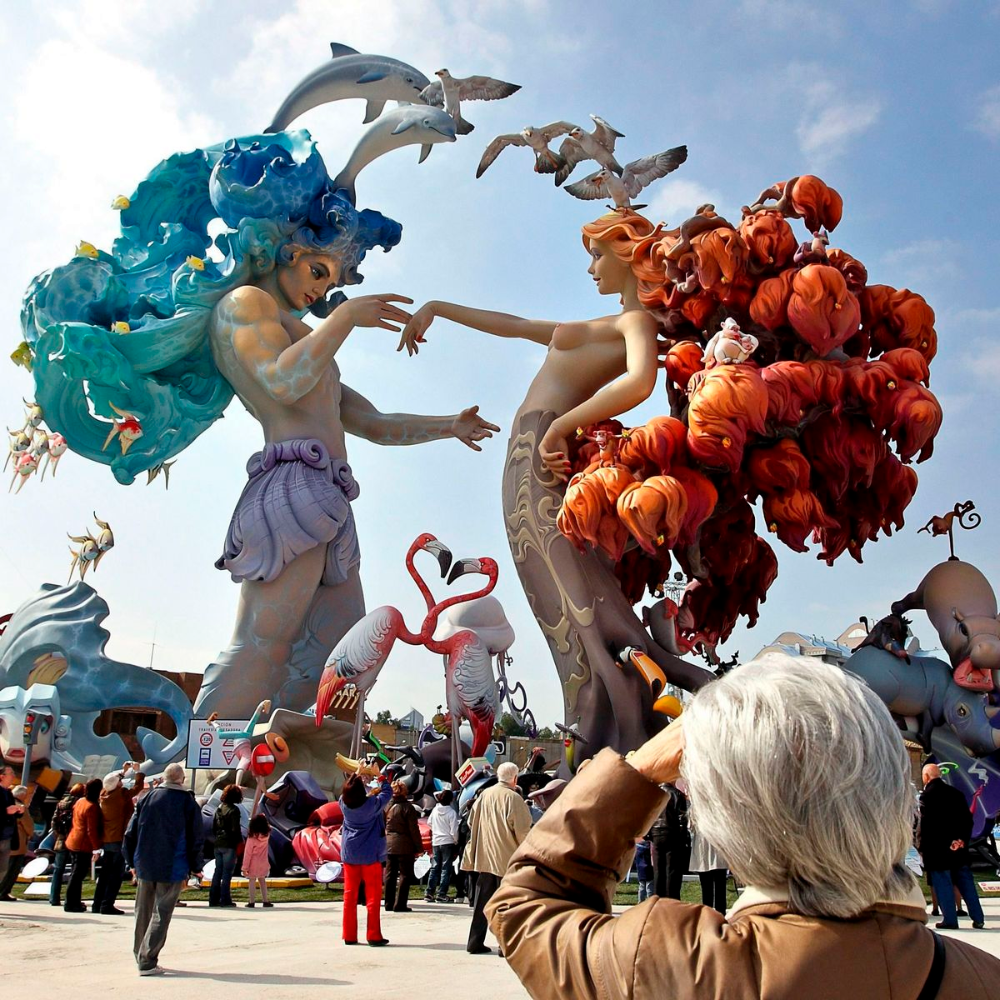
One of the most captivating aspects of Las Fallas is the incredible craftsmanship behind each sculpture. Artists spend months designing and building these towering figures, often reaching heights of over 20 meters. The fallas typically depict satirical scenes, political figures, celebrities, and fictional characters, offering commentary on current events and social issues.
The level of detail in these sculptures is astonishing bright colors, expressive faces, and intricate designs bring each piece to life. Neighborhood associations compete to create the most impressive fallas, making the festival both a cultural and artistic competition.
The Fiery Finale: La Crema
The highlight of the festival is “La Crema,” the final night when all the fallas are set ablaze. In 2026, over 800 sculptures were burned across Valencia, lighting up the night sky with flames, sparks, and emotion.
Crowds gathered in the streets, watching as months of artistic effort disappeared into fire within minutes. While it may seem surprising to destroy such beautiful creations, the act symbolizes renewal, letting go of the past, and embracing new beginnings. The burning also reflects the festival’s deep-rooted philosophy: nothing is permanent, and beauty can be found even in fleeting moments.
A City Alive with Celebration
During Las Fallas, Valencia becomes a city that never sleeps. The streets are filled with parades, traditional music, fireworks, and the constant sound of firecrackers known as “mascleta.” Locals and tourists alike immerse themselves in the festive atmosphere.
People dress in traditional Valencian costumes, showcasing the region’s rich heritage. Food stalls line the streets, offering delicious local dishes such as paella, churros, and bunuelos. The festival is not just about fire it is a complete sensory experience of sound, taste, color, and emotion.
Cultural and Economic Impact
Las Fallas plays a significant role in boosting tourism and the local economy of Valencia. Hotels, restaurants, and businesses see a surge in visitors, making it one of the most economically impactful events in the region.
Moreover, the festival strengthens community bonds. Each neighborhood collaborates to create their fallas, fostering teamwork, creativity, and a shared sense of pride. It is a celebration that unites people of all ages and backgrounds.
Symbolism Behind the Flames
The burning of the fallas is deeply symbolic. It represents purification and renewal, much like other fire festivals around the world. By turning art into ashes, participants symbolically release negativity and welcome a fresh start.
This unique tradition also teaches an important lesson about impermanence. Despite the time, effort, and resources invested in creating the sculptures, they are willingly destroyed, emphasizing that the journey and the experience matter more than the final product.
A Global Attraction
Over the years, Las Fallas has gained international recognition, drawing thousands of tourists to Valencia. Visitors come to witness the grandeur of the sculptures, the intensity of the fireworks, and the emotional impact of the final burning.
The festival’s unique blend of art, culture, and tradition makes it a must-see event for travelers seeking an unforgettable experience in Spain.
Safety, Planning, and Organization
Behind the dazzling spectacle of Las Fallas lies careful planning and coordination. With hundreds of large structures being set on fire across Valencia, safety is a top priority. Local authorities, firefighters, and volunteers work together to ensure that each burning event is controlled and secure. Designated safety zones are created, and crowds are managed efficiently to prevent accidents.
Each falla is strategically placed and later burned in a planned sequence, allowing emergency teams to supervise the process closely. Fire-resistant materials and controlled ignition techniques are often used to ensure that the flames do not spread beyond intended areas. These precautions make it possible for thousands of people to enjoy the festival safely.
Looking Ahead
As one edition ends, preparations for the next Las Fallas begin almost immediately. Artists start conceptualizing new designs, often inspired by current global events, cultural trends, and social themes. This continuous cycle of creation and destruction keeps the festival dynamic and relevant.
The enduring charm of Las Fallas lies in its ability to blend tradition with modern expression. Each year, it not only preserves the cultural identity of Valencia but also reinvents itself, ensuring that future generations continue to celebrate this fiery and fascinating heritage.
Conclusion
The 2026 edition of Las Fallas once again proved why it is one of the most extraordinary festivals in the world. With the burning of over 800 sculptures, the event concluded in a breathtaking display of fire and emotion.
From its humble beginnings to its current global fame, Las Fallas continues to celebrate creativity, community, and the beauty of tradition. As the flames die down and the ashes settle, the spirit of the festival lives on, promising another year of artistry and celebration in the heart of Valencia.
About the Author
MANSI KAILA