US Tightens Marriage-Based Green Card Rules: Cohabitation and Proof Now Crucial
Introduction
Historically, marrying a US citizen has been one of the easiest ways for foreigners to obtain a Green Card in the United States. Lately, however, American Immigration Attorney Brad Bernstein issued several warnings about changes to immigration enforcement during the last Administration. In particular, there have been increased enforcement efforts on marriages (especially in regard to immigrant marriages). Immigration agencies no longer just take your word for it that your marriage is “real.” You now need to show evidence that your marriage exists and that it continues to exist through your engagement in ongoing daily activities together.
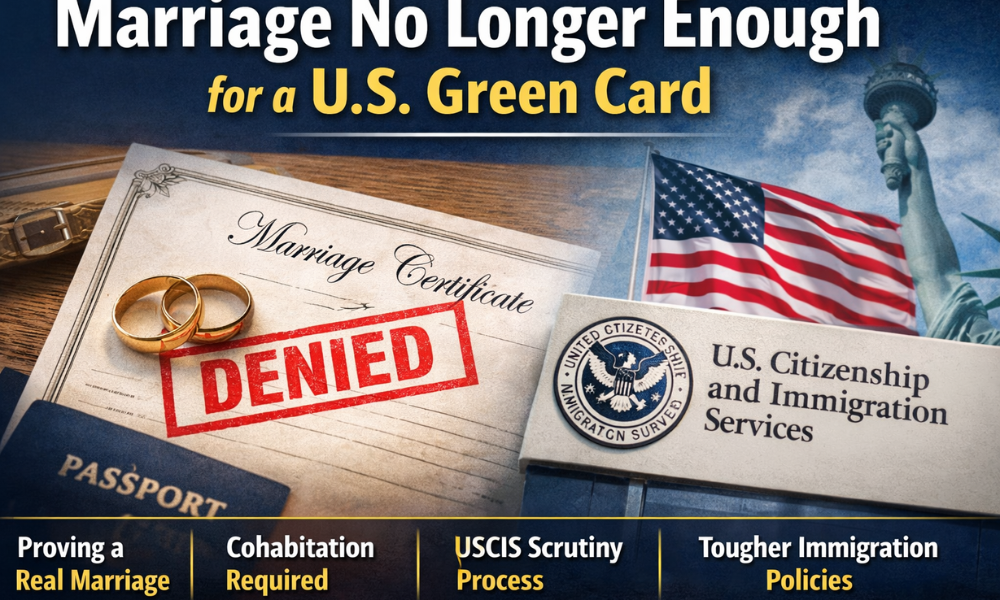
Marriage-Based Green Cards: Why Legal Marriage Alone Is No Longer Enough
The concept of using U.S. citizenship as a path to acquire a Green Card through a spouse has historically been seen as a reliable means of achieving immigration status. Although U.S. Immigration laws still permit spouses of U.S. citizens (i.e., “immediate relatives”) to file immigration applications, there has been substantial change to the processes which U.S. Immigration personnel use to evaluate those applications. According to immigration attorney Brad Bernstein, a legal marriage certificate is no longer sufficient to ensure a successful application for immigration status. The focus of U.S. Immigration authorities has shifted away from simply inspecting the paperwork and instead toward determining whether a couple entered into the marriage in order to facilitate obtaining immigration benefits. A legal marriage can be deemed invalid by U.S. Immigration authorities due to the intent of the applicant. Consequently, applicants must now provide considerable documentation, such as proof of an ongoing relationship, prior to approval for an application. While U.S. Immigration law continues to permit marriage as a possible method of applying for immigration benefits, the types of evidence required to substantiate that application must be far more compelling than merely existing on paper.
Cohabitation as a Indicator of a Valid Marriage
According to immigration experts, couples who are sharing a home (cohabitate) can be more sure of their prospects with respect to immigrating to the United States as husband and wife than those couples who are not cohabiting (i.e. living together). Immigration officers, as a rule, do not accept “work,” “school,” or “financial issues” as valid excuses for couples living apart. From the viewpoint of the immigration officer, a valid marriage consists of partners living together and participating fully in each other’s daily lives. If a couple cannot prove this, the immigration officer will most likely conduct an extensive background investigation, including site visits and comprehensive interviews. Cohabitation is a good way for couples to show the immigration officer their emotional, financial and social integration – these are critical elements in demonstration of a bona fide marriage. A couple’s joint leases, utility bills, shared address and everyday life provide the immigration officer with tangible evidence of a marriage relationship. In the current, more restrictive immigration environment, a couple’s cohabitation must be a requirement for an adjustment of status based upon marriage.
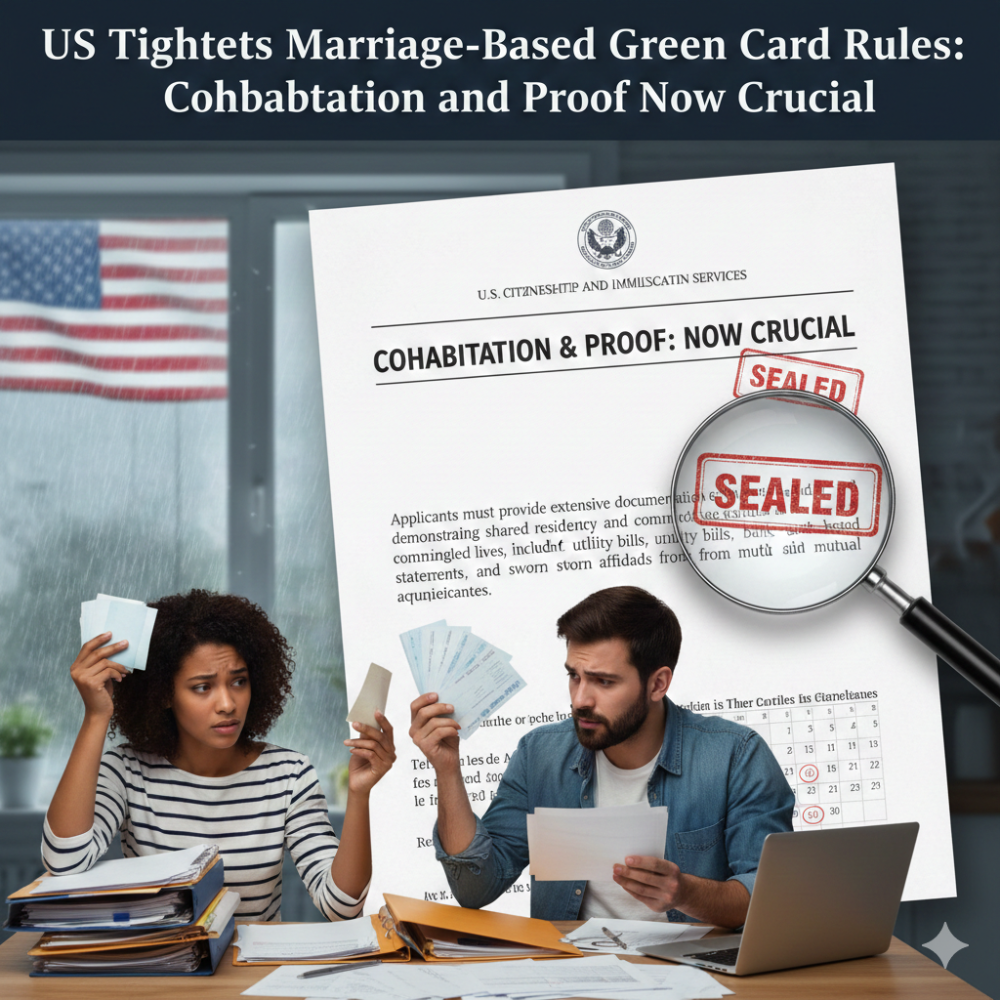
How USCIS Determines a ‘Genuine’ Marriage
USCIS assesses whether a married couple is genuinely and legally married based on the totality of their circumstances at the time of the marriage as evidenced through documentation and other evidence submitted. Officers will evaluate evidence such as communication history, shared finances, joint bank accounts, photos of the couple together, etc.; they may also ask for affidavits from friends and family members who support the couple as well as interview the couple separately to confirm their responses match.
USCIS policy provides that even a legally valid marriage can be denied if there was no intent to live together in a genuine manner. USCIS officers receive training on identifying indicators of marriage fraud, including but not limited to: lack of consistent responses from couples or lack of shared responsibilities in the marriage. It is important to understand that the purpose of this policy is not to question the existence of love but rather to protect individuals from utilizing a marriage as a way to avoid immigration laws.
Increased Immigration Restrictions in the Trump Presidential Administration
The increased scrutiny of marriage-based Green Cards is, therefore, only one aspect of a broader evolution of US Immigration Policy under the current administration. Various channels of legal immigration, such as the Diversity Visa Lottery, have seen strict regulation, with greater scrutiny of Green Cards regarding the duration of employment authorization documents. Additionally, there has been increased scrutiny of those with permanent residency status in countries deemed to be ‘Countries of Concern.’ Increased scrutiny of marriage Green Cards means that these are now inspected under the same vigilant standards. Increased investigation, greater duration of processing, and an uptick in denials are thus no longer exceptional. For hopeful immigrants, therefore, there is greater preparation, greater documentation, or, perhaps, representation. The clear takeaway here is that immigrants are now being selected more selectively, with authenticity and compliance paramount rather than tradition.
Conclusion
A marriage-based Green Card is no longer just a formality in America; with increased scrutiny of all immigration files by the USCIS, those who apply for Green Cards must demonstrate that their marriage is real and continuous, based on their day-to-day lives together. Therefore, to obtain approval, co-habitation, document collection, and consistency will play an important role in any Green Card determination. If you plan on applying for marriage-based Green Cards, it will be necessary to understand the new requirements for approval and develop an effective plan of preparation for your application. In today’s environment of stricter immigration standards, an authentic relationship, as well as a legal marriage, will determine how you obtain your permanent residency.