Web3 and Blockchain in India: Hype or Real Business Opportunity
Introduction
Web3 and blockchain have triggered massive discussions in India, with a lot of buzzwords, predictions, and market speculation. Although the initial buzz was around cryptocurrencies, the question being asked today is whether these technologies provide real business value. Indian companies, whether startups or large corporations, are actively exploring blockchain-based solutions to address real-world problems. This blog post will explore whether Web3 and blockchain provide a sustainable business opportunity in India or are just riding a wave of excitement.
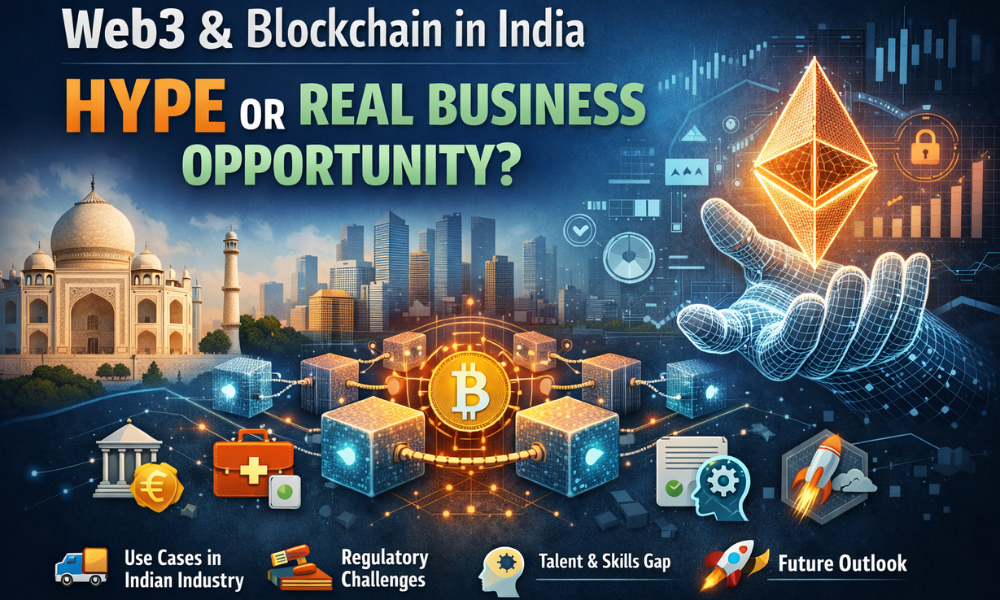
Understanding Web3 and Blockchain: Beyond Cryptocurrency in India
In the Indian scenario, Web3 and blockchain are commonly confused with being only about cryptocurrencies such as Bitcoin or Ethereum. However, the truth is that blockchain is a technology that allows for the secure, transparent, and decentralized sharing of data, while Web3 is the next generation of the internet, where users will have control over their data and digital assets. Web3 applications are built using blockchain, smart contracts, and decentralized networks to eliminate middlemen and build trust. In the Indian scenario, this is much more than just trading tokens. It includes decentralized identity, secure digital storage, peer-to-peer networks, and transparent transaction systems. As India is rapidly digitizing through Digital India and UPI, blockchain is a natural fit in this environment, providing tamper-proof and automated solutions. It is important to understand this larger context to assess whether Web3 is capable of powering real businesses or is just a crypto fad.
Use Cases of Blockchain in the Indian Business Environment
The implementation of practical, real-world blockchain solutions has become evident as a result of experimentation amongst Disruptive Technology (blockchain) and also due to understanding and resolving challenges faced within the business environment. For example, within the Financial Services Industry (FinTech), blockchain has allowed for greater speed in cross-border payments; contributed to fraud prevention and verification as well as enhanced security when conducting KYC processes. Other sectors (e.g., Supply Chain Management) have been able to utilize blockchain as a mechanism to track items; confirm authenticity and improve transparency across all areas (i.e., Pharmaceuticals, Agriculture, Logistics, etc.) of the Supply Chain. In addition, Start-up companies within Healthcare are looking at blockchain as a way to securely maintain patient data and share that data between healthcare providers; potential real estate companies are considering using blockchain technology for tokenized property records and/or maintaining an accurate record of real estate transactions; while some government-supported projects have already used blockchain technology to verify land records and provide verification services for government-issued documents. All of these examples clearly illustrate that the adoption of blockchain technology within India is not merely a theory; it is a result of the market finding efficiencies, cost savings and ultimately creating trust as a part of an emerging SAM (Single Point Of Data) model, as there are various examples of projects using blockchain technology as a solution to drive real business value aligned with an organization’s true business needs.
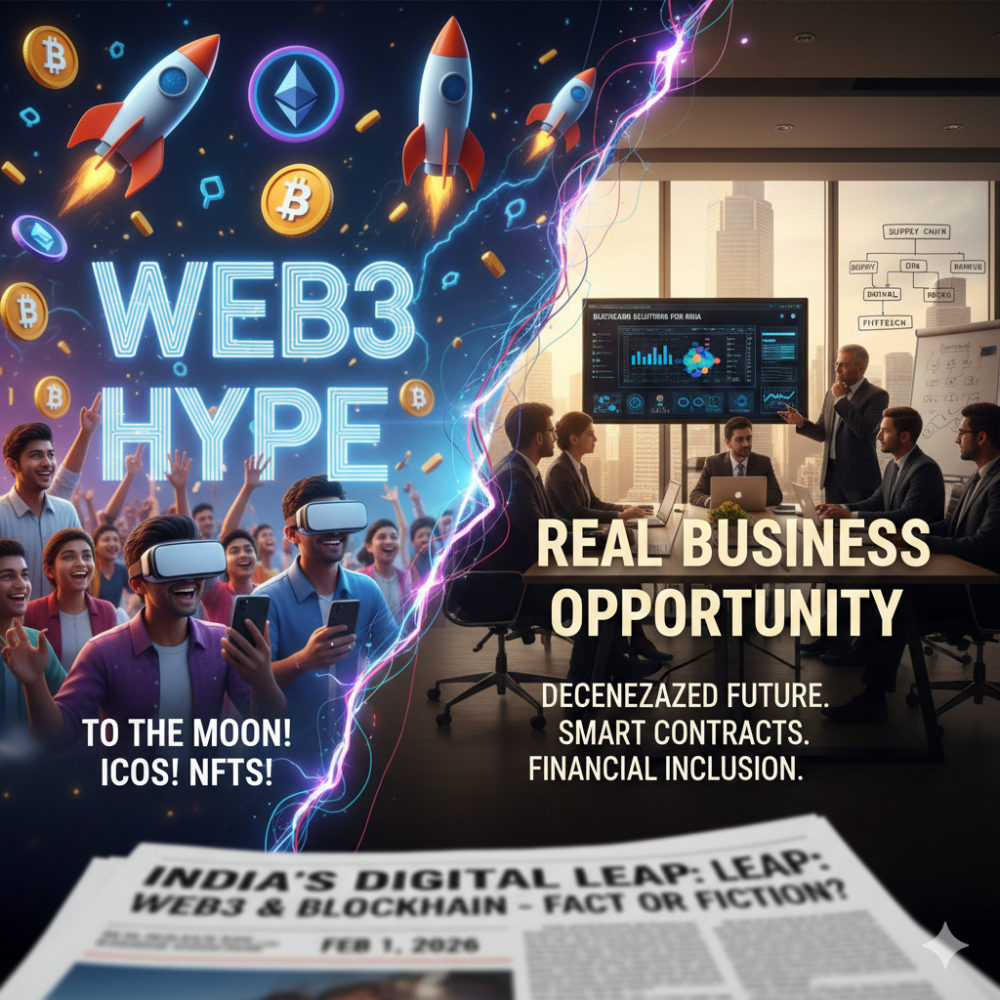
Challenges Slowing Web3 Adoption in India: Regulation, Talent & Trust
Multiple factors inhibit India’s ability to adopt blockchain and web3 technology. The primary source of trouble for blockchain/web3 implementation in India is a lack of regulatory certainty; this is particularly true with regard to cryptocurrency regulations, taxation compliance and reporting requirements. With regulations and policies regularly changing, it has become increasingly difficult for startups and investors to plan for the long term. Additionally, there is also a shortage of skilled blockchain developers and web3 professionals within India; this creates not only higher hiring costs but also impedes innovation. Other factors that contribute to obstacles faced by blockchain and web3 businesses include regulatory uncertainty, a shortage of talented workers, and the issue of public trust regarding these types of ventures due to scams, volatility in crypto markets, and misinformation about these products. Lastly, there exist significant technology-related obstacles for enterprise adoption of blockchain/web3 technology due to problems related to scalability and integration with existing enterprise information systems. The establishment of clear regulations, talent development programmes, and greater consumer awareness will be necessary for the broader acceptance of blockchain and web3 technologies to occur within India. The ability for blockchain technology to go from a niche-level to a mass-market-level use case in the world of business will depend on the solutions that are provided for these obstacles.
Web 3.0 in India: Long-term business opportunity or short-term buzz?
Growing from the hype to practical application will determine whether web 3.0 becomes a successful and sustainable technology in India. There is a lot of hype around web 3.0, with a big focus on NFTs, speculative trading and the race for quick profits, but there are many serious entrepreneurs and enterprise-level businesses looking to create long-term value with web 3.0.
The India startup ecosystem is exceptionally strong; the country has a huge base of developers and digital-first consumers all of which are valuable assets toward the growth of web 3.0 in India. We are also seeing many global companies set up blockchain development hubs in India, demonstrating confidence in its access to talented developers.
For web 3.0 to become a viable business or growth opportunity for the long term, we need greater regulatory clarity, higher rates of enterprise-level adoption, and products that provide large-scale solutions to real-world problems. Web 3.0 will not completely replace traditional systems overnight, but it will help provide additional benefits such as transparency, efficiency and trust. If all these factors come together, web 3.0 and blockchain could become permanent fixtures in the business landscape rather than a fad that will pass away in time.
Conclusion
Web3 and blockchain in India are not just buzzwords anymore, driven by speculation and hype. Although there are still challenges in terms of regulation, trust, and scalability, the fact that there are real-world use cases and serious interest from enterprises is a sign that there is long-term potential. It will be important to see how these technologies are adopted and how policies are developed to support them, because ultimately, their success will be measured by their adoption and value.