What Happens to Our Digital Selves 100 Years After We Die?
Introduction
With so much of our identity now existing in cyberspace, it stands to reason that when someone dies, they are still present in some manner via their digital footprint. For example, people’s messages, pictures, music playlists, and social media posts will continue to circulate through cyberspace long after they have passed away. But what happens to all the digital information that has been created 100 years after a person has died? Is this information eventually lost, or is it preserved to create a sort of digital afterlife? This blog attempts to answer the question of how our digital identities will continue to exist in ways that we cannot yet fully comprehend.
Ghost Traces in Our Data
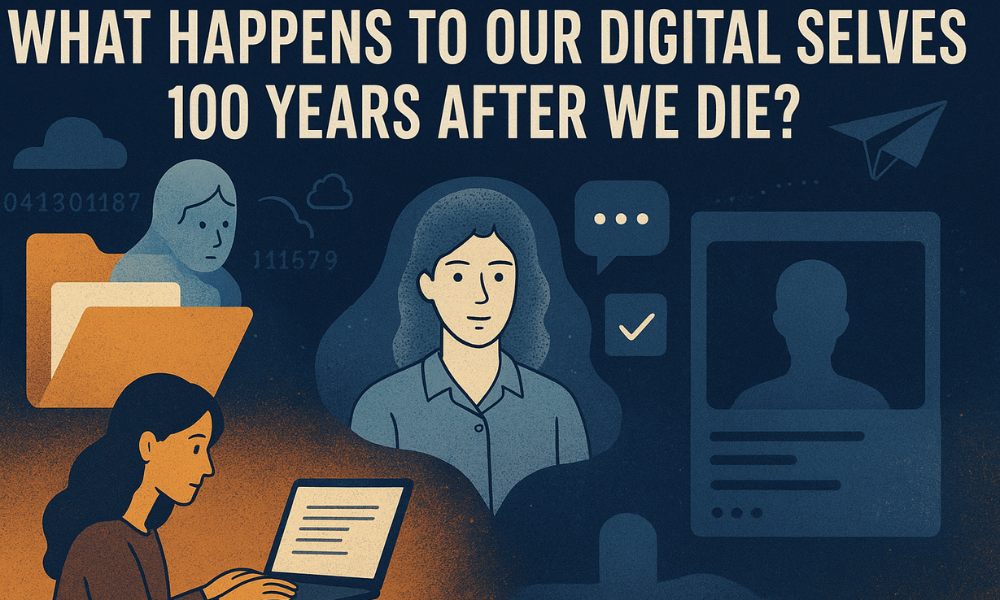
Even when we pass away, the data we have created will remain in existence, serving as an echo of who we have been in the past; that being said, the internet has a way of maintaining that data for future generations. All images, conversations, web-search histories and any notes/text messages that have been stored and/or sent will create a circumstantial record (i.e. Digital Archival Records) which will serve a function for future generations. Many of these records will not be seen by anyone within 100 years after the records were saved/storage; however, they will continue to exist on Digital Archive Servers and be used to influence the creation of algorithms, which will, in turn, allow ghost records to return to life through backups or other means – essentially creating a digital time capsule.
What I will be most interested in seeing is how the future generation (generations) will be able to view fragments of the digital life of people from this decade, and piece the information together. Will people be shocked at what was documented in e-mails, chat rooms, websites and social media? Will they want to recreate the life recorded for them? In a manner, our digital activity becomes a type of self-biography that continually exists after we’ve passed.
AI Avatars That Outlive Us
Digital reincarnation through AI will be a new way we will continue as “live” entities. It will be possible to gather enough historic, technology-enabled information about us (text-based communication, voice notes, video clips, writings of ours) that an artificial intelligence system can create a very accurate and responsive digital representation of us to live on for many generations after our death. These digital representations have the ability to respond, learn and interact long after we have left this world. As a result of this, digital representations will act as keepsakes for families, be used as a way to preserve memories by tech companies, and also serve historians as a new type of historical artefact to study. This raises many questions about what it means when an AI continues to evolve after you have passed away, what defines us, or the technology that is created to resemble our physical forms, and how long it is appropriate to exist in this digital world and offer comfort in the same way Digital Reincarnation offers can be found. Digital Reincarnation will be able to create a sense of comfort, but will also create undefined lines between remembering and resurrecting someone.
Inheriting Digital Life After Death
Ownership of your digital identity becomes an even bigger issue the longer after your death that a user retains access to digital data. Today, most digital accounts, while personal in nature, do not legally belong to you. In the future, under current laws and practices, users will likely pass their access to old iClouds, records of stored messages and pictures and long memories down through inheritance, creating a new form of “digital inheritance.” In the future, Governing Growth will likely have laws in place to clarify how and who will manage your digital identity after death, while many Technology Companies (Tech Co’s) will likely offer ‘legacy modes,’ which allow the storage of a user’s digital profile for a period of time after death. But not everyone will wish to revisit their family member’s old digital lives. Thus, the debate continues to this day: Should digital identity and the contents on online accounts, be considered property items like physical art and other personal items or are they simply someone’s private journal? The answer to this question, once determined in the next few decades, will ultimately influence how people manage digital memories a hundred years from now.
Forgotten Profiles in a Future Internet
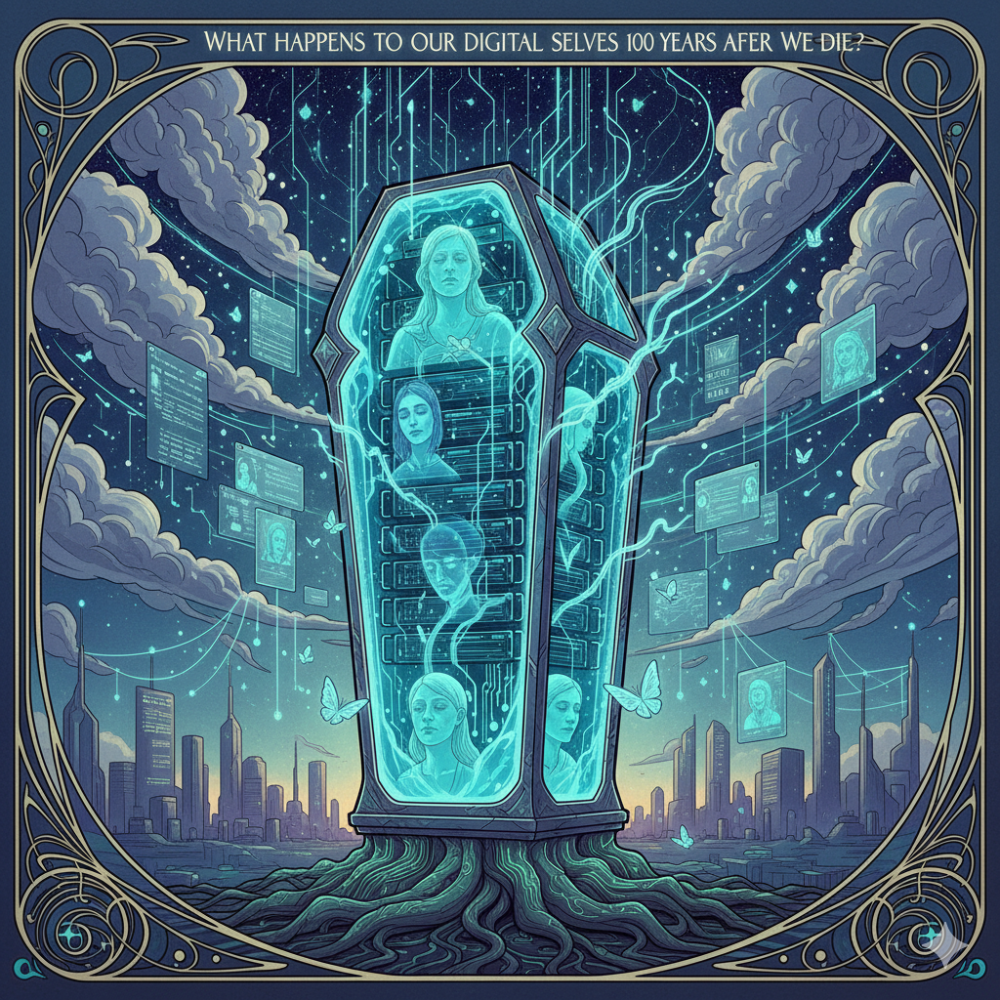
What will happen to digital identities (or online profiles, or social media users) that do not become either inherited or transformed into new forms? For many digital profile holders, simply continuing a profile for the next hundred years means that profile will be “frozen” and remain as it was when first created; thus, they will forever remain in a ‘digital time capsule’. Digital Time Capsules. Imagine you’re living in 2130 and you find your great-great-grandmother’s Facebook page, just as we now find letters from the 1800’s. Your great-great-grandmother’s old memes, and incomplete descriptions of her life, along with her interests, will give historians some insight into what people lived like back in the early 21st Century. Some of the social media platforms we use today will continue to archive that content automatically after accounts have gone inactive. The rest will eventually disappear with only the digital remnants of them remaining scattered throughout cyberspace. In the future, your great-great-grandmother—including her now-inactive social media accounts—will still be part of a larger historical record of the “collective” memory that no longer exists in any form we’ve seen so far, but will be present in a form “waiting” for us to discover and create.
Conclusion
In a century from now, we will not cease to exist in digital form, but our online presence will continue in some way: either by evolving; fading; or settling into some sort of background noise in an unfamiliar future. Through such things as “ghost data,” artificial intelligence simulated personas, legacies and unremembered profiles, parts of who we are will still be present to a certain extent yet in unforeseen variables. The digital afterlife ultimately serves as a reminder that whatever we do on the Internet, whether it’s storing or creating something; it will exist on far more than just the days we assign to ourselves while we are alive.