Why Being Busy Has Become a Personality
Introduction
Having a lot to do or a busy schedule used to mean being busy. With the popularity of the word ‘busyness,’ it has taken on a new definition; now it defines our personality. We treat overload of work as an indication of significance; we wear exhaustion proudly as a badge of honour, and it is nearly impossible for us to stop doing things without feeling as if we are not completing anything. This blog will discuss how busyness has taken over our lives and the impact that busyness is having on our lives and how this impacts our relationships and work, as well as exploring the many reasons that we continue to hold onto or identify with busyness, and exploring the psychological and emotional costs of embracing busyness.
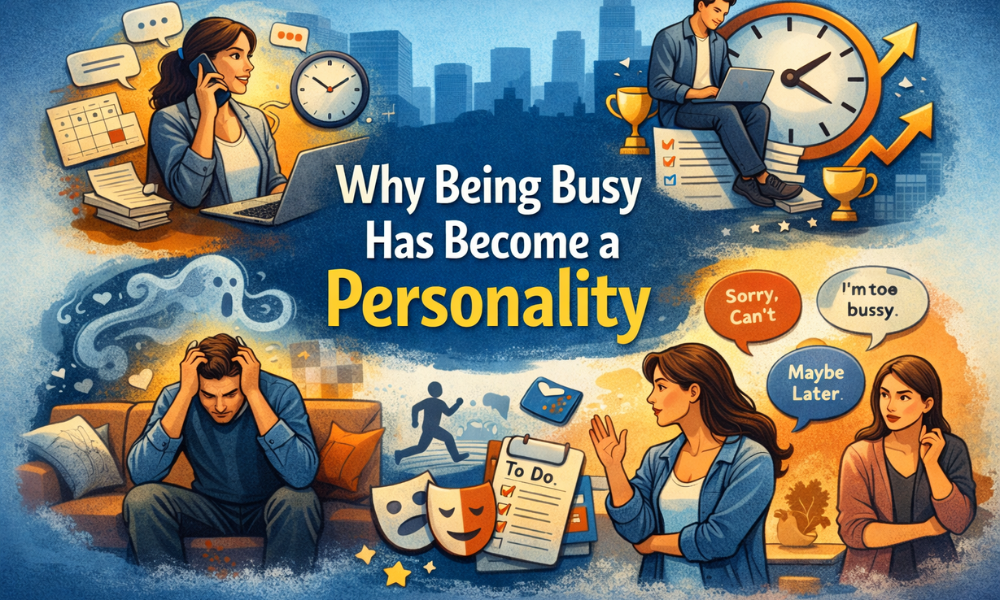
When “How Are You?” Became “Busy”
From the time that people used to greet each other in diverse ways and convey their feelings on a regular basis with, “How are you?” this has since completely changed and now instead uses, “Busy.”
In modern society, “Busy” has taken on a new role in people’s emotions and also as a means of avoiding sharing our feelings. It has come to the point where this is a normal response instead of an expression of true feelings. Thus, saying “busy” means that a person is productive, important and has a better chance at acceptance by society than someone that is emotionally drained, confused or bored.
Busyness now denotes a certain level of prestige within our society and is proof that we have some form of value. It has also contributed to the total acceptance of the idea that we are overworked.
As we award people more for their busy schedules instead of for their honesty, we disconnect ourselves from ourselves and from others, and as a result we start to become competitive in every interaction we have. When we get to the point where every conversation becomes a comparison of exhaustion, we have no time or space to connect with others through our vulnerability. In addition, “Busy” acts as a barrier that conceals both the happiness experienced and the sorrows felt behind a singular word which does not elicit a follow-up inquiry.
Self-worth associated with productivity
Society tends to equate productivity and value; the greater the number of things completed, the higher the sense of worth. Making a choice to avoid activity is viewed as laziness, but in fact, we need to rest. We are taught to see ourselves as our productivity (completed work, assignments, goals reached). As time goes on, we will stop seeing all of these accomplishments as things we accomplished, but rather, they will become part of who we are. When we are productive, we feel self-worth; when we are not producing, we feel guilt. Even times spent not working create more stress than enjoyment because they seem to be laden with unnecessary guilt. Social media continues to promote activity through the concept of “hustler” while it does not promote through showing the negative results of burnout. This has the potential to create a subconscious cycle: with decreasing productivity, decreases self-worth. We do not believe that we are worthy of anything outside of checklists; we deny the notion that being human is comprised of being productive all the time, therefore, we are continually striving to prove ourselves by working ourselves to exhaustion.
A Search for Peace
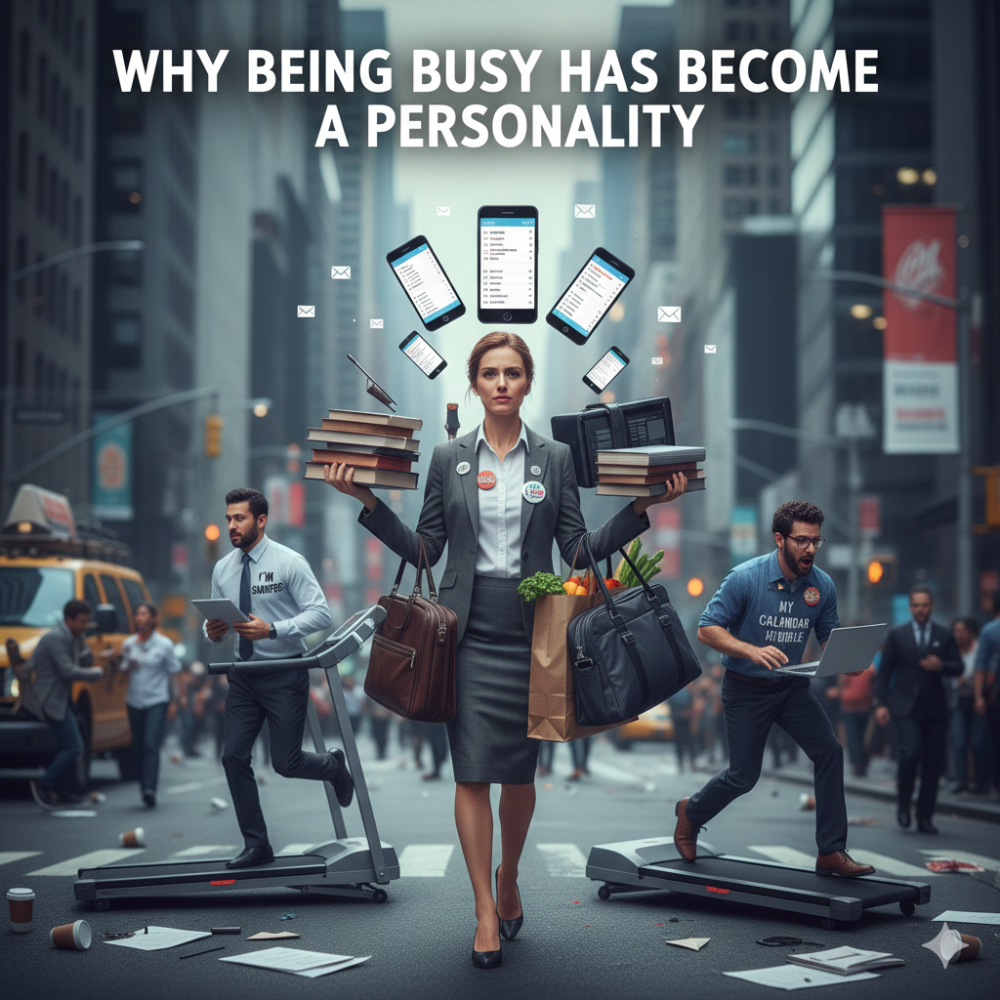
Many people view slowing down as peaceful; yet many feel stressed when they hear “slow down” or simply feel uneasy. When life becomes quiet, our thoughts become so much louder than they were during our busy days. Time to ourselves may reveal to us the feeling that have been hiding from us, i.e., uncertainty, doubt, regret, unanswered questions, and so forth. When we are constantly “on the go,” our distractions prevent us from feeling the emotions of these feelings; we are busy doing things, so we don’t have to face what was bottled up inside.
Society encourages this way of thinking, as it holds up “moving forward,” and treats being still, as being unproductive; so, therefore, we view slowing down as being unsuccessful or unbalanced. Therefore, we continue to remain stuck in cycles of exhaustion and continue to have this desire to do something about the cycle; however, we confuse motion with progress, and noise with meaning. In the long run, we need to slow down to gain clarity and understanding.
Busyness as a Social Shield
The busyness of our daily lives acts almost like a “social shield,” protecting us from the need to engage in uncomfortable conversations with other people. It allows us to create barriers so we can avoid the emotional vulnerability of being seen too deeply by other people or of having an uncomfortable moment of self-reflection when we take a break from the the activity that keeps us busy.
By saying that we are “too busy,” we don’t have to explain to anyone what is happening in our minds or hearts but rather use that statement as a shield that provides us with distance from others without appearing to be rude or selfish. Being busy also gives us the illusion of companionship; when we spend all our free moments doing tasks, we are not feeling lonely.
Ironically, having so much to do prevents us from being close with one another because none of us have the “time” needed to engage in deeper conversations. We may be busy, but we haven’t developed any connections or emotional bonds; we’ve only developed a pattern of being busy. Eventually, being busy becomes part of our identity; we don’t just act busy anymore; we’ve become busy.
To remove this “social shield” and begin developing emotional connections with other people takes courage—first, to be present with ourselves, second, to accept that not every single moment needs to be productive for it to have meaning.
Conclusion
While being busy can be seen as a defect—it is usually a reaction from everything around us. In addition there’s also the danger of busy becoming your only identity In other words if the majority time you’re moving, you can easily forget the importance of resting and nurturing your own inner self through social connections and/or gaining self-awareness. Rather than solely looking to utilise productivity as a means of measuring success In life we must take the time to slow down. By doing this we allow ourselves the opportunity for our own fulfilment and meaning of life. By eliminating the social virtue of exhaustion we also allow ourselves the opportunity to live with intention In life. When we slow down, we will discover our value is determined not only on how many appointments we have scheduled but also how much satisfaction we’re receiving by being with ourselves in our own being.