Why Modern People Collect “Micro-Hobbies” Instead of Mastering One Skill
Introduction
In today’s society, we no longer have to pick one area of expertise as was prominent in years past; instead, there are many micro-skills that an individual can develop. For instance, an individual may spend one week on painting, one month on learning to play the guitar, or simply experimenting with and working on pottery throughout their life without mastering any of them. Although none of these micro-skills enables individuals to become experts, they provide many enjoyable moments, such as an opportunity for diversity and joy, and they offer a chance to learn about new hobbies, all in rapid time. Additionally, as our world continues to increase in speed and become less certain, the ever-increasing presence of micro-hobbies is likely to keep pace with that increase; in short, that is how humans develop neural pathways in today’s society.
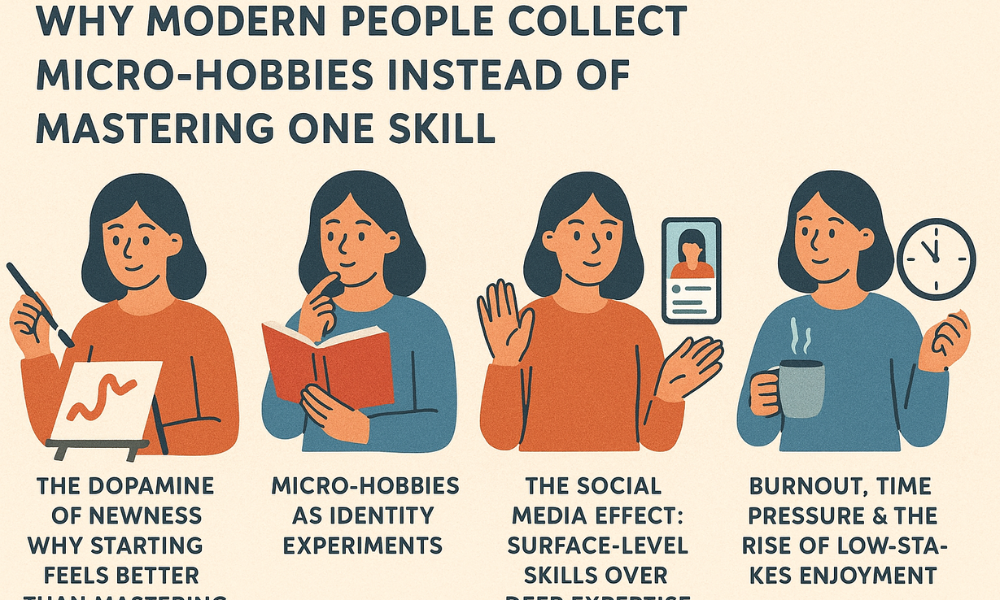
The “Dopamine Effect” of New Beginnings
When you start a new hobby, there’s a unique pleasure in starting and finishing something new. You get a rush of dopamine the very moment that you buy supplies, see an introduction video, and practice for the very first time. This initial relationship with your new hobby is fun, rewarding, and full of potential. But, that feeling changes dramatically when you truly master your craft. Mastering anything takes time, effort, repetition, and discipline, and it often comes with many ups and downs throughout your learning process. Because of the high levels of interaction, immediate gratification, and instant entertainment that modern society provides us with, our brain has become accustomed to receiving “quick” rewards. Consequently, it is now more difficult than ever for people to keep pursuing their interests long enough to become proficient at them. Micro-jobs provide the same euphoria without the stress of accustoming yourself to a long trial-and-error period. It’s not about being lazy; it’s about the reality of how our brains are adapting to the pace of life today.
Experimenting with Identity with Micro-Hobbies
Micro-hobbies have become increasingly popular among many. Micro-hobbies give people an opportunity to experiment with various aspects of their identity and how they might fit into various environments outside of what they have typically been exposed to. For example, one may begin a new hobby like gardening, which may give someone an appreciation for a slower pace of life. Or a person may begin learning to write in calligraphy to develop their artistic side. Each micro-hobby can serve as a way for an individual to answer the questions, “Who am I? And Who could I become?” Today, the emphasis on discovering oneself (either through the practice of identifying one’s passions) and the flexibility to grow and learn has enabled individuals to experiment with a variety of different options without feeling limited to a single choice or direction for their life. Instead of having to commit to one particular path from a very young age and continuing to walk that path until the end of their lives, people today are able to experiment with a wide variety of paths in order to determine which lifestyle is best suited for them. Identity experimentation does not have to be shallow; these are ways to learn and identify the various aspects of who you are within an existence that is continuously changing and developing.

The Impact of Social Media: Surface Level Skills over Depth of Knowledge.
Hobbies are affected by how Social Media impacts us with regards to how we learn them, and we may not even recognize it. On Social Media apps, such as Instagram, TikTok, or Vine, video clips are created quickly and display only the most visually pleasing parts of the activity (i.e. a very haphazard unsuccessful attempt at pottery; a new dance that goes viral; a 20 seconds video displaying the process of creating a painting from start to finish). The content provided by Social Media is very low commitment; it rewards those for attempting something rather than mastering it. Due to this reward structure, people tend to pursue “shareable” events instead of developing themselves long-term. People tend to share only their accomplishments as they are publicly shamed for failing in private. True expertise is developed over years of systematic hard work and dedication, and therefore virtually no one has an avenue to gain true expertise.
Micro-Hobbies: Escape Through Enjoying Low-Stakes Activities
Life has become so stressful these days with constant demands on our time, deadlines to meet and being bombarded each day by the digital world, that many of us are so worn out that we can hardly find the energy to invest in a skill or hobby which requires an enormous amount of effort and dedication to learn how to do well. That’s why micro hobbies are popping up – they are a type of hobby that requires little effort and a low commitment level. You can start and stop doing them whenever you want, they aren’t something you have to feel guilty about not performing, and they are meant strictly for enjoyment and for providing you with the ability to “reset” and clear your mind. A hobby requiring just 15 minutes of time and no performance expectations is downright “sexy” in a day and time when burnout is rampant and people feel they have so little time to get everything done. Thus, micro hobbies provide a safe haven for people to be creative and have fun while still providing a means of creative outlet for someone.
Conclusion
Ultimately, micro-hobbies mirror the nature of life as we know it: quick, experimental, fluid in nature. Rather than committing ourselves to one great thing throughout our lives, we can sample an array of experiences that suit our current state of mind, time, and energy level. Even though these short bursts of creativity may not provide an avenue for becoming a skilled individual, they do allow us to nurture curiosity, maintain creative outlets, and remain connected with ourselves—all of which may represent the greatest need for the current generation.