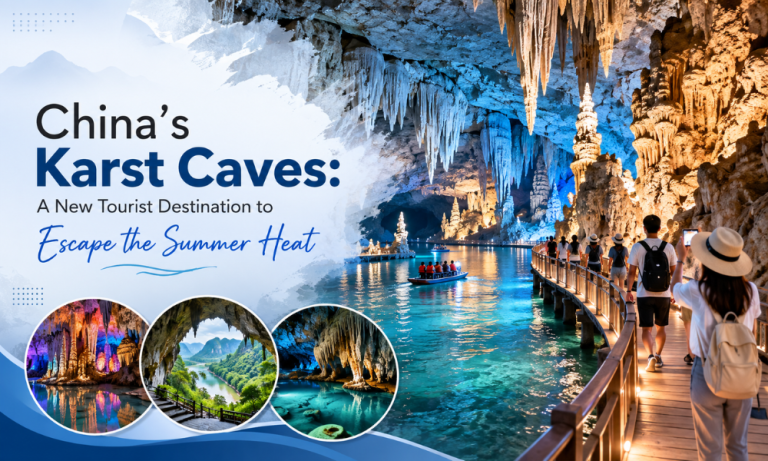
China’s Karst Caves: A New Tourist Destination to Escape the Summer Heat
Introduction
When summer temperatures rise across China, travelers often look for destinations where they can enjoy nature while escaping the intense heat. A new and fascinating option is attracting increasing attention: karst caves. Hidden beneath the mountains of southwestern China, these natural underground landscapes offer cool temperatures, dramatic rock formations, underground rivers, adventure activities, and even unique cafés and leisure spaces.
In particular, Guizhou Province has emerged as an exciting destination for cave tourism. Known for its spectacular karst terrain, the province has thousands of caves and underground formations. In recent years, tourism operators have transformed some of these natural wonders into distinctive summer attractions, combining geological exploration with recreation and adventure.
A Natural Escape from the Summer Heat
One of the biggest attractions of karst caves during summer is their naturally cool underground environment. While temperatures outside can become uncomfortable, caves maintain a relatively stable and cooler atmosphere, making them attractive places for visitors seeking relief from the heat.
Tianhetan Tourist Resort near Guiyang, for example, is known for its karst landforms, caves, waterfalls, pools, mountains and canyons. Its relatively cool summer environment has helped make it a popular destination for people looking to escape high temperatures.
This natural cooling effect gives cave tourism an advantage over traditional outdoor sightseeing. Visitors can explore spectacular geological formations while enjoying a refreshing environment away from direct sunlight.
Guizhou: A Growing Hub for Cave Tourism
Guizhou is particularly well suited to this new tourism trend because of its extraordinary karst landscape. According to recent reports, the province has around 42,800 recorded cave entrances, creating enormous potential for underground tourism and exploration.
These caves are not simply being promoted as places to look at rocks. Tourism businesses are developing a variety of experiences around them, including underground paddleboarding, cave camping, climbing, zip lines, via ferrata routes, underground rivers, cafés and cultural activities.
This change reflects a broader shift in tourism. Modern travelers increasingly want experiences rather than simply visiting a scenic location, and China’s cave destinations are responding to this demand.
Spectacular Underground Landscapes
Karst caves are formed over long periods through geological processes involving soluble rock, particularly limestone. Water gradually dissolves and shapes the rock, creating tunnels, chambers, underground rivers and dramatic formations.
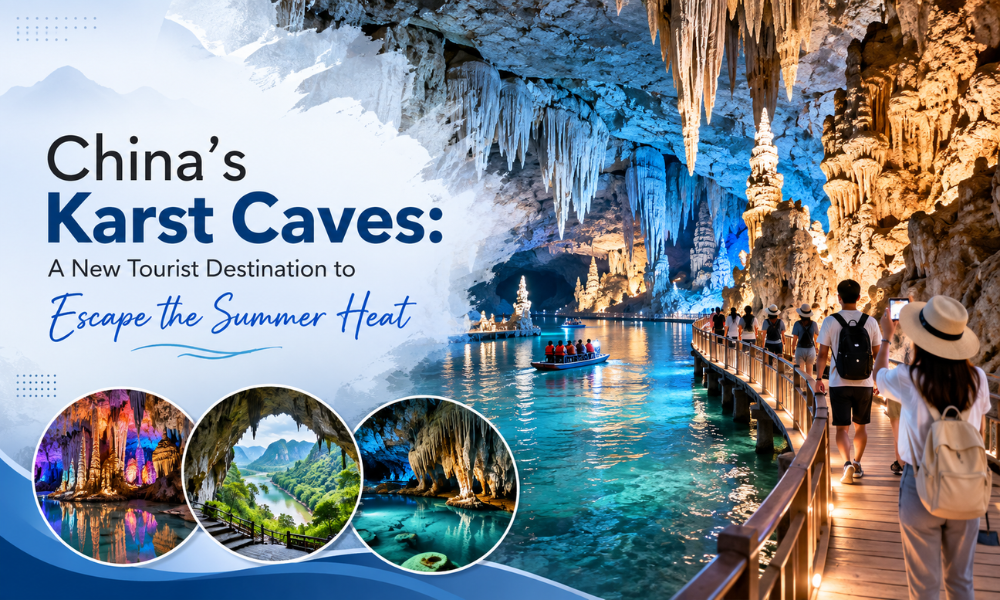
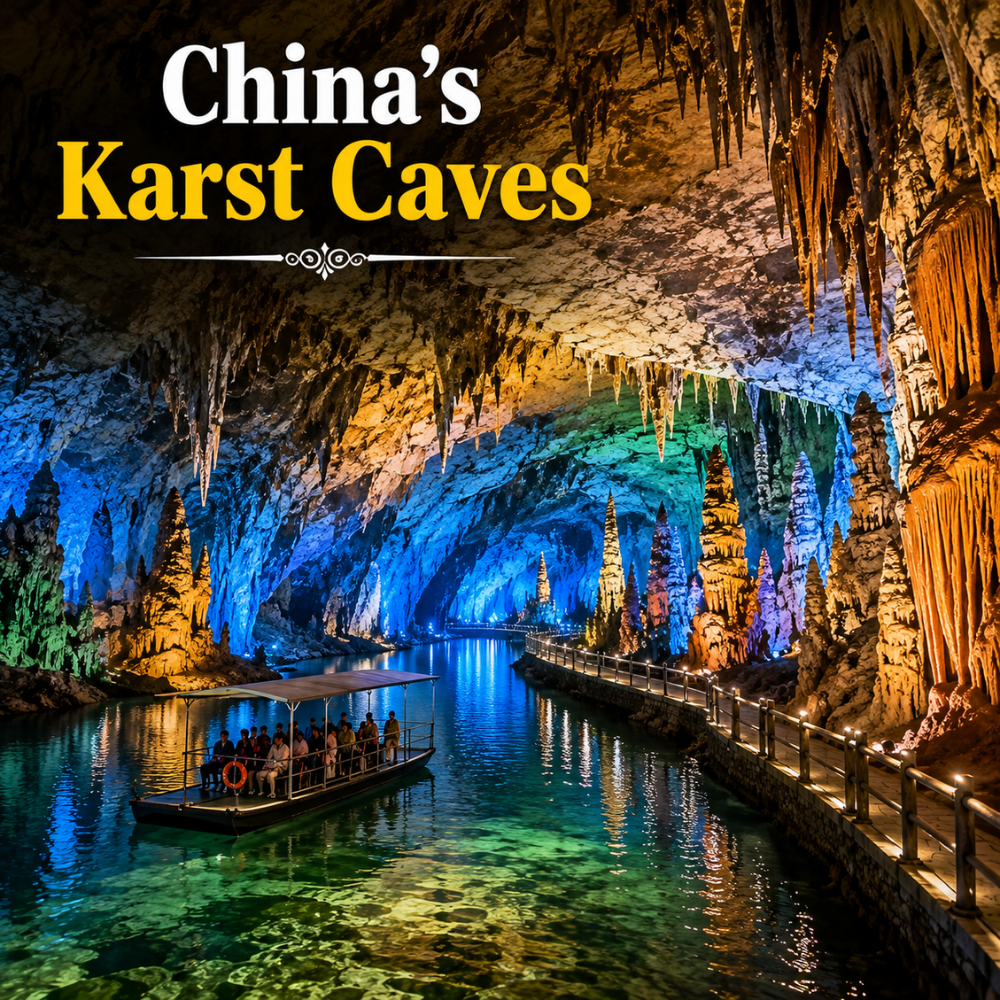
Inside China’s caves, visitors can see stalactites, stalagmites, stone pillars, stone curtains, crystal-like formations and underground streams. The shapes created by nature can resemble flowers, animals, mountains and other imaginative forms.
Zhijindong Cave in Guizhou is one notable example. The cave contains an enormous underground landscape filled with stalactites, stalagmites, stone pillars, stone curtains and other formations. It was recognized as a UNESCO Global Geopark in 2015.
The wider South China Karst region is also internationally recognized for its remarkable geological features. UNESCO describes areas of the region as containing cone-shaped karst peaks, underground caves, sinking streams and other significant karst landscapes.
From Cave Exploration to Cave Cafés
One of the most unusual developments in China’s cave tourism is the appearance of cafés and leisure spaces inside or beside caves.
Instead of simply walking through a cave, visitors can now enjoy coffee, food, music and relaxation surrounded by natural rock formations. Recent reports from Guizhou show tourists visiting cafés inside karst caves and enjoying the naturally cool environment.
This concept combines nature with modern lifestyle experiences. A visitor can enjoy a drink while listening to the sound of underground water, looking at rock walls and experiencing an atmosphere completely different from a conventional café.
Such attractions are particularly popular among younger travelers, who often share photographs and videos of unusual travel experiences on social media.
Adventure Activities for Young Travelers
For visitors looking for more excitement, cave tourism in Guizhou is also becoming an adventure destination.
Some developed cave attractions now offer via ferrata climbing, rappelling, zip lines, underground paddleboarding and other outdoor activities. Shuanghe Cave in Zunyi, for example, has developed adventure-oriented experiences including via ferrata routes, rappelling and cave paddleboarding.
Recent reports also show that young travelers are exploring caves through activities that go beyond traditional sightseeing. Underground rivers, cave camping and guided exploration are becoming part of the experience.
For adventure lovers, this provides an opportunity to combine cooling off with physical activity and exploration.
Underground Rivers Add to the Experience
Water is another major feature of China’s karst caves. Some cave systems contain underground rivers that flow through enormous chambers and narrow passages.
In some tourist destinations, visitors can travel by boat or participate in water-based activities inside cave systems. Guilin, another famous karst region, has several caves associated with underground rivers and distinctive formations. Fengyu Cave, for instance, features a subterranean river and sections that can be explored by land and water.
Crown Cave in Guilin also combines cave sightseeing with an underground river experience, allowing visitors to see stalactites, stalagmites and large stone pillars from different perspectives.
These experiences make karst caves attractive not only to geology enthusiasts but also to families, photographers and travelers looking for something unusual.
A New Tourism Experience
The popularity of China’s karst caves reflects how tourism is changing. Travelers increasingly want destinations where they can participate, explore and create memorable experiences.
Recent reports describe a growing interest among young travelers in Guizhou’s caves, with social media helping turn underground adventures into a new tourism trend. Visitors are no longer satisfied with simply viewing a cave from a designated pathway; many are looking for more immersive experiences.
At the same time, easier cave experiences are being developed for families and visitors who do not want physically demanding adventures. Cafés, gentle sightseeing routes, water activities and entertainment options allow different types of tourists to enjoy the underground environment.
Protecting the Underground Environment
As cave tourism grows, environmental protection becomes increasingly important. Caves are fragile geological environments, and formations such as stalactites and stalagmites can take extremely long periods to develop.
Tourism operators therefore need to balance visitor access with conservation. Safe pathways, controlled visitor numbers, appropriate lighting and responsible behavior can help protect these natural formations.
Adventure activities should also be carefully managed, particularly in areas involving underground rivers, climbing and rappelling. Recent cave tourism projects in Guizhou have placed emphasis on route design, safety equipment and professional expertise.
Why Karst Caves Could Become a Summer Travel Trend
China’s karst caves offer a combination that is difficult to find elsewhere: natural cooling, geological beauty, adventure, water activities and modern leisure experiences.
For summer travelers, they provide a refreshing alternative to crowded beaches and conventional tourist destinations. For young explorers, they offer opportunities for adventure and photography. For families, many developed cave attractions provide easier sightseeing and recreational activities. And for nature lovers, the caves reveal an extraordinary underground world created over thousands or millions of years.
Guizhou is currently at the center of this growing trend, but China’s broader karst regions—including Guilin and other parts of southern and southwestern China—also provide remarkable cave experiences.
Conclusion
China’s karst caves are becoming much more than geological attractions—they are emerging as distinctive summer tourism destinations. Their naturally cool environments provide relief from the heat, while underground rivers, dramatic rock formations, adventure activities and cave cafés create memorable experiences for visitors.
As travelers continue searching for unique destinations, the mysterious underground landscapes of China are likely to attract even more attention. Whether visitors want a peaceful escape, an adventurous journey or simply a fascinating place to spend a summer day, China’s karst caves offer a refreshing way to experience nature from a completely different perspective.
With responsible tourism and effective environmental protection, these extraordinary underground worlds can continue welcoming visitors while preserving their geological beauty for future generations.
About the Author
Hemangi is a content writer with experience in business writing, strategy, and professional storytelling.