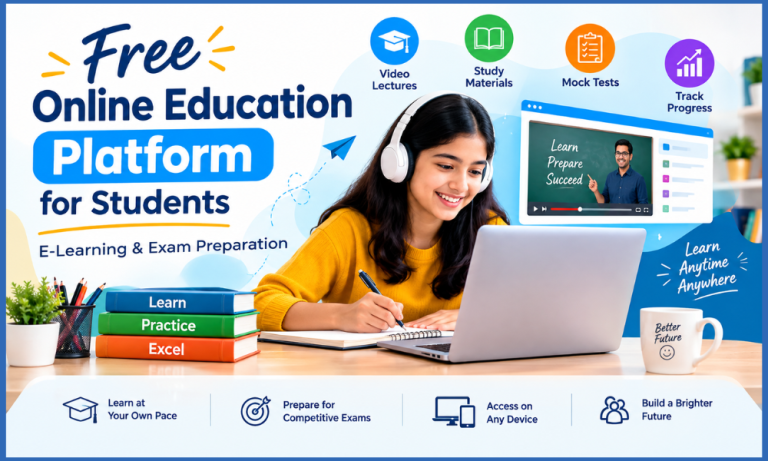
Free Online Education Platform for Students – E-Learning & Exam Preparation
Introduction
Education is no longer limited to classrooms, printed textbooks, or fixed study schedules. With the growth of digital learning, students can now access educational resources from computers, tablets, and smartphones. Free online education platforms have made learning more flexible and accessible, particularly for students preparing for school examinations, competitive examinations, and higher education.
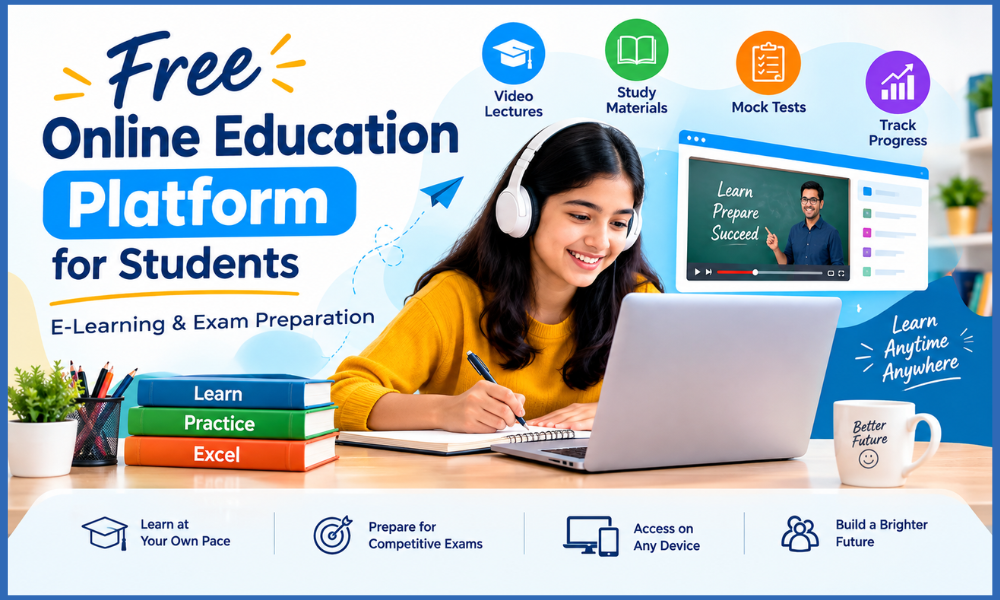
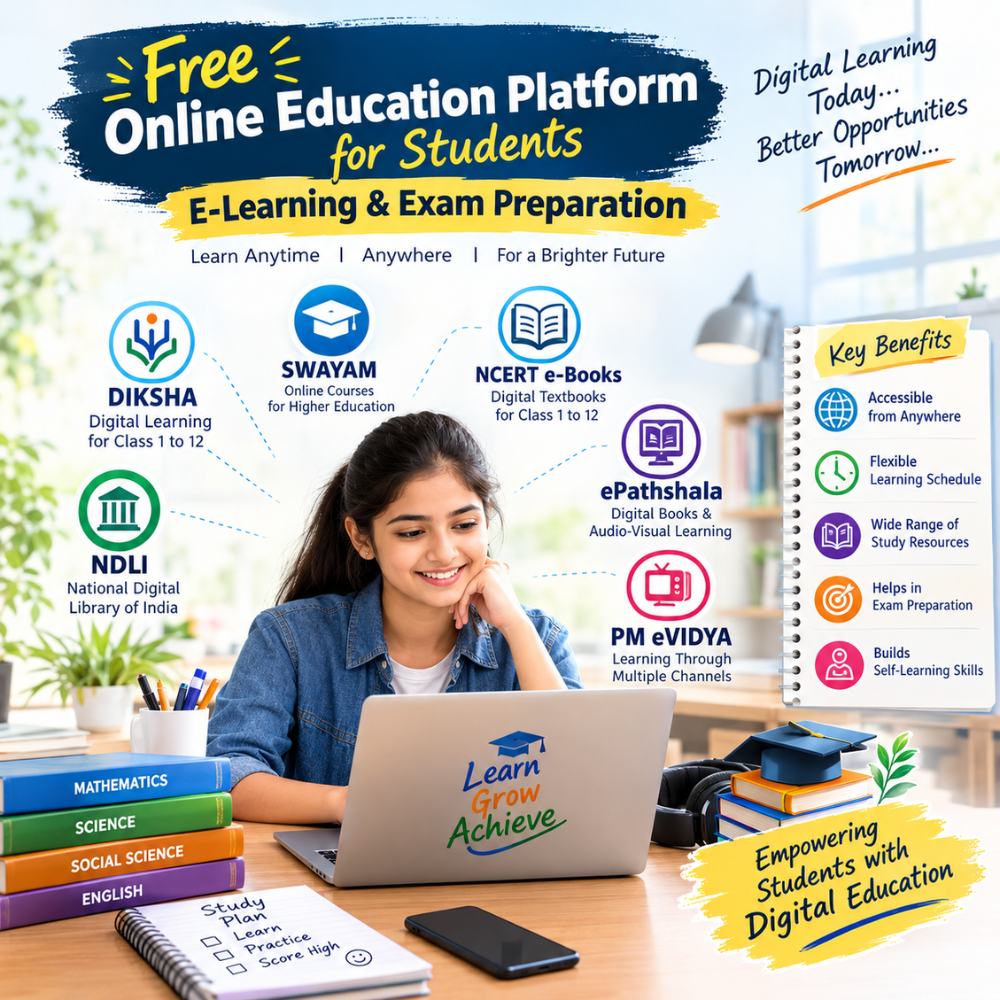
The shared Gujarati newspaper article highlights six useful digital education platforms that can support students from school level to higher education and competitive exam preparation. These platforms provide digital textbooks, video lectures, study materials, audio content, question resources, and other educational resources. They can be especially useful for students who want additional learning support beyond their regular classroom studies.
- DIKSHA – Digital Learning for School Students
DIKSHA is one of the important digital education platforms highlighted in the article. It supports students from Class 1 to Class 12 by providing access to educational resources in digital formats.
Students can find textbooks, videos, worksheets, and other learning materials through the platform. One useful feature is the ability to access digital content connected with textbooks through QR codes. When a student scans the relevant code, additional educational resources related to a lesson can become available.
This makes textbook learning more interactive. Instead of depending only on written explanations, students can use videos and supplementary digital resources to understand difficult concepts.
DIKSHA can therefore be useful for students who want to revise lessons, understand concepts visually, or continue studying outside regular classroom hours.
- SWAYAM – Online Courses for Higher Education
SWAYAM is another platform mentioned in the newspaper article. It is designed to provide online learning opportunities for students from school level through higher education.
The platform offers courses developed with contributions from reputed educational institutions and organizations. Students can explore learning materials, lectures, reading resources, assignments, and other course-related content.
For students entering college or preparing for higher-level studies, platforms such as SWAYAM can provide an opportunity to learn subjects in a structured online environment.
One of the major advantages of online courses is flexibility. Students can study according to their own schedules, revisit difficult topics, and use digital resources for additional preparation.
- NCERT e-Books – Digital Textbooks for Classes 1 to 12
Textbooks remain an essential part of academic preparation, and the article highlights NCERT e-books as another valuable digital resource.
NCERT provides digital versions of textbooks for students from Class 1 to Class 12. Having textbooks in digital form can be particularly convenient for students who want to study while travelling or when physical books are not readily available.
Digital textbooks can also support revision. Students can quickly access chapters, review important concepts, and keep educational material available on their devices.
For students preparing for board examinations and competitive examinations, NCERT books are often an important academic resource. Subjects such as Mathematics and Science require strong conceptual understanding, and systematic textbook study can help students build those fundamentals.
- NDLI – National Digital Library of India
The National Digital Library of India (NDLI) provides access to a broad collection of educational and academic resources.
As highlighted in the article, the platform can be useful for students, researchers, and competitive examination candidates looking for books, research materials, video lectures, question resources, and other educational content.
One of the strengths of a digital library is the ability to search for information based on different requirements. Instead of visiting a physical library and searching through shelves, students can explore digital resources through an online platform.
For learners preparing for higher studies, research work, or competitive examinations, access to a wider range of reference material can make independent learning easier.
- ePathshala – Digital Books and Audio-Visual Learning
ePathshala is another educational initiative highlighted in the article. It provides digital educational resources associated with school education, including textbooks and multimedia learning material.
The platform can make learning more convenient by providing educational content in digital formats. Students, teachers, and parents can use such resources for learning, revision, and academic support.
Audio-visual resources can be especially useful when students find traditional textbook explanations difficult to understand. Combining written material with videos and audio resources can provide a different approach to learning.
For students studying at home, ePathshala can serve as an additional source of educational content alongside classroom teaching and physical textbooks.
- PM eVIDYA – Learning Through Multiple Digital Channels
The article also highlights PM eVIDYA, an initiative designed to support digital education through multiple channels and formats.
One of the important ideas behind such digital education initiatives is to make learning accessible even in areas where students may face limitations in internet connectivity or access to conventional educational facilities.
PM eVIDYA brings educational resources through different digital channels, including television, radio, and online resources. This multi-channel approach can help students continue their studies using the technology available to them.
For school students, educational television and other digital resources can supplement classroom learning and provide additional opportunities for revision.
Benefits of Free Online Education Platforms
The biggest advantage of these platforms is accessibility. Students can access educational resources without being restricted by location or traditional classroom timings.
Another important benefit is flexibility. A student can study a chapter in the morning, watch a related video later, and revise the same topic again before an examination.
Digital platforms also encourage self-learning. Students can identify topics where they need improvement and search for additional resources instead of waiting for classroom instruction.
For examination preparation, these resources can be useful for:
- Revising school subjects
- Understanding difficult concepts
- Accessing digital textbooks
- Watching educational lectures
- Practising with additional study material
- Finding reference books and academic resources
- Supporting competitive examination preparation
- Studying outside regular classroom hours
Making Digital Learning More Effective
Having access to online education does not automatically guarantee better results. Students need to use digital platforms in a planned manner.
A good approach is to begin with the official textbook or syllabus and then use digital resources to strengthen understanding. For example, a student can read an NCERT chapter first, use DIKSHA or ePathshala resources for additional explanation, and then revise the topic through notes and practice questions.
Students should also create a realistic study timetable. Spending excessive time watching educational videos without practising or revising may not produce the desired results. Digital learning works best when it is combined with reading, writing, problem-solving, revision, and regular self-assessment.
Supporting Students Beyond the Classroom
The six platforms discussed in the article demonstrate how technology can complement traditional education. DIKSHA, SWAYAM, NCERT e-Books, NDLI, ePathshala, and PM eVIDYA represent different approaches to digital learning, from school textbooks and video lessons to online courses, digital libraries, and multi-channel educational resources.
For students, these platforms can reduce dependence on a single source of learning. A classroom teacher remains an important guide, but digital resources can provide additional explanations and opportunities for independent study.
The availability of free educational resources is particularly valuable for students who want to continue learning at their own pace. Whether the goal is school examination preparation, board examination revision, higher education, or competitive examination study, the right digital resources can become an important part of an effective learning strategy.
Conclusion
The rise of free online education platforms for students is transforming the way learners access knowledge. Digital textbooks, video lectures, online courses, academic libraries, audio-visual content, and television-based educational resources provide students with multiple ways to learn and revise.
The six platforms highlighted in the provided article—DIKSHA, SWAYAM, NCERT e-Books, NDLI, ePathshala, and PM eVIDYA—can serve different educational needs across school and higher education.
The real benefit of e-learning comes from using these resources intelligently. When students combine digital learning with textbooks, classroom guidance, regular practice, revision, and disciplined study habits, technology can become a powerful partner in their educational journey.
About the Author
Kinjal is a passionate content writer with expertise in crafting unique, high-quality content tailored for digital marketing and search engine optimization. Her writing helps businesses strengthen their online presence and connect with their target audience.