Best Vedic Village Concept in North Carolina USA – Organic Farming and Community Living
Introduction
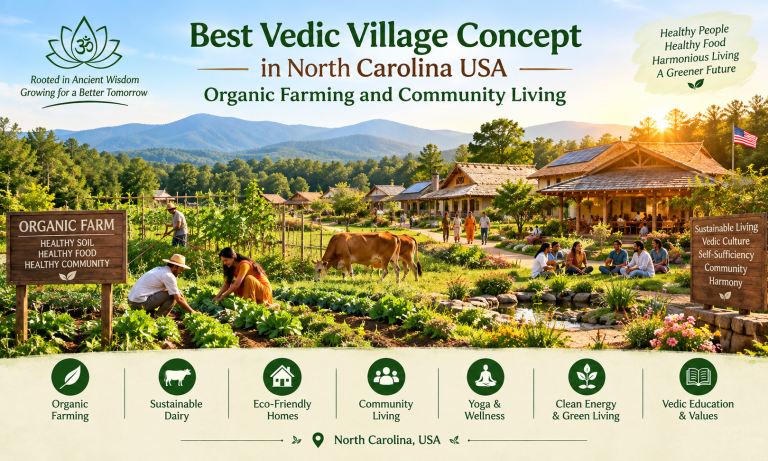
In the United States, a unique community inspired by Indian Vedic values is creating a different vision of modern living. The concept of a Vedic Village North Carolina USA combines residential life, organic farming, spirituality, nature and community living in one thoughtfully planned environment. Spread across approximately 215 acres, the proposed village is designed with around 180 homes, giving families an opportunity to live closer to nature while maintaining access to modern facilities.
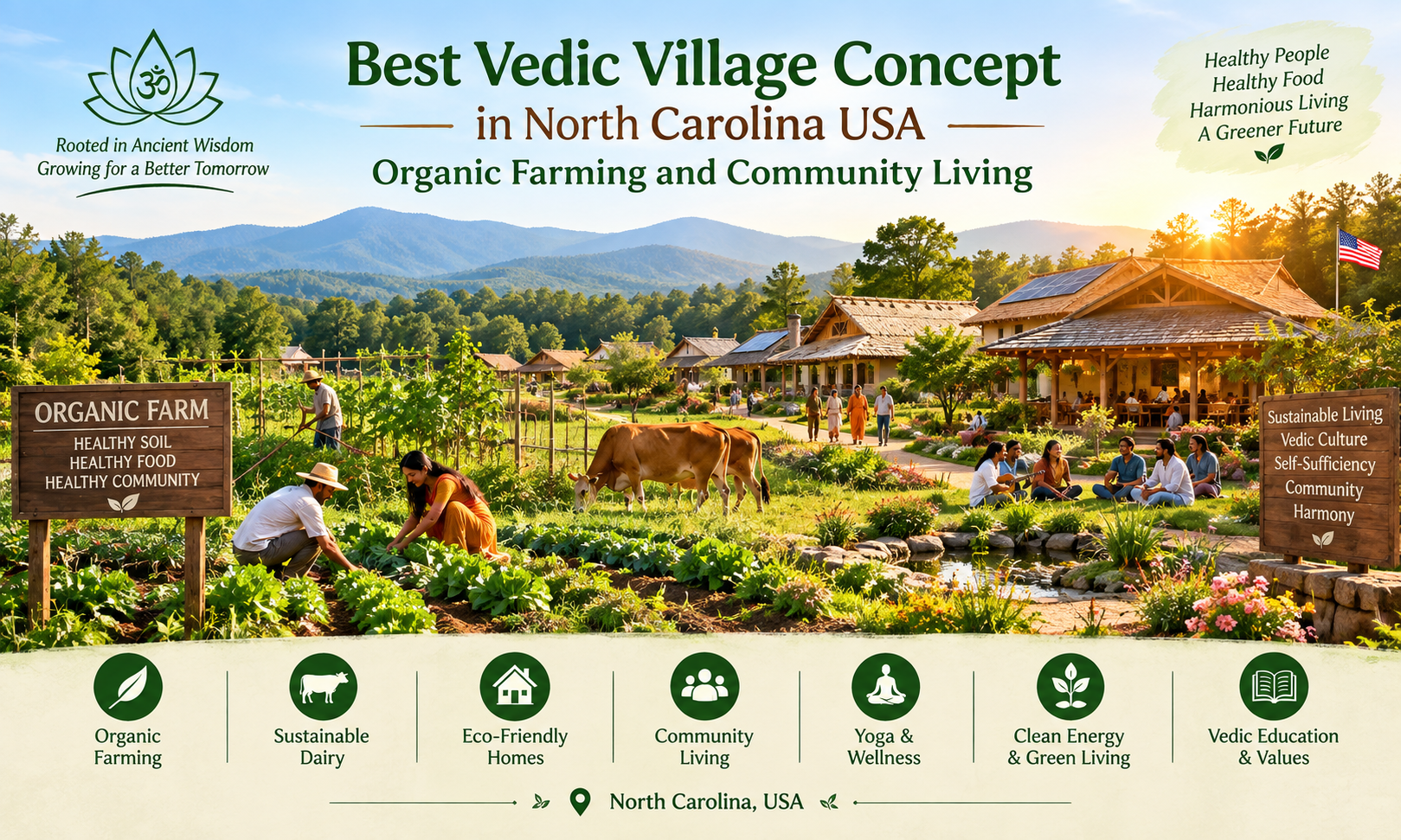
The idea reflects a growing interest among people of Indian origin and others in creating communities where traditional Indian values can coexist with contemporary American lifestyles. Instead of treating a home simply as a private residence, the Vedic village concept looks at the entire community as a place for healthy living, cultural connection and shared experiences.
A Large Community Surrounded by Nature
One of the most notable aspects of the proposed Vedic village is its large land area. With around 215 acres available for development, the community can provide considerable open space along with residential areas. The planning shown in the newspaper report presents homes surrounded by greenery, roads, agricultural areas and common spaces.
Such a design can create a more peaceful atmosphere than densely populated residential developments. Residents can potentially enjoy walking paths, green spaces and agricultural surroundings as part of their everyday lifestyle.
The concept also places importance on maintaining a relationship between people and the natural environment. Trees, plants, open land and farming areas can become important elements of the community rather than simply unused spaces between buildings.
Organic Farming as a Part of Everyday Life
A major attraction of the Vedic Village North Carolina USA concept is organic farming. The reported plan includes agricultural land where residents can participate in or benefit from the cultivation of vegetables and other crops.
Organic farming can support a healthier lifestyle by encouraging the consumption of fresh, locally grown produce. Instead of depending entirely on food transported from distant locations, a community with its own farming facilities can develop a stronger connection with the food people eat.
For families, this can also become an educational experience. Children can learn where vegetables come from, how crops are grown and why soil, water and natural resources need to be protected. Farming can therefore become more than a commercial activity; it can become part of the community’s culture.
Homes Designed Around Community Living
The proposed village is planned for approximately 180 homes across the large property. This creates the possibility of a close-knit residential community where families can interact regularly.
Traditional Indian communities have historically placed importance on relationships between neighbours and extended families. The Vedic village idea attempts to bring some of this social connection into a modern American setting.
Residents may have opportunities to celebrate festivals together, organize cultural activities, participate in community gatherings and create shared traditions. At the same time, each family can have its own private residential space.
This balance between individual privacy and community participation is one of the important ideas behind the development.
Bringing Indian Culture to America
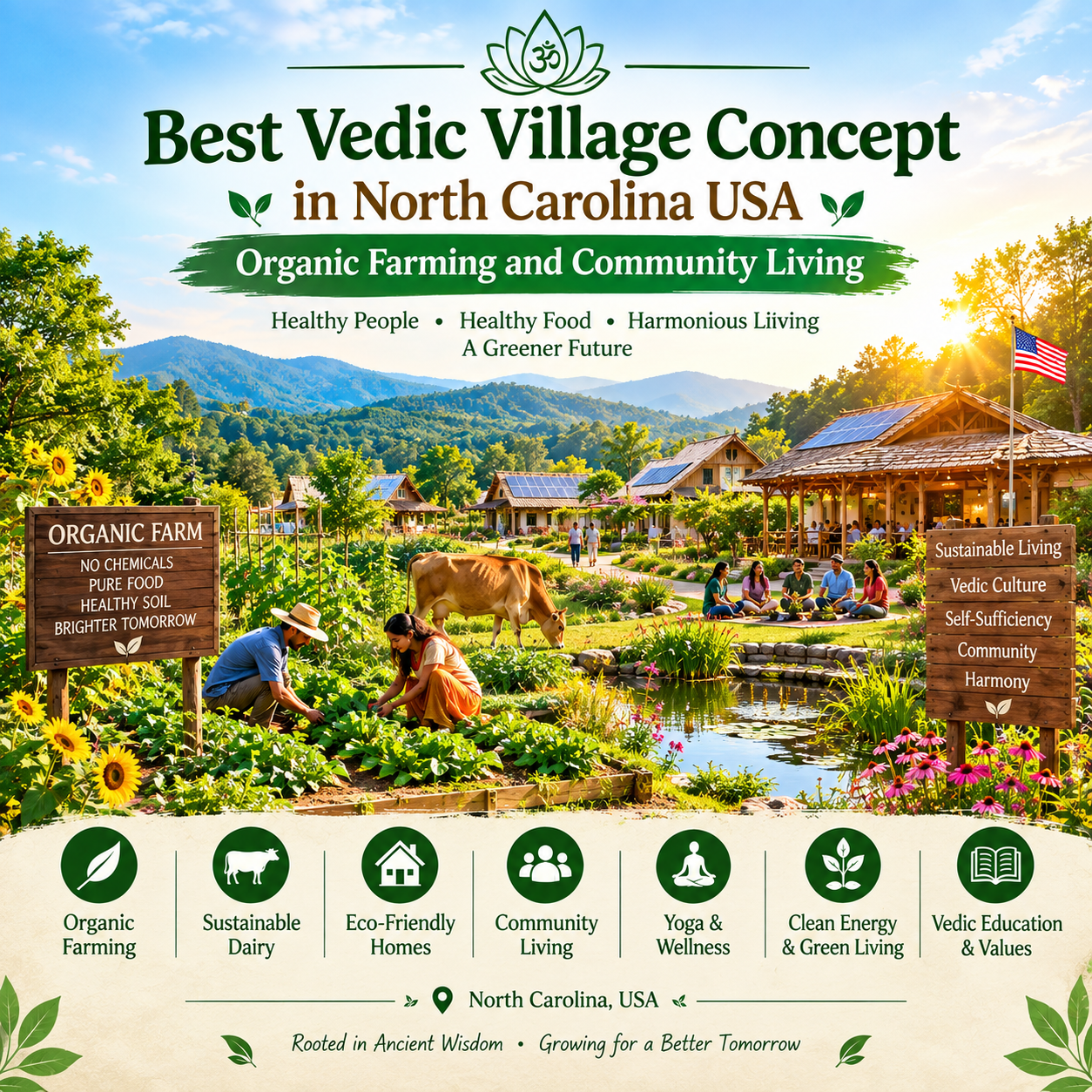
For Indian families living in the United States, maintaining cultural connections can sometimes become challenging, particularly for younger generations. A community based on Vedic principles can provide an environment where Indian traditions remain part of everyday life.
Temples, cultural spaces, community gatherings and traditional celebrations can help residents stay connected with Indian heritage. Children growing up in such an environment can experience Indian festivals, food, languages, customs and family-oriented traditions while continuing their education and professional lives in America.
The newspaper report also highlights the broader idea of establishing Vedic-style villages in different American locations. Similar concepts are mentioned in states such as Georgia and Tennessee, indicating an interest in developing culturally connected communities beyond a single location.
A Different Approach to Modern Lifestyle
Modern urban life often comes with busy schedules, traffic, technology dependence and limited access to open agricultural land. The Vedic village model proposes a different approach.
Here, the focus is not necessarily on rejecting modern facilities. Instead, the objective is to combine modern conveniences with elements such as nature, healthy food, spiritual practices and community relationships.
A resident could potentially begin the day surrounded by greenery, have access to organically grown food, participate in community activities and still remain connected to the professional and technological opportunities available in the United States.
This combination makes the concept interesting for families looking for an alternative residential lifestyle.
Focus on Healthy Food and Wellness
Another important aspect of the village concept is its emphasis on healthier living. Organic farming, natural surroundings and community-oriented activities can encourage residents to pay greater attention to food and wellness.
The report also refers to restrictions on fast food within the proposed community. Such an approach reflects the intention to create an environment where fresh food and traditional dietary habits receive greater importance.
Rather than making fast food a regular part of community life, residents could be encouraged to prepare fresh meals using locally available agricultural products. This can also create opportunities for cooking together and sharing traditional recipes.
Spirituality and Inner Well-Being
The Vedic concept is not limited to buildings and agriculture. Spiritual and cultural values form another important part of the proposed lifestyle.
A community can provide spaces for meditation, prayer, yoga, cultural programs and other activities that support mental and emotional well-being. Temples or spiritual centres can also become gathering places for residents.
For many families, this can provide a sense of belonging that is difficult to achieve in a conventional residential development.
Employment and Economic Opportunities
A project of this scale can also have an economic impact. The newspaper report mentions an investment of approximately ₹717 crore and the possibility of employment for around 378 people.
A large community can generate work opportunities through construction, agriculture, maintenance, hospitality, administration and other supporting services. Once established, agricultural activities and community facilities may also contribute to local economic activity.
This demonstrates that the Vedic village concept can have significance beyond residential development. It can potentially become a broader community and economic project.
Creating a Sustainable Community for the Future
The Vedic Village North Carolina USA concept represents an interesting combination of traditional values and modern infrastructure. With approximately 215 acres, 180 planned homes, organic farming and community-oriented facilities, the development aims to create a lifestyle centered around nature, culture and social connection.
For Indian-origin families in America, such a community can offer a familiar cultural environment without requiring them to leave the United States. For others, it can provide an opportunity to explore a lifestyle based on organic food, open spaces, community relationships and wellness.
Conclusion
Ultimately, the idea of a Vedic village demonstrates how residential development can move beyond houses and roads. A thoughtfully planned community can bring together homes, farms, culture, spirituality, healthy living and nature. The proposed Vedic Village in North Carolina reflects this broader vision creating a place where modern American life and Indian-inspired community values can exist together.
About the Author
Kinjal is a passionate content writer with expertise in crafting unique, high-quality content tailored for digital marketing and search engine optimization. Her writing helps businesses strengthen their online presence and connect with their target audience.